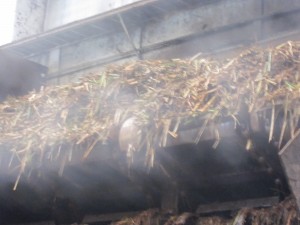
 Yesterday, the Environmental Protection Agency confirmed in its expanded rules of implementation for the Renewable Fuel Standard (RFS), that ethanol made from sugarcane is considered an advanced biofuel that lowers greenhouse gas emissions (GHGs) by more than 50 percent. Specifically, EPA’s calculations show that sugarcane ethanol from Brazil reduces GHG emissions compared to gasoline by 61%, using a 30-year payback for indirect land use change (ILUC) emissions.
“The EPA’s decision underscores the many environmental benefits of sugarcane ethanol and reaffirms how this low carbon, advanced renewable fuel can help the world mitigate against climate change while diversifying America’s energy resources,” said Joel Velasco, Chief Representative in Washington for the Brazilian Sugarcane Industry Association (UNICA).
Brazil is the second largest ethanol producer in the world, behind the U.S., and the largest producer of ethanol made from sugarcane. Sugarcane ethanol, when compared to most types of ethanol produced today, yields less CO2 and can be less expensive for drives to purchase at the pump, this according to UNICA. The organization also says that “many observers point to sugarcane ethanol as a good option for diversifying U.S. energy supplies, increasing healthy competition among biofuel manufacturers and improving America’s energy security.”
A recent study in the November 2009 edition of the journal Energy Policy indicated that since 1975, over 600 million tons of CO2 emissions have been avoided thanks to the use of ethanol in Brazil.
“We are pleased that EPA took the time to improve the regulations, particularly by more accurately quantifying the full lifecycle greenhouse emission reductions of biofuels. EPA’s reaffirmation of sugarcane ethanol’s superior GHG reduction confirms that sustainably-produced biofuels can play a important role in climate mitigation. Perhaps this recognition will sway those who have sought to raise trade barriers against clean energy here in the U.S. and around the world. Sugarcane ethanol is a first generation biofuel with third generation performance,” said Velasco.
UNICA concluded by congratulating the administration for its “transparency and scientific integrity in the environmental rulemaking,” and encouraged other governments around the world to “take note of the manner that EPA has handled this process.”


 After my presentations tomorrow at the Chicago Farmers Farmland Investment Fair I’ll be off to Dallas for the National Biodiesel Conference and I’ll be the Biodiesel Blogger for the 5th year!


