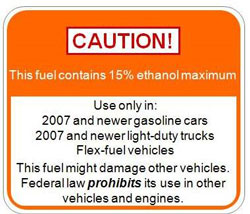
 The Environmental Protection Agency has released its proposed design for the label on fuel pumps that would dispense E15, or 15 percent ethanol, as promised under the fragmented ruling issued last week allowing the fuel mix in only vehicles of model year 2007 and newer. EPA must now solicit comment on the proposed label for 60 days before it can issue a final label.
“The RFA will certainly have some comments,” said Renewable Fuels Association president Bob Dinneen on the organization’s E-xchange Blog. “Since EPA has chosen the most confusing of options for E15 implementation, ensuring the label is clear, factual and non-threatening will be critical. The industry has worked for a long time to remove confusing and alarming labels from pumps, and the RFA will engage vigorously with EPA to create a label that does not unnecessarily deter motorists from choosing E15. The label is meant to instruct consumers on how to the use the fuel, not frighten them away from doing so.”
 Meanwhile, Dinneen says the industry is working together on the technical issues to make this limited introduction of the ethanol blend as smooth as possible. “First, working with Growth Energy, the RFA has begun the health effects testing and fuel registration process that must be conducted for any new fuel,” he said. “This testing is required to determine if any new chemical species in evaporative and combustion emissions are created as a result of increased ethanol content. We do not believe this will be the case and early testing is confirming that belief.”
Other issues that need to be addressed include testing on dispensing equipment; changes to state laws to allow for the use of E15; and completion of the fuels registration process by industry.
 Heavy rains, nearly 60 percent higher than average for the month, hampered cane crushing for second consecutive two-week period, but reportedly favored ethanol production in the South-Central Brazil region. UNICA Technical Director Antonio de Padua Rodrigues says they are experiencing “another exceptional year” in terms of weather conditions. “From April to early September, the amount of rain was well below the historic average, reducing the availability of cane. Already in September, especially at the end of the month, rainfall returned with greater intensity than expected, hampering the harvest and, more importantly, reducing the quality of cane that will be crushed in October,” he said, adding that these factors should impact the overall production of sugar and ethanol at the end of the harvest.
 According to a
  The commercial potential of cellulosic ethanol in Brazil is substantial due to the great amount of sugarcane bagasse, a fibrous residue of sugarcane production, available in the country. Brazil is the world’s largest sugarcane producer with an extraction capacity of approximately 600 million tons per year, currently yielding 27 billion liters (7 billion gallons) of ethanol. It is estimated that bagasse-to-ethanol technology can increase the country’s ethanol production by some 40% without having to increase the crop area.
 Perdue BioEnergy has partnered with Bionol Clearfield, a subsidiary of
 The fuel will be provided to NASCAR by