ACE Conference 2026

Raptor Opens Florida’s Newest Biodiesel Plant

John Davis

No, it’s not a scene from Jurassic Park where the dinosaurs become environmentally conscious, but rather, a company that Raptor Technology Group, Inc. is in the process of acquiring has started up a new biodiesel plant.

This company press release
says Raptor Fabrication and Equipment, Inc. got the first batch of ASTM certified biodiesel and will now begin its commercial production of biodiesel fuel at Fort Lauderdale-based Greenwave Biodiesel’s 3.6 million-gallon-a-year refinery, using Raptor’s mid-sized, multi-feedstock production system:

“The Greenwave plant is our first launch of the new year and we have introduced exciting new remote monitoring technology in the plant giving us the ability to monitor production and diagnose any problems increasing overall production and customer satisfaction,” said Tom Gleason, President and CEO of Raptor Fabrication and Equipment. “With the reinstatement of the federal biodiesel tax-credit and facilities we currently have in production for customers, 2011 is expected to be a strong year for Raptor,” added Gleason.

Biodiesel

Latest Poll Shows Mixed Response On Biofuels Policy

Chuck Zimmerman

It should be an interesting year in the biofuels debate. The response to our latest poll shows some pretty divided results which might make it interesting to see how Congress handles things after hearing from their constituents. In answer to the question “What do you think will happen with biofuels policy this year?” Our results are that 38% say there will be another one year extension of the tax incentive, 22% say there will be new incentives for infrastructure, 20% say there will be no federal biofuels incentives, 14% say there will be a multiple year extension and 6% chose other. If you chose other then feel free to comment with what you think will happen.

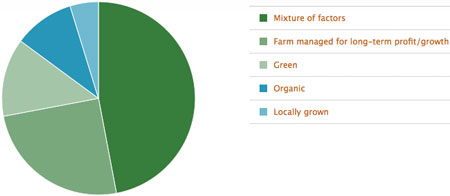
Our next ZimmPoll is now live and asks the question, “What do you think about the number of farm groups? Let us know what you think and thank you for participating.

ZimmPoll is sponsored by Rhea+Kaiser, a full-service advertising/public relations agency.

ZimmPoll

Biodiesel Board to Hold Symposium with Ford & GM

John Davis

The National Biodiesel Board, along with auto industry partners Ford Motor Company and General Motors, will be holding a symposium at the North American International Auto Show (NAIAS) in Detroit on Wednesday, January 12th from 2:00 – 3:30 p.m. in Cobo Center’s Michigan Hall.

This NBB press release says the biodiesel symposium, entitled “Biodiesel: Powerful Fuel, Promising Future,” will highlight how biodiesel is and will be used to power “vehicles in a cleaner, greener, more sustainable manner”:

“We are extremely pleased to have this opportunity to feature biodiesel as America’s first Advanced Biofuel to the global automotive industry,” said Joe Jobe, CEO of the National Biodiesel Board. “The U.S. Renewable Fuel Standard (RFS-2) established realistic goals of supplementing the nation’s fuel supply with advanced biofuels which reduce lifecycle carbon by more than 50 percent. Biodiesel is the first advanced biofuel to reach commercial scale production in North America, and it reduces direct lifecycle carbon by more than 80 percent. Biodiesel is thus very well-positioned to help the nation meet its immediate and long-term advanced biofuel goals.”

As part of the biodiesel symposium, General Motors and Ford are presenting information on their new 2011 diesel vehicles, which are all fully approved for use with B20 biodiesel blends (20 percent biodiesel blended with 80 percent petroleum diesel). General Motors extends B20 approval to its full diesel line-up, which includes the Chevy Silverado and GMC Sierra pick-ups, as well as the Chevy Express and GMC Savana cargo vans. Ford supports the use of B20 on its full line of 2011 Ford Super Duty diesel trucks.

Jim Michon, Truck Fleet Marketing Manager for Ford Motor Company, said, “Many of our fleet customers are very conscious of the environment, and had been asking us for a truck approved for use with B20 biodiesel. In the process of developing our all-new Ford-designed, Ford-built 2011 Super Duty truck, we thoroughly tested B20 in our new engine under the harshest of conditions. B20 proved itself to provide the same fuel economy, power and performance our customers expect of our high performance diesels – there are no trade-offs for using B20”.

Biodiesel, Car Makers, NBB

New California Center to Focus on Jatropha Biodiesel

John Davis

A new center in California will focus on turning jatropha into biodiesel.

Global Clean Energy Holdings has established a new non-profit research organization called the Center for Sustainable Energy Farming:

Research at the Center will be focused on increasing agricultural production; creating a sustainable feedstock supply; reducing inputs including the use of fossil fuel, pesticides, water and fertilizer, and developing new and sustainable biofuels. In furtherance of the P3 (People, Planet, & Profit) concept, the Center’s work will strive to improve the quality of life of the farming communities, and preserve and renew the environment through the application of plant
science and biotechnology, while generating sustainable profits for the farmers and other stakeholders.

Dr. Mark Guiltinan, Professor of Plant Molecular Biology and Director of the Plant Science Center at the Huck Institute of Life Sciences at The Pennsylvania State University, will serve as the Center’s Chief Scientific Officer. “It is our vision that this Center will help facilitate the development of industry and scientific partnerships, and provide a common research platform from which a new generation of sustainable biofuels can be produced,” Guiltinan remarked.

“To develop truly sustainable biofuel feedstock production systems, it will take the coordinated efforts of scientists with expertise in a wide array of interdisciplinary fields such as plant genetics and breeding, entomology, soil sciences, agronomy, plant pathology, environmental and social sciences as well as agricultural technologies.” Initially, the Center will focus on Jatropha curcas as a feedstock species for the development of the model bioenergy farms of the future. “Jatropha is of particular interest for its high quality oil and suitability for production of renewable fuels, and it holds a tremendous potential for future improvements,” said Dr. Guiltinan. “This could be one of the first crops domesticated and improved using the techniques and tools of modern genomics.”

The center hopes to triple jatropha yields in the next 10 years, while reducing the amount of inputs to grow it.

Biodiesel

“For the Good of the Land” Co. Gets Biofuels Contract

John Davis

A company whose name means “for the good of the land” has landed a contract from Hawaiian Electric Company to provide sustainable biofuels for the utility.

This press release says ‘Āina Koa Pono will partner with HEC to help the state reach its clean energy goal of meeting 70 percent of its electricity and ground transportation needs from clean, renewable energy sources by 2030 by building a 13,000 acre energy farm able to produce biofuels in the next two years:

“The time has come to take a bold step toward establishing a self-sustaining energy future for our state and we are excited and honored to be selected by Hawaiian Electric Company to produce biofuels for Hawai‘i,” said Dr. Melvin H. Chiogioji [co-founder of Āina Koa Pono]. “This partnership is critical in helping Hawai‘i reduce its reliance on imported fossil fuels and expand our state’s green energy initiative.”

“We are very pleased to award this first contract as a result of our request for proposals for locally grown and processed biofuels to be used in our power plants on Hawaii Island, Oahu and in Maui County,” said Hawaiian Electric Executive Vice President Robbie Alm. “We look forward to a long and productive partnership.”

‘Āina Koa Pono will invest approximately $320 million in the Ka‘ū Energy Farm, to cover the costs of building a cutting-edge processing facility as well as planting and harvesting biofeedstocks including sweet sorghum and eucalyptus. The Ka‘ū Energy Farm will be located on private land under long-term lease agreements with the Olson Trust and the Mallick family.

When completed, the energy farm will produce 16 million gallons of biofuels a year.

biofuels, biomass

Farm Bureau Supports Change in Biofuels Policy

Cindy Zimmerman

AFBF Annual MeetingThe American Farm Bureau Federation is supporting a new direction in biofuels policy away from the blenders tax credit and toward increasing infrastructure.

“The whole discussion has been evolving within the industry and within the Congress,” said AFBF President Bob Stallman during a press conference following the conclusion of the organization’s 92nd annual meeting. “It doesn’t surprise me that that showed up in our policy this year and our members have said it’s a good idea for us to make that transition.”

AFBF Annual Meeting“Part of that is the recognition that maybe that blend credit isn’t serving as good a purpose as it could and the fact that it is a pot of money that may be subject to budget reductions and if we could shift that to infrastructure you can make the case that its a better use of public funds,” Stallman added.

The voting delegates of the nation’s largest general farm organization also adopted urged Congress to “pursue vigorous oversight” of the Environmental Protection Agency.

In approving the “sense of the delegate body” resolution, the delegates said “congressional action is necessary to restore common sense to environmental regulation on our farms.” EPA, they said, is limiting the use of private property, “encroaching on state land use and water quality planning efforts,” and impeding economic growth.

To change those regulatory trends, the delegates urged Congress to assess the impact EPA’s actions have had on agriculture, conduct a “critical examination of how the agency uses science,” and “determine an adequate budget for necessary agency activities.”

The resolution also asked lawmakers to consider legislation to “halt” EPA’s regulation of greenhouse gases.

Biodiesel, biofuels, Ethanol, Ethanol News, Farm Bureau

Online Briefing: “Roadmap to Bankability”

Joanna Schroeder

AltaTerra Research is hosting an online briefing aimed at the renewable energy industry, particularly, the solar industry, to help them learn how to obtain financing. “Roadmap to Bankability: A Discussion with Matt Cheney on Getting New Technology Financed & Deployed” will be held Thursday, February 3 at 11:00 am Pacific / 2:00 pm Eastern. Matt Cheney is the founder of Renewable Ventures and the CEO of CleanPath Ventures.

Project financing, also known as “bankability” is a critical issue facing the renewable energy industry today. The ability to successfully navigate your company through the paths to funding and onto commercialization is the key for new and improved technologies survive in the marketplace. Without access to private capital, the renewable energy industry will struggle to survive.

“Matt Cheney is a solar luminary and financing expert, who was the first to finance many emerging solar technologies in America. As the founder and former CEO of Renewable Ventures, Matt has financed, owned, and operated more than $300 million in solar assets,” said Jon Guice, managing director of research at AltaTerra Research and moderator of the online briefing. “We are excited to have Matt share his insights on how bankability is affecting the renewable and solar industries and discuss some potential solutions.”

During the online briefing, Cheney will discuss the challenges of project financing and commercialization for emerging and established renewable energy innovations. He will offer practical solutions for how companies are solving the bankability problem, including an exploration of innovative finance mechanisms, and he will focus on how bankability affects customers and investors in innovative technology solutions. In addition, the session will cover the broader issue of how bankability affects the commercialization of new, improved and emerging technologies.

Registration is now open for the live online briefing, and for post-event access.

Education, Solar, Wind

Available Land Could Produce 1/2 World’s Fuel

Joanna Schroeder

According to a new paper published in the journal Environmental Science and Technology,Land Availability for Biofuel Production,” authored by researchers from the University of Illinois, using detailed land analysis, biofuel crops cultivated on available land could produce up to half of the world’s current fuel consumption. This could be done, the researchers say, without negatively affecting food crops or pastureland.

The study was led by civil and environmental engineering professor Ximing Cai who identified land around the globe available to produce grass crops for biofuels, with minimal impact on agriculture or the environment. Cai noted going into the study that prior research concentrated on biofuel crop viability focused on biomass yield or how productive a crop could be regionally; yet, there was little research on land availability, a key constraint of biofuel development. He also noted that there is major concern as to whether, on a global scale, biofuels can meet fuel demand without compromising food production.

“The questions we’re trying to address are, what kind of land could be used for biofuel crops? “If we have land, where is it, and what is the current land cover?” said Cai.

For this particular study, Cai’s team assessed land availability from a physical perspective – focusing on soil properties, soil quality, land slope, and regional climate. The researchers collected data on soil, topography, climate and current land use from some of the best data sources available, including remote sensing maps but the point of differentiation of this research was that the study only considered marking land for biofuel crops. By doing this, current crop land, pasture land and forests were ruled out as viable land options for biofuel production. In addition, the research team ruled out any land that must be irrigated, thus eliminating concerns over the need to divert water from agriculture crops.Read More

biofuels, food and fuel, Indirect Land Use, Research

“Man Caves” Propane Van Featured At Home Builder’s Show

Joanna Schroeder

The “Man Caves” liquid propane-autogas powered Ford E350 van is being featured at the National Association of Home Builder’s International Builders Show January 12-15 in Orlando, Florida. The ROUSH CleanTech’s utlity van is featured on the DIY Network television show “Man Caves” and will be used in a least three upcoming episodes of the TV series.

“We’re thrilled that ‘Man Caves’ has added a ROUSH CleanTech propane-autogas van with a Knapheide Utility Vehicle (KUV) body organized with Sortimo solutions,” said Chris Weiss, vice president of engineering at Knapheide. “This van, a virtual workshop on wheels, shows that ‘green’ can be sustainable and productive.”

During the home builders show, a professional speaker will provide commentary for the attendees in Ford’s booth and regale them about the latest features and benefits of this “Man Caves” propane utility van. Some new features include Ford Work Solution’s in-dash computer and the ROUSH CleanTech liquid propane-autogas fuel system.

“This van promises to boost any builder’s bottom line with lower fuel costs and reduced maintenance costs,” said ROUSH CleanTech President Joe Thompson, who will be in the Ford booth to answer any and all questions. “Propane autogas is not only environmentally friendly, but it has a tough side that lives and breathes durability, dependability, and economic feasibility.”

According to ROUSH CleanTech, propane autogas is the most widely used alternative fuel on roads today in the United States, fueling over 270,000 vehicles, and globally, more than 13 million vehicles. In addition, there are nearly 56,000 miles of pipeline that transport propane, more than 6,000 retail dealer locations, and thousands of propane autogas fueling stations across the U.S.

“Propane autogas powered vehicles are the smart choice for businesses aiming to meet air quality standards without taking a hit in the pocket,” said Thompson. “Beyond proven ‘green’ benefits, this fuel makes sense for business by reducing our country’s dependence on foreign oil and boosting profits. And historically, propane autogas costs 30 to 40 percent less than gasoline.”

The “Man Caves” utility van features Knapheide’s KUV service body, Sortimo boxes, cases and accessories, adjustable shelves and dividers for easy reconfiguration depending on the project requirements, a cargo compartment with retention poles to hold sheet material and other over-sized parts and pieces, and a bed slide to help load and unload heavy equipment. The in-dash computer system features a computer screen and wireless keyboard, allowing the driver to function as though from an office.

Propane

POET Fuels EcoTrek Tour

Cindy Zimmerman

Cellulosic ethanol from the nation’s largest ethanol producer is powering a cross country road trip of the non-profit EcoTrek Foundation to showcase renewable fuels and educate the public about environmental issues.

The cellulosic ethanol made from corn cobs and stover will be provided by POET, which has a pilot plant in Scotland, S.D. that has produced cellulosic ethanol for more than two years and tests equipment for commercial use at Project LIBERTY, POET’s planned 25 million-gallon-per-year cellulosic ethanol plant, which will be built in Emmetsburg, Iowa.

The EcoTrek “Best of America Tour” started today at the Santa Monica pier (the start of Historic Route 66) and will travel to cities on the East Coast, including Washington, D.C., and New York with stops in-between at national parks, farms, cities and other venues. Driver and EcoTrek founder Tom Holm will demonstrate how a renewable, American-made fuel can green our nation’s transportation system.

“We’re taking a regular American-made pickup truck, outfitting it with American-made accessories and powering it with American-made biofuels in order to emphasize our ability to be gentler to the environment, while bolstering American’s economy, national security and independence from foreign oil,” Holm said. “My hope is that the use of clean biofuels made here at home will begin to minimize our sacrifices and lead to a more prosperous America admired for the innovations for which Americans are noted.”

Holm will work to spread the message about renewable fuel at every stop on his trip, including visiting farms and refineries that produce cellulosic ethanol in South Dakota and Iowa. The tour concludes March 11 on the pier at Santa Monica.

Cellulosic, Ethanol, POET