DF Cast: Study Shows E15 OK in Older Vehicles

John Davis

The Environmental Protection Agency (EPA) has given the green light for E15 ethanol to be used in vehicle years 2001-2007. But what about older cars and trucks?

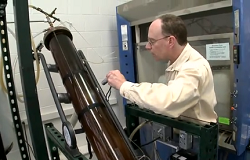
In this edition of the Domestic Fuel Cast, we listen in to part of the presentation by Ricardo, an internationally recognized automotive and engineering firm, at the Iowa Renewable Fuels Summit, where the company made the case that E15 is OK for vehicles made between 1994 and 2000.

We hear from Ricardo’s Rod Beazley, who explains why they looked at this group of cars and trucks, the challenges involved in the testing, and why the fuel tanks were actually more likely to corrode from the outside and not from the E15 on the inside (the picture on the right is quite telling).

It’s an interesting presentation, and you can see the slide show here and hear what Beazley has to say here: Domestic Fuel Cast

You can also subscribe to the DomesticFuel Cast here.:

Audio, conferences, Domestic Fuel Cast, Ethanol, Ethanol News, News

NASCAR Season Kicks Off With Ethanol

Joanna Schroeder

Although ethanol’s “driver” Clint Bowyer didn’t win the Daytona 500 this weekend, ethanol scored a victory as the “The Great American Race” this past Sunday was the first time all the cars raced using Sunoco Green E15. There were more than 120,000 fans at the race and millions of fans watched the action on TV and witnessed the ethanol partnership between NASCAR and the National Corn Growers Association and Growth Energy.

“This is just the beginning of the racing season, and NASCAR’s 75 million race fans will see the benefits of an ethanol blend for more power and less emissions,” said NCGA President Bart Schott, on hand for the race in Daytona Beach, Fla., with growers and others for an up-close look at how a NASCAR race operates. “This has been a great experience for us to learn more about NASCAR’s drivers, staff and fans and to help spread the word about ethanol.”

American-Ethanol-sponsored driver Clint Bowyer, driver of the #33 Chevrolet, performed well this weekend, winning a pole position for Saturday’s Drive4COPD 300 race and coming in second, and scoring the sixth starting position for the Daytona 500 on Sunday. Bowyer led that premier event 11 times for 31 laps and then finished 17th, after a massive pileup only four laps before the end of the race.

During the Daytona 500, race fans were provided miniature American Ethanol green flags to wave at the start of the race and take home. In addition, NASCAR aired a minute-long spot during the Fox broadcast focused on the farm connection to ethanol. In addition, ethanol is branded on the track: ethanol logos encircle the fuel ports of all race cars. The NASCAR American Ethanol partnership also involves a multi-year agreement through which American Ethanol will sponsor a new award each race and be featured on-site for race days.

“This showcase of ethanol will really help us educate Americans about the value of a domestic, renewable fuel blend that creates jobs, provides energy independence and helps clear the air,” Schott said. “NASCAR’s endorsement of ethanol is an important one because they appreciate the value of good fuel for their machines.”

While you will be able to see ethanol on track in all three NASCAR series throughout the 2011 season, American Ethanol will be the primary sponsor of the No. 33 Chevrolet car at the Kansas Speedway 400 on June 5, and an associate sponsor of the car for the rest of the season.

American Ethanol, Ethanol, Growth Energy, NASCAR, NCGA, Racing

Corn Forecast Bright for Ethanol

Cindy Zimmerman

2011 ethanol conferenceCorn stocks may be a little tight right now, but National Corn Growers Association CEO Rick Tolman thinks that is probably a short term situation

“Still our biggest challenge is that we can overproduce the market,” Tolman said during an interview after a presentation at the National Ethanol Conference on Monday. “Farmers respond to incentives, there’s an incentive right now to produce. I can guarantee we’ll have a big crop in 2011.”

Tolman makes that confident prediction after an informal survey of the NCGA farmer board members, who are mostly ahead of the game right now as far as being ready for spring planting, compared to where they were a year ago. “We had a great fall, farmers got their crop out of the field, they did their fall tillage, they did their application of inputs. We’re coming into the season in about as perfect a condition as you can have,” he said, adding that odds favor significant yields in 2011 and a larger carryover in 2012.

Tolman says NCGA is in the midst of a study commissioned by Informa Economics to look out to 2020 with different scenarios, including one in which there would be 20 billion gallons of corn ethanol produced. “The key point here is, even under a 20 billion gallon scenario, we see stocks continuing to grow because of this productivity equation,” Tolman said during his presentation.

Listen to or download my interview with Rick Tolman here: Rick Tolman Interview

Listen to or download Tolman’s presentation: Rick Tolman NEC Presentation

2011 National Ethanol Conference Photo Album

Audio, corn, Ethanol, Ethanol News, National Ethanol Conference, NCGA, RFA

Green Floyd Debuts New Ethanol Song

Cindy Zimmerman

2011 ethanol conferenceA gorgeous desert sunset provided the perfect backdrop for the National Ethanol Conference networking reception Monday night, featuring the ethanol industry’s own “Green Floyd.”

The Green Floyd band is made up of Frontline Bioenergy CEO Bill Lee, Neil and Tom Koehler with Pacific Ethanol and Paul Kamp with Inbicon. The group played a variety of songs from blues to folk to rock, and entertained with a couple of original parodies designed with the ethanol audience in mind. Here’s some of the lyrics to their latest Pink Floyd parody to the tune of “Wish You Were Here” – and a short video clip to enjoy.

Hey, so you think you can tell,
Heaven from Hell
Blue skies from rain?
Can you tell a Corn field from a Tar Sand Hell,
a Seed from a Drill – Do you think you can tell?

Ethanol, Ethanol News, National Ethanol Conference, RFA, Video

Future of Ethanol Tax Policy

Cindy Zimmerman

2011 ethanol conferenceThe most important issue facing the ethanol industry this year on a policy level is the future of biofuels tax policy when the Volumetric Ethanol Excise Tax Credit (VEETC) expires at the end of this year.

Several experts in tax policy and economics took the stage during the general session of the 2011 National Ethanol Conference Monday to tackle that issue They included U.S. Senate Finance Committee tax counsel Ryan Abraham, economic consultant David DeRamus with Bates White, Iowa State professor Bruce Babcock and Purdue University professor Wally Tyner. The panel was moderated by Renewable Fuels Association VP of Research Geoff Cooper.

2011 ethanol conferenceBabcock tackled the challenge of how the industry might better sell the VEETC to a budget-conscious Congress. He suggested looking at the way the federal sugar program has survived for decades by positioning itself as a “no-cost” program.

“The sugar program has been around forever, and the same groups that are lined up against ethanol have been lining up against the sugar program and they’ve been completely ineffective in getting rid of that program,” Babcock said. “So, the first alternative in terms of VEETC is to make it a no-cost program.”

Babcock explained how the sugar program operates by using import quotas to control supply and places assessments on excess sugar to pay for storage. “The analogy for the ethanol industry would be to use domestic consumption quotas, rather than import quotas to put a floor under demand,” he said. “The sugar alternative would simply be to rely on the RFS for conventional biofuels.”

Interesting concept and you can listen to or download Babcock’s comments here: Bruce Babcock at NEC

2011 National Ethanol Conference Photo Album

Audio, biofuels, Ethanol, Ethanol News, RFA

Updated Algae 2020 Study Released

Joanna Schroeder

In a market research report released today, Algae 2020, Vol. 2, Emerging Markets Online highlights why some algae companies will be winners and some will be losers bringing their product from pilot to commercial scale from 2011-2020. The report concluded that of all the current algae production companies, R&D ventures and public-private partnerships currently in play, less than a dozen will graduate into pre-commercial, deployment-stage algae ventures using pond, photo-bioreactor and fermentation based production systems.

“For the Algae 2020 study, I did my research the old fashioned way, where you conduct an on site visit, you kick the tires, and you say I understand you’re producing algae and you have a pilot project. Show me,” said Thurmond. “While I was on site I conducted interviews with CEOs and various staff scientists, took pictures, analyzed the data, and determined three common strategies of companies that are attracting investment capital and scaling up.” Thurmond interviewed more than 200 algae related companies and visited 30 in person.

The study found three key strategies that determine which companies will attract capital and scale up their enterprises while others will be perpetually stuck in the laboratory or garage, many never even scaling up to small, test-pilot phase.

Strategy #1: Algae Long-Term Winners Focus on Drop-In Fuels and Biofuels. Thurmond notes there are about a dozen leading algae companies that have successfully progressed into pilot and demonstration scale projects. Why? In addition to being able to produce either ethanol or biodiesel, these organizations are also able to produce drop-in replacement fuels like biojet and renewable diesel that are in high demand today by various industries including oil and gas, aviation, petrochemical, and the U.S. military.

Strategy #2 Algae Short-Term Winners Target Diversified Markets. Algae 2020 discovered that most winning algae producers are diversifying their short-term focus on high-value products including: omega 3s, health products, cosmetic, pharmaceutical, and specialty chemical uses, and some mid-value markets like livestock and fish meal, renewable chemicals. This allows a company to bring in revenue to pay the bills and establish brand identity while scaling up their operations over time to commercial scale biofuel production.

Strategy # 3 Algae Winners Bring Together R&D Labs, Universities and Public-Private Partnerships. According to Thurmond, the third key finding from Algae 2020 study: among R&D and start-up related algae projects, the winners attracting government grants, funds, or private funds share the following in common. These winners bring together “collaborative clusters” of research labs, industry, government, academia, cleantech investors, and producers to share and collaborate on key technology challenges and market demand-based opportunities.

The report concludes that if algae companies and R&D ventures engage in the above strategies, as detailed in the Algae 2020 study, they are more likely to attract the needed investment dollars, and ultimately more likely to scale up from the R&D stage to demonstration and commercial scale, thus becoming an algae winner rather than an algae loser.

You can listen to my full interview with Will here: Interview with Will Thurmond, Author Algae 2020, Vol. 2

algae, Audio, Biodiesel, Research

Matalin and Carville Visit Ethanol Conference

Chuck Zimmerman

2011 ethanol conferenceAmerica’s most well-known political odd couple were the keynote speakers for the National Ethanol Conference luncheon on Monday.

James Carville and Mary Matalin gave their opposite views of the political landscape to a crowd of about 1300 ethanol supporters from around the country.

The couple are pictured here with Renewable Fuels Association chairman Chuck Woodside and RFA CEO Bob Dinneen.

Keep checking the photo album for more pictures!

2011 National Ethanol Conference Photo Album

Ethanol, Ethanol News, National Ethanol Conference, RFA

Celebrating 30 Years of Ethanol Advocacy

Cindy Zimmerman

There are some 1300 ethanol industry leaders gathered this week in Phoenix to celebrate 30 years of advocating for ethanol at the 2011 National Ethanol Conference.

2011 ethanol conferenceChuck Woodside, General Manager of farmer-owned KAAPA Ethanol in Minden, Nebraska is the current chairman of the Renewable Fuels Association (RFA). “I am fortunate to follow in the footsteps of great leaders in this industry that have helped shape the role and place of ethanol in America’s energy, economic and environmental future,” he said, noting that RFA has been present at every major turning point for ethanol over the past 30 years.

It was Woodside’s pleasure to recognize one of the pioneers of the ethanol industry as the recipient of the 2011 RFA Membership Award. Ron Miller was one of the founders of the RFA and served as chairman of RFA three times. “We’ve been successful because we as an industry have spoken with one voice,” he said. “Back in 1981, we were like a gnat buzzing around an 800 pound gorilla. Today, the 800 pound gorilla is still there, but we’re about an 80 pound gorilla and he’s taking us seriously.”

Pictured from left to right are Chuck Woodside, Ron Miller and RFA CEO Bob Dinneen

Listen to or download comments from Woodside and Miller here: Opening of National Ethanol Conference

2011 National Ethanol Conference Photo Album

Ethanol, Ethanol News, National Ethanol Conference, RFA

2011 State of the Ethanol Industry

Cindy Zimmerman

Bob Dinneen at 2011 NECThe Renewable Fuels Association (RFA) is celebrating 30 years of advocating for the ethanol industry, and while the industry has come a long way since that time, some things never change.

Giving the “State of the Ethanol Industry” address to some 1300 attendees at the National Ethanol Conference, RFA president and CEO Bob Dinneen started off quoting the organization’s first president, Dave Hallberg, in 1981 that sounded like it could have been written today. “Dave went on to cite the inimitable comic strip character Pogo, “We are faced with insurmountable opportunities,” concluding with a familiar sense of optimism that they would be realized,” Dinneen said, adding that, “This industry can and will meet today’s challenges as it has met every ‘insurmountable opportunity’ of the past, and that we will, once again prevail.”

Bob Dinneen at 2011 NECDinneen addressed the pivotal changes facing the ethanol industry, starting with expiration of the Volumetric Ethanol Excise Tax Credit (VEETC) at the end of this year and the potential for complete reform of federal ethanol policy. “Congress does appear ready to end the ethanol tax incentive program, however. At least, end it in its current form and cost. Our industry needs to work with Congress and the Administration to reform the tax incentive moving forward.”

“One way or another, change is coming to this industry,” Dinneen concluded. “We need to do what the RFA has done for 30 years – build bridges. We need to build a bridge wide enough for the entire biofuels industry to cross to a more sustainable energy future. We need to build a bridge to our customers and consumers so the road to increased ethanol use is paved with understanding. We need to build a bridge to lawmakers so that we end up with a motor fuel policy befitting a 21st century energy industry. And we need to stride confidently across this bridge with enough vision, strength and innovation to conquer the insurmountable opportunities of our time.”

Listen to or download Dinneen’s remarks here: Bob Dinneen - 2011State of the Ethanol Industry

2011 National Ethanol Conference Photo Album

Audio, biofuels, Ethanol, Ethanol News, National Ethanol Conference, RFA

Live Feed of State of Ethanol Industry

Chuck Zimmerman

Good morning from Phoenix, AZ and the National Ethanol Conference. We’re going to stream the opening remarks and state of the industry speech for you starting at 8am MST. On the stage will be Renewable Fuels Association Chairman, Chuck Woodside and President/CEO Bob Dinneen. After their remarks I’ll post the audio and recorded video for you as soon as I can.

So, feel free to send a link to this post to your friends and neighbors who are interested in ethanol for a look at what’s ahead for the industry. Just click on the player below to begin the feed.

Post Update: Here’s the recorded version of our live feed from this morning.

2011 National Ethanol Conference Photo Album

Audio, Ethanol, Ethanol News, National Ethanol Conference, RFA, Video