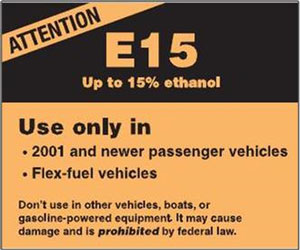
RFA E-15 Ad

Kenya to Construct Largest Geothermal Plant in Africa

Joanna Schroeder

In my latest book review, Energy, Convenient Solutions, author Howard Johnson predicts that geothermal energy will play the biggest role in our energy future. Maybe because I’m now paying more attention to geothermal energy, it seems that some pretty significant geothermal projects have been announced recently. For example, Kenya has unveiled its plans to build the largest geothermal power plant in Africa. The plant, once operational, would have the capacity to generate 2,000 megawatts (MW) per year.

The $3.4 billion Borgia-Silali geothermal project is under development by the Geothermal Development Company (GDC) who plans on building out the project in four phases. GDC believes this project is critical in helping to resolve Kenya’s “critical recurring energy crisis.” The first phase of the project will involve the construction of a plant that will generate 800 MW by 2017. Phase II, with a capacity of 400 MW, is expected to be completed by 2019, while Phase III and Phase IV, each with a capacity of 400 MW, are expected to be completed by 2021 and 2023 respectively.

GDC is a state-owned company and is currently finalizing investors for this portion of the project and are already taking bids for Phase 1, that entails the construction of eight 100 MW power plants in the Bogoria-Silali area.

This is not the only area Kenya is targeting for geothermal power. GDC is also building a 400 MW geothermal plant in the Menengai caldera field and the geothermal power plant in Olkaria is generating 280 MW per year. The country’s current energy demand peaks today around 1,200 MW and is projected to grow by 10 percent to at least 17,000 MW over the next 20 years. The country hopes to generate at least 5,000 MW of energy by 2030 through geothermal power although GDC has identified 14 high potential sites along the Rift Valley that could generate between 7,000 – 10,000 MW.

Electricity, Energy, Geothermal

Louisiana Moves Forward On Sugar-to-Ethanol Plant

Joanna Schroeder

Louisiana is one step closer to being the first state in the U.S. to boast a sugar-to-ethanol plant. The Louisiana Public Facilities Authority Board of Trustees has approved bonds worth up to $70 million to help build the plant in Lacassine. The plant is a project of Louisiana Green Fuels (LGF) and is 80 percent owned by Andino Energy and 20 percent owned by Lake Charles-area sugarcane farmers. The refinery will be built by a manufacturer based in India where the plant would be pre-built and shipped to Lake Charles in late summer and be in place before the next year’s cane harvest begins this October.

“Because of increasing oil prices and concerns over the environment, interest in the alternative fuel industry is growing,” said Thomas A. Antoon, chairman of the LPFA Board, in a press statement. “This new sugar-to-ethanol plant will move our state into the forefront of the growing alternative fuel production industry and should have a favorable economic impact on southwestern Louisiana.”

The sugar-to-ethanol plant will be sited near the Lake Charles Cane-Lacassine Syrup Mill that has been in operation since 2006. The ethanol plant will use syrup produced at this plant along with can molasses sourced from other sugar mills in the state to produce the fuel. LGF anticipates the ethanol will be sold to the city of Houston as well as the state, that both have ethanol mandates in place.

The bond approval is considered a preliminary approval for additional bonds and LGF says these bonds lend credibility to the company’s effort to court private investors. To date, Andino Energy along with a cooperative of Lake Charles farmers have spent nearly $40 million to buy land and secure contracts for sugarcane and sweet sorghum farmers. According to Alex Santacoloma, co-owner of Andino Energy, this is the reason the bonds are needed to help build the ethanol plant.

biofuels, Ethanol, feedstocks

Grain Production Not Keeping Up With Demand

Joanna Schroeder

According to Purdue University agricultural economist Chris Hurt, grain crops are being “gobbled up” faster than farmers can grow them. This could lead to trouble down the road if production doesn’t catch up. Hurt says there have been two major demands surges on commodities in the past five years. One is the rising use of corn for ethanol production being driven by biofuel mandates and high oil prices. The second is increased soybean purchases by China being driven by the country’s growing income and food demand.

“These greater levels of usage have placed a strain on the agricultural production system, resulting in low inventories that leave little room for any production shortfalls,” Hurt said. “Producers certainly have responded to try to meet those demands, but what we’ve seen is that demand has really outpaced the ability of the world to supply.”

Hurt said wheat stocks are in better shape than corn and soybeans that are near “bare minimums” in the U.S. In the past, he said there was enough for 46-60 days or more but anticipates that this won’t be the case after this fall’s harvest.

“With corn, it looks like we could be down to about a 24-day supply at the end of this marketing year,” said Hurt. “That, of course, means any further threats to the 2011 crop yields would send markets into deeper shortages and higher prices.”Read More

Agribusiness, biofuels, corn, Ethanol News, Soybeans

Scouting for Biofuels Crops in Indian Creek Watershed

Cindy Zimmerman

The Department of Energy’s Argonne National Laboratory is looking for the best biofuels crops to grow in the northeast Illinois Indian Creek Watershed.

CTIC TourDuring a recent field tour of the watershed sponsored by the Conservation Technology Information Center, Argonne agronomist Cristina Negri said they are looking at alternative crops that can efficiently use nitrogen to grow on marginal land in the area. According to Negri, the purpose of the Biomass Production and Nitrogen Recovery project is to “find a way to bring biofuels into the big conservation equation.”

Negri participated in the CTIC tour to learn more about the production practices being used by farmers in the watershed and also gave a presentation on the Argonne project: Cristina Negri Presentation

CTIC Indian Creek Watershed Project Field Tour Photos

Audio, biofuels, feedstocks, Government, Research

Texas Looks to Algae As Next Cash Crop

Joanna Schroeder

According to Texas AgriLife Research scientists in Corpus Christi, microalgae may be the next cash crop. There are an estimated 200,000 to 800,000 species of microscopic freshwater and marine microalgae, yet only 35,000 species have been described. Researchers around the globe are trying to discover the best algae species for producing biofuels.

“It’s a huge, untapped source of fuel, food, feed, pharmaceuticals and even pollution-busters,” said Dr. Carlos Fernandez, a crop physiologist at the Texas AgriLife Research and Extension Center at Corpus Christi. He is studying the physiological responses of microalgae to the environment.

Fernandez said researchers are only beginning to scratch the surface of discovering algae’s secrets. Yet he believes farmers will one day soon be growing microalgae on marginal land that won’t compete with fertile farmland or for fresh water. One of the secret’s that needs to be unlocked is how to most effectively grow algae. Therefore, Fernandez constructed a microalgae physiology laboratory to study how algae is affected by temperature, salinity, nutrients, light levels, and carbon dioxide.

“We have four bioreactors in which we grow microalgae to determine the basic physiological responses that affect its growth,” explained Fernandez. “We will then integrate these responses into a simulator model, a tool we can use in the management of larger, outdoor systems.”

The study is also looking to find algae that can produce large amounts of lipids or fats, that are converted to biofuels such as biodiesel or biojet fuel. In addition, the research team, that includes members from Texas AgriLife Mariculture labs in Flour Bluff, are looking at a residue that remains after the lipids are extracted as a source of animal feed. Finally, they will also evaluate algae as a source of fertilizer for soil.

Fermandez said Corpus Christi is the perfect place to conduct the research for several reasons including access to seawater to grow the microalgae, large acres of marginal land and lower evaporation rates than in arid areas so water requirements are reduced. In addition, he noted that local power plants and oil refineries are good CO2 sources and there is a good network of higher education institutions in the region.

algae, biofuels, Research

Grasses Better Option Than Corn for Biofuels

Joanna Schroeder

According to a new study from Colorado State University (CSU) in collaboration with the University of Illinois, using grasses to produce biofuels is a more economical and environmental better option than using corn. Led by CSU research scientist William Parton, his research team found using grass species, such as switchgrass, in the same land area as used to grow corn (the Midwest Corn Belt) could result in an increase in ethanol production, a decrease in nitrogen leaching (Dead Zone) and a reduction in greenhouse gas emissions.

Furthermore, the research concluded that replacing corn with perennial grasses could increase the productivity of food and fuel within the region without causing additional indirect land use changes. The study was published in the online version of Frontiers in Ecology and the Environment.

“Raising perennial biofuel crops on previously cultivated land in the United States will result in massive reductions in greenhouse gas fluxes from agricultural systems,” said Parton. “Growing perennial biofuel crops on low-production agricultural land can result in large environmental benefits such as improved air and water quality as well as increased ethanol production and sustained production of corn and soybeans.”

Parton said the research supports additional efforts in studying methods of producing ethanol from biomass crops, and despite the fact that biomass to ethanol is not currently economical, biomass crops have the potential to benefit the Corn Belt in ways corn cannot.

“We have found that perennial biofuel crop growth has the potential to reduce greenhouse gas fluxes and nitrogen leaching from agricultural systems while maintaining current food production for human consumption,” continued Parton. “Production of corn-based ethanol simply cannot compare to the 15 percent to 30 percent reduction in nitrogen leaching into the Gulf of Mexico when perennial crops are grown for ethanol production.”

biofuels, corn, Ethanol, Research

Dominican Republic To Build 2 Wind Farms

Joanna Schroeder

The Inter-American Development Bank (IDB) has approved two loans totaling $78.3 million to help build two wind farms in the Dominican Republic. Once completed, the renewable energy projects will combined provide 80.6 megawatts to the grid. The wind farms are being developed by private companies, and demonstrate the growing confidence in the Dominican energy sector. The Corporación Dominicana de Empresas Eléctricas Estatales (CDEEE) is one utility that will purchase the electricity produced from both wind farms through seperate 20-year power purchase agreements.

The first loan of $50.7 million was awarded to the Parques Eólicos del Caribe (PECASA) project, located in the southern province of Mote Cristi. The $127 million wind farm is under development by Gamesa, Grupo Delta Intur, Aquiles Mateo, and Miguel Ángel Muñiz. The project will consist of 25 Gamesa G90 turbines with a capacity of 2 megawatts each.

The second loan of $27.6 million was awarded to Grupo Eólico Dominicano, a company controlled by the Spanish group Inveravante. This $68.9 million project, located in Baní, part of the Peravia province, will be comprised of 17 Vestas V90 turbines, with a capacity of 1.8 megawatts each.

To support both projects, 138-kilovolt transmission lines will be constructed to connect the wind farms to the national grid. In addition, access roads will be built along with several new substations and control stations.

Electricity, Energy, Wind

DOE Unveils SUNPATH to Support Solar Growth

Joanna Schroeder

In February of this year, the U.S. Department of Energy (DOE) unveiled its SunShot Initiative designed to help reduce the costs associated with solar power by at least 75 percent by the end of the decade. This week, during the InterSolar North America conference, Minh Le, a principal scientist with the DOE, introduced SUNPATH – Scaling Up Nascent PV at Home. While the program details have not been specified, the program is intended to address the financial gap in the U.S. solar market.

Le said during his presentation that there is a trade gap caused by the country’s spending on foreign sources of energy – a move that is helping to prolong poor economic conditions. “Oil is about half our trade deficit,” Le said. He continued by saying transitioning to renewable energy will provide a means to resolve this problem.

The two programs are designed to work together. SunShot focuses on reduces the costs of solar technology while SUNPATH is aimed to grow the domestic solar manufacturing market. Today, the majority of solar manufacturing is taking place in countries such as Europe and Asia.

“SUNPATH is an incubator program,” Le said. “Now, as companies are being attracted by foreign capital, we’re having a hard time keeping them in the U.S.”

Fifteen years ago, the U.S. boasted a 43 percent market share for producing PV cells and modules. Today, the U.S. has only a 7 percent market share. As a result of the decline of the United State’s global solar position, the program hopes to create an investment-friendly environment in the U.S. It also hopes to encourage solar companies to keep their business in the U.S.

You can view photos from the InterSolar North America conference in my event photo album.

conferences, Electricity, Energy, Solar

AllianceGas Adds New Partners

Joanna Schroeder

Alliance AutoGas has added some new partners this month. Coast Transit Authority (CTA) of Gulfport, Mississippi has partnered with them to convert a portion of its public fleet to propane autogas. CTA is working with Alliance AutoGas to convert four Glaval buses to use propane. As part of the program, Alliance aids with conversions, providing on-site fueling and training.

“Going green is a big priority for Coast Transit Authority, and we feel government agencies should take the lead in introducing alternative fuels like autogas to the community,” said Executive Director Kevin Coggin. “Autogas was a smart choice for our fleet because there was no up-front cost for the fueling infrastructure, and we benefit greatly from the reduced greenhouse gas emissions and lower fuel prices.”

In addition, Nantucket Energy Corp has also partnered with Alliance AutoGas to help supply propane to community fleets. Nantucket Energy co-founder Philip Marks, III said they made the decision to offer propane in an effort to provide inexpensive, clean-burning fuels to meet community energy needs.

Alliance AutoGas says fleets running on autogas save more than $1 per gallon at the pump. They also say vehicles running on propane emit less emissions and require less maintenance. The company’s President Stuart Weidie said adding partners supports their mission to “make the most popular alternative fuel in the world available to more American fleets.”

Propane

Book Review – Energy, Convenient Solutions

Joanna Schroeder

I read an unusual book this week. “Energy, Convenient Solutions,” by Howard Johnson. The book was part Energy 101, part manifesto, part conspiracy theory. It began with a look at various forms of energy ranging from fossil-fuels to biofuels – to nuclear energy. From there, Johnson laid out his manifesto, per se, or his ideas on energy, our current state and what the future could or should look like. The end of the book reviewed factors that make it difficult to effect change as well as highlighted several “hate campaigns” that have been lobbied against big oil and nuclear energy.

Johnson says the real purpose of the book is to present many different ideas about the generation, transport and use of energy. “The study of these ideas and the efforts to make them into realities can result in excellent and viable solutions in years, instead of decades. Creative solutions are sure to be found that require few and inexpensive infrastructure changes and by using both new and existing technologies.”

Now, before I continue, some of you will accuse me of being in the pockets of Big Oil. I’m not. I’m simply reviewing the author’s book and the thoughts contained therein. What makes the diversity of energy books so compelling is the fact that each author has his or her own ideas, predictions and solutions.

Speaking of predictions, Johnson outlines a few in his book. First, he notes that the largest energy growth sector is expected to be in electricity and the largest growth product will be nuclear energy followed by geothermal. He believes there will be a decline in coal-fired power plants unless carbon sequestration technologies come a reality, and also believes wind and solar energy will require long-term substantial subsidies to compete, and even so, may never be cost competitive. In addition, he predicts hydropower will stay fairly stagnant due to environmental concerns and finally believes electric vehicles will dominate and vehicles fueled by liquids (such as gas or biofuels) will be phased out. Needless to say, like so many others, Johnson does not believe first generation biodiesel or ethanol is a solution but does have hope for things such as algae-based biofuels.Read More

biofuels, book reviews, Electric Vehicles, Energy, global warming, Nuclear Energy, Oil