

Two international organizations are recommending reform of fossil-fuel subsidies to improve the economy and the environment.
 An analysis by the International Energy Agency (IED) and the Organisation for Economic Co-operation and Development (OECD) found that governments and taxpayers spent about half a trillion dollars last year supporting the production and consumption of fossil fuels and that removing such subsidies would raise national revenues and reduce greenhouse-gas emissions.
 OECD and IEA say fossil fuel subsidies “create wasteful use of energy, contribute to price volatility by blurring market signals, encourage fuel smuggling and lower competitiveness of renewables and energy efficient technologies.”
The G20 leaders in 2009 agreed to phase out subsidies that “encourage wasteful consumption, reduce our energy security, impede investment in clean energy sources and undermine efforts to deal with the threat of climate change”. According to the IEA, since that agreement subsidies for fossil fuel globally have increased by $110 billion to $409 billion in 2010 and could reach $660 billion by 2020 despite the G20 countries commitment.
 “As we strive to develop alternatives to oil we must recognize that alternative fuels are not competing on a level playing field,” said Bliss Baker, spokesperson for the Global Renewable Fuels Alliance. “These massive multi-billion dollar crude oil subsidies completely outweigh current biofuel incentives and are a serious obstacle to the development of cleaner greener alternatives. Oil has a huge competitive advantage financed by global taxpayers.”
Baker notes that the G20 will meet in France next month and the issue of oil subsidies is on the agenda. “It is time for the G20 to show leadership and reverse this practice of never-ending subsidies to big oil,” Baker said. “It is time to move beyond crude oil and into a world with sustainable alternatives such as biofuels and other renewable forms of energy.”
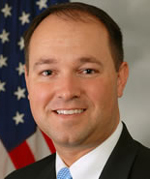
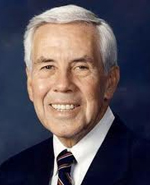 Senator Dick Lugar (R-IN) and Rep. Marlin Stutzman (R, IN-3rd) have
  In the energy section,
  The
The  The webinar will feature the very latest on biodiesel research from two university students who will present their biodiesel research, and USDA’s Dr. Michael Haas, who will provide an overview of his work with low value feedstocks and in new process development.
 Anne Steckel, vice president of federal affairs for the
  NEXCOM opened its sixth E85 station on a U.S. Navy base at Naval Air Station Pensacola this week. This facility will provide access to E85 fuel for the Navy’s fleet of FFVs as well as the general public.
 The
The  “We are pleased to work with Dow to create new advanced materials for the energy storage industry,” said Jeff Chamberlain, energy storage major initiatives leader for Argonne. “The goal of this collaboration will be to use our common scientific and technical capabilities to develop next generation energy storage materials that address the performance, cost and adoption challenges found in today’s emerging battery technologies.”
 The organizations were reacting to a bill introduced by Representatives Bob Goodlatte (R-VA) and Jim Costa (D-CA) that would reduce or eliminate the volumes of renewable fuel use required by the Renewable Fuels Standard (RFS) based upon corn stocks-to-use ratios.
  Chuck Woodside of KAAPA Ethanol in Minden, Nebraska was re-elected as Chairman of the Board. Also re-elected were Vice Chairman Neill McKinstray, Ethanol Division Vice President and General Manager, The Andersons, Inc.; Treasurer Randall J. Doyal, CEO of Al-Corn Clean Fuel in Claremont, Minnesota; Secretary Walter Wendland, CEO of Golden Grain Energy in Mason City, Iowa; and President Bob Dinneen.
 Speaking on behalf of the
  Officials with the