ACE Conference 2026

Ethanol Group Says Changing RFS is “Bad Policy”

Cindy Zimmerman

Legislation reportedly being drafted that would change the Renewable Fuels Standard would be a bad policy move, according to the Renewable Fuels Association (RFA).

Renewable Fuels Association LogoReuters reported this week that a bill is being drafted in the House that would “reduce the federal mandate to use fuel ethanol when corn supplies are tight” in an effort to keep livestock feed prices lower, according to a congressional staff member. Rep. Bob Goodlatte (R-VA) and Rep. Jim Costa (D-CA) are named as likely sponsors of the legislation.

“Seeking to relegislate the RFS in this manner would do nothing to address the concerns raised by the livestock constituents of Reps. Goodlatee and Costa,” said RFA President and CEO Bob Dinneen. “Research clearly demonstrates that implementing an RFS waiver trigger based on the stocks-to-use ratio will not have the effects on corn prices desired by livestock and poultry interests, nor will it mean more corn is immediately available for feed use. Rather than knee-jerk policy reactions, Congress should maintain the integrity of the RFS to help drive job creation and wean America from its addiction to foreign oil.”

Dinneen also cautioned that if this effort were to be successful, the loss of ethanol in the fuel supply lead to increased prices at the pump. “In fact, given the disproportionate impact on food pricing exerted by energy and fuel prices, raising gas prices by reducing ethanol use would exacerbate concerns with rising food prices,” said Dinneen. “This is simply the wrong policy to address corn supply concerns.”

Ethanol, Ethanol News, RFA

Re-Opened Biodiesel Plant is a “Jewel”

Cindy Zimmerman

The Renewable Energy Group (REG) just hated to see the 30 million gallon capacity biodiesel plant standing idle near Albert Lea, Minnesota for the past three years, so the company decided to do something about it.

“It’s a great plant that needed to run,” Brad Albin, REG Vice President of Manufacturing, said at the plant’s re-opening on Monday. “It had no where to go but was a jewel just sitting here ready to run.”

REG originally built the plant in 2005 for SoyMor, which ran it for three years before shutting down in 2008. “We’re very lucky to have brought this plant up within about four weeks,” said Albin. “It was actually the largest 30 million gallon plant years ago and what’s great about it is that it’s highly efficient and we’ve already got it up to just about 90% throughput.”

Since Minnesota has a state requirement for biodiesel blends, Albin says it was important to get the plant back on line. “Minnesota is a great user of biodiesel so it was just natural that we build it, we’d run it, get back and get it going again,” he said of the plant which uses soybean oil as its primary feedstock.

Listen to or download interview with Brad Albin here. REG VP Brad Albin

REG Albert Lea Biodiesel Plant Photo Album

Audio, Biodiesel, REG, Soybeans

Sheriff Uses Drug Money for Propane Fueled Cruisers

Cindy Zimmerman

Confiscated drug money is helping to clean up the community of Iredell County, North Carolina by putting propane-fueled law enforcement vehicles on the road.

Iredell County Sheriff Phillip Redmond recently had 13 Ford Crown Victoria cruisers converted to run on propane autogas using money confiscated from illegal drug activity.
“We put dirty money to good use by re-purposing seized assets from our drug interdiction program to match grant funding for the autogas conversions,” says Sheriff Redmond, pictured here preparing to fill up one of the converted cruisers at a propane autogas pump.

Nationwide network Alliance AutoGas provided the conversions and autogas fueling infrastructure. The autogas conversions are estimated to save the county about 40 percent in fuel costs, in addition to reduced maintenance expenses and the Sheriff’s Office is reportedly so pleased with the autogas vehicle performance, they are converting 13 additional vehicles this fall and hope to eventually run 50 fleet vehicles on autogas.

Propane

Groups Challenge 15% Ethanol Rules and Label

Cindy Zimmerman

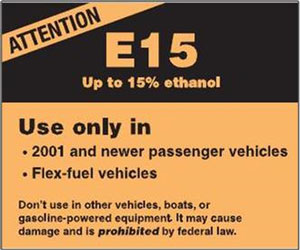
Groups representing small engine, automakers and marine manufacturers announced a formal legal challenge to regulations and labeling proposed for the use of 15% ethanol blends (E15) in older model vehicles.

The Outdoor Power Equipment Institute (OPEI) and other organizations object to the Environmental Protection Agency’s “Regulation to Mitigate Misfueling” rule and labeling proposal meant to address concerns about improper use of E15, calling them “completely inadequate to protect consumers and avoid potential misfueling and damage to millions of legacy products not designed to run on any ethanol fuel higher than E10.”

Officials with the Renewable Fuels Association dismissed the groups’ new litigation, which would prevent EPA from finalizing a consumer label for the proper use of E15 in cars, pickups, and SUVs model year 2001 and newer.

“EPA’s label more than adequately informs consumers as to the proper use of E15,” responded RFA. “Similar labeling, such as for the use of E85 ethanol fuel, have been around for years without incident. In fact, since the adoption of the E85 label, we are not aware of any gas station being found liable for misfueling. EPA’s E15 label is far more descriptive as to the approved uses for E15 and eliminates the guess work for consumers. We believe the American motoring public will be quite capable of determining if E15 is right for their vehicles.”

RFA notes that the groups are already suing EPA over the decision that allows E15 to be used.

Ethanol, Ethanol News, RFA

Biodiesel Tax Incentive Creates Jobs

Cindy Zimmerman

The biodiesel tax incentive is helping to create jobs across the country, according to testimony submitted to the House Ways and Means Committee today by the National Biodiesel Board (NBB).

“While we understand the pressures facing Congress, this is the wrong time to pull support from a growing American industry that is a rare bright spot in this economy,” said Anne Steckel, NBB vice president of federal affairs. “Our industry is having a record year of production, and the tax incentive is a key ingredient in that success. Stripping the incentive away this year would put thousands of jobs in jeopardy.”

Steckel’s written testimony was submitted to the committee for a hearing on energy tax policy and tax reform held today that focused on whether energy policy should be conducted through the tax code, and specifically on proposed tax credits for natural gas under the New Alternative Transportation to Give Americans Solutions (NAT GAS) Act of 2011.

While, the biodiesel industry was not called to testify at the hearing, Steckel’s submitted comments highlighted the biodiesel industry’s rebound this year after the biodiesel tax incentive was reinstated following a one-year lapse in 2010 which caused production to drop dramatically last year as dozens of plants shut down and thousands of people lost jobs.

Since its reinstatement this year, the industry had produced roughly 475 million gallons as of July compared with 315 million gallons in all of 2010. This year’s increased production of at least 800 million gallons will support more than 31,000 jobs while generating at least $3 billion in GDP and $628 million in federal, state and local tax revenues, according to a recent economic study conducted by Cardno-Entrix.

“We believe the U.S. biodiesel industry offers a clear and compelling case that strong domestic energy policy can boost this economy,” she said. “Our production turnaround this year is creating good-paying jobs in nearly every state in the country.”

That claim was highlighted with the re-opening of a southern Minnesota biodiesel plant this week. Minnesota soybean farmer Jim Willers said reinstating the biodiesel tax incentive is one of the best jobs creation programs the government has done lately. “This plant’s put almost 25-30 people back to work, there’s usually 50 trucks that go through here and the spin off effect from this plant creates almost 2,000 jobs,” he said. “Between state and local and federal taxes, it’s way more than the tax credit so your return on investment for the government is just terrific with biodiesel.”

Biodiesel, NBB, REG, Soybeans

A Million NASCAR Miles on 15% Ethanol

Cindy Zimmerman

NASCAR has passed the one million mile mark in competition racing on Sunoco Green E15 and issued a report detailing how the 15% ethanol blend performed on the race track this year.

The “One Million Competition Miles on Sunoco Green E15” report, released today in Washington D.C., shows the qualities of E15 as a racing fuel this first year of use in the NASCAR Sprint Cup Series™, NASCAR Nationwide Series™ and NASCAR Camping World Truck Series™. With more than 1.3 million miles accumulated in practice, qualifying and racing laps in NASCAR racing vehicles since the racing season began in February with the Daytona 500, the report details the performance of mid-level ethanol blends.

“Before NASCAR switched its fuel to Sunoco Green E15 at the start of the 2011 racing season, there was extensive analysis and deep consideration about the decision,” said Mike Lynch, Managing Director of Green Innovation for NASCAR. “Successfully transitioning to the new fuel and surpassing a million miles, all on America’s toughest proving ground, is a validation of Sunoco Green E15 as a high-performance racing fuel and is part of our overall effort to go green. NASCAR is proud to use this American-made product because it creates American jobs while also reducing harmful emissions.”

NASCAR’s switch to 15% ethanol fuel came together from a partnership with American Ethanol, established by Growth Energy and the National Corn Growers Association (NCGA).

“It is time we moved forward with E15. This is yet another testament to E15’s value as a fuel. If E15 can fuel the dozens of drivers in dozens of different vehicles every weekend without issue, then it stands to reason that E15 can be used in everyday street cars by everyday Americans,” said Tom Buis, CEO of Growth Energy.

“E15 is performing like champ in the most rigorous driving conditions on the planet and that’s good news for everyone who supports renewable fuels,” said NCGA president Bart Schott.

Read the report here.

American Ethanol, blends, Ethanol, Growth Energy, NASCAR, NCGA

Minnesota Biodiesel Plant Means Jobs

Cindy Zimmerman

At the opening celebration of the Renewable Energy Group (REG) REG Albert Lea facility on Monday, Minnesota state representative Rich Murray (left) and local Chamber of Commerce Executive Director Randy Kehr (right) both congratulated REG president Dan Oh (center) on fueling the economy by creating new jobs.

“They’re great green collar jobs,” said Kehr, who noted the importance of the agriculture industry to the region. “If you take the value-added in soybeans here in Freeborn county on the seven million bushels that were harvested last year, that represents nearly $1,750,000 into our community.”

Listen to the opening ceremony comments here. REG biodiesel plant opening ceremony

Rep. Murray said that job creation is the number one priority for lawmakers. “I’m excited about the jobs, that’s why I’m here today,” he told me. “It’s a great value add for agriculture and agriculture is the back bone of southern Minnesota and of the whole state.”

Minnesota has had an increasing biodiesel blend requirement since 2002, which is slated to go to 20 percent by 2015. “And this plant’s going to help us get there,” said Murray.

Listen to my interview with Rep. Murray here. Minnesota state representative Rich Murray

REG Albert Lea biodiesel plant photo album

Biodiesel, REG, Soybeans

Development of Next Gen Biofuels Good For Jobs

Chuck Zimmerman

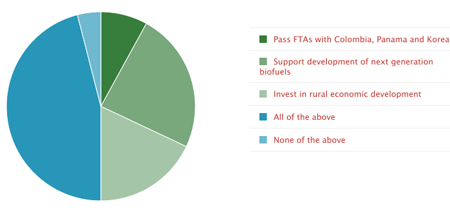
At least that’s what many of you said in our latest ZimmPoll which asked the question, “What is best for ag to add jobs to the economy?” 46% said All of the above to our choices. We also had 24% choose Support development of next generation biofuels; 18% choose Invest in rural economic development; 8% choose Pass FTAs with Colombia, Panama and Korea and 4% choose None of the above. I guess we’ll see what happens as the budget and farm bill debates continue to unfold.

Our new ZimmPoll is now live. We’re asking the question, “Can farmers effectively reach out to consumers with social media?” Seems like a timely questions with tomorrow’s The Food Dialogues about to take place. A USFRA program that will be driven by social media. You probably know where I come down on this. But with all our efforts, are we “reaching” consumers? What do you think? Feel free to comment and take our poll.

ZimmPoll is sponsored by Rhea+Kaiser, a full-service advertising/public relations agency.

ZimmPoll

Senators Receive Recognition for Ethanol Support

Cindy Zimmerman

Senators John Thune (R-SD) and Amy Klobuchar were recognized for their support of the ethanol industry today with the “Fueling Growth” award from Growth Energy during the ethanol organization’s second annual Legislative Conference in Washington D.C.

According to Growth Energy, the awards are meant to recognize the leadership of policy makers “in fostering our country’s energy independence, through the production and use of ethanol as a fuel to displace foreign oil.” Senator Thune is pictured here receiving the award from Growth Energy co-chairman Jeff Broin of POET. In the photo below, Sen. Klobuchar poses with members of Growth Energy attending the legislative conference.

“We are grateful for the leadership and wisdom of these leaders,” said Growth Energy CEO Tom Buis. “This award serves as a reminder of our gratitude, and our continuing efforts to make this country’s national security and economic security stronger through a robust and viable alternative, renewable fuels industry. With their votes and actions in Congress, and their leadership within the administration, these individuals demonstrated loyalty and devotion to the cause of American energy independence.”

The two senators jointly sponsored a bi-partisan effort earlier this year that would have generated $2.5 billion in deficit reduction by reforming the ethanol tax credit and investing in renewable fuels infrastructure. Growth Energy also honored Agriculture Secretary Tom Vilsack with a Fueling Growth award.

Ethanol, Government, Growth Energy

RFA Urges Super Committee to Look at Oil Subsidies

Cindy Zimmerman

Renewable Fuels Association LogoIn a letter to the co-chairs of the Joint Select Committee on Deficit Reduction, the so-called “super committee” assigned to find ways to cut the deficit, the Renewable Fuels Association today urged them to “focus on comprehensive energy tax policy” rather than simply end the ethanol tax credit a week earlier than it is due to expire.

“On behalf of the more than 300 member companies of the Renewable Fuels Association, I write to strongly urge you to ignore calls from various special interests to repeal the current Volumetric Ethanol Excise Tax Credit, or VEETC,” RFA General Counsel Edward Hubbard wrote to Senator Patty Murray (D-WA) and Representative Jeb Hensarling (R-TX). Hubbard noted that while the ethanol industry had proposed ending the VEETC August 1st when it would have saved nearly $2 billion for the remainder of 2011, with a deadline of December 23rd deadline for congressional action for deficit reduction, “barely $100 million would be saved by ending VEETC before its scheduled expiration” on December 31.

Instead, RFA encourages the committee to “take a comprehensive look at all existing energy tax policies and eliminate those ongoing policies that serve only to pad the balance sheets of already profitable and very mature industries.”

If the committee is truly seeking to eliminate wasteful and market-distorting spending, we urge you to begin by rescinding permanent tax subsidies for the oil industry. Several tax loopholes, such as the Section 199 deduction for all oil and gas activity, the deduction for intangible drilling costs, and the depletion allowance for oil and gas wells, are available only to oil and gas companies and further strengthen the monopoly these companies have on the nation’s gasoline market. Removing these and other provisions would save at least $40 billion over the next decade – a pittance compared to the annual profits of oil companies – and significantly contribute to debt reduction efforts while simultaneously helping level the playing field for existing and emerging renewable fuel technologies.

Read the letter here.

Ethanol, Ethanol News, Government, RFA