

USDA Agricultural Research Service (ARS) scientists are studying a new yeast that could help make cellulosic ethanol production less expensive and a commercial enzyme that could reduce overall costs linked with producing ethanol from grain.
 Molecular biologist Zonglin Lewis Liu with ARS’ National Center for Agricultural Utilization Research in Peoria found a biorefinery yeast that successfully ferments plant sugars from cornstalks, wheat straw, and other rough, fibrous, harvest-time leftovers into cellulosic ethanol. According to Liu, the yeast overcomes some of the troublesome compounds in these materials that are created during dilute acid pre-treatment of the crop leftover. The compounds tend to damage yeast cell walls and membranes, disrupt yeast genetic material such as DNA and RNA, and interfere with yeast enzymes’ fermentation abilities, ultimately reducing potential cellulosic ethanol yields.
In research that began in 2003, Liu and his colleagues have worked with dozens of strains of S. cerevisiae, a yeast species already used to make ethanol from plant starch to speed up the microbe’s natural adaptation to the hostile environment created by the inhibitors.
Meanwhile, other research being done at the ARS Eastern Regional Research Center in Pennsylvania is looking at a commercial enzyme that helps extract water from an ethanol byproduct used to make dried distillers grains with solubles (DDGS). This could significantly reduce the amount of electricity, natural gas, energy and water needed for production of grain ethanol and its marketable byproducts.
The study was conducted at Center Ethanol Company in Sauget, Ill., a commercial facility that produces 54 million gallons of ethanol and 172,000 tons of DDGS every year from corn. In the study, the scientists added one pound of an experimental dewatering enzyme for each 1,000 pounds of corn. The enzyme was supplied by Genencor, a major developer and manufacturer of industrial enzymes that is now part of DuPont Industrial Biosciences. After the grain had been fermented into ethanol, the researchers transferred the leftover slurry of corn solids and water, called “stillage,” into a centrifuge, where much of the water was extracted.Read More
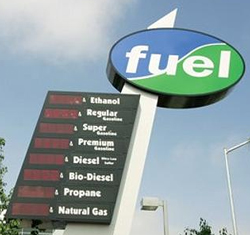 Ethanol, biodiesel, propane, natural gas, electricity – even regular gasoline – consumers should have choices at the pump and a new campaign is urging lawmakers in Washington to make that happen.
 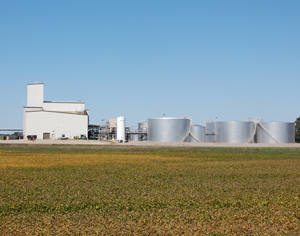 Fields of soybeans surround the newly re-opened
  Hill, pictured here on the left with REG president Dan Oh, says the economic benefits of biodiesel production in a rural community have a multiplier effect. “From the farmer, to the elevator to the tire salesman, to the people buying the biodiesel to blend it, for trucks and everything else, it just helps everybody,” Hill said, adding that it helps all of agriculture, including livestock producers who benefit because it helps reduce the cost of soybean meal.
  Secretary of Agriculture Tom Vilsack addressed members of
 Registration is now open for the


