ACE Conference 2026

REG Albert Lea Biodiesel Plant Officially Opens

Cindy Zimmerman

The Renewable Energy Group (REG) celebrated the official opening of the REG Albert Lea biodiesel plant in Minnesota on Monday, with representatives of the state and local community and agriculture industry.

REG President and COO Dan Oh says they were involved in the construction and operations of the plant when it originally was built and opened by SoyMor. “We have worked together since 2003,” said Oh. The plant unfortunately got caught up in the economic issues that hit the renewable fuels industry back in 2008 and had to shut down, but REG felt it was a significant plant that needed to get back in operation, so they worked to make it happen for the local economy. “Think of a gallon of biodiesel in roughly every bushel of soybeans, this is a 30 million gallon biodiesel facility, so that really adds value back to a bean bushel,” Oh said.

Listen to or download interview with Dan Oh here. REG President Dan Oh

Representatives of the Minnesota soybean industry were on hand today for the grand opening, including Jim Willers, who is a farmer from Beaver Creek and a director on the United Soybean Board, as well as a member of the Minnesota Soybean Research and Promotion Council. After touring the plant, Willers said he was impressed with the shape it is in after being shut down for three years. “I found out that it was in excellent condition when they closed it down and the start up was way better than they thought,” he said. “It’s a state of the art facility and in six months they’re going to be a BQ-9000 plant.”

Listen to or download interview with Jim Willers here. Minnesota soybean farmer Jim Willers

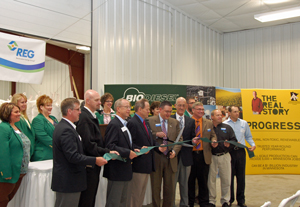
Watch the ribbon cutting below and see photos in the REG Albert Lea biodiesel plant photo album

Audio, Biodiesel, REG, Soybeans, Video

Ohio Ethanol Plant Celebrates Grand Opening

Cindy Zimmerman

RFAGuardian Lima, LLC of Ohio is officially back in full operation, producing 54 million gallons of ethanol a year, as well as 165,000 tons of dried distillers grains and jobs for the local economy.

Guardian Lima employs 33 full time Ohioans in positions from chemists to engineers to accountants and administrative support staff. Prior to the opening, there were 120 jobs involved with retrofitting and construction of the plant. The facility, formally Greater Ohio Ethanol, originally began operations in 2008 but went idle shortly thereafter due to adverse market conditions. Guardian Lima acquired majority stake in the ethanol production facility in November 2010.

“We are proud to bring this facility back into operation, creating jobs and providing a boost to the Lima economy,” said Don Gales, CEO of Guardian Lima, LLC. “Domestic ethanol production is a key component of the nation’s energy strategy and one that begins in hundreds of small towns and cities just like Lima.”

Renewable Fuels Association
president and CEO Bob Dinneen congratulated the company for bringing the plant back into operation. “America’s ethanol industry continues to demonstrate an unparalleled ability to create jobs, particularly in small cities and rural communities all across the country,” said Dinneen.

Ethanol, Ethanol News, RFA

Minnesota Biodiesel Plant Will Celebrate Re-Opening

Cindy Zimmerman

The Renewable Energy Group (REG) will be celebrating the grand re-opening Monday of a Minnesota biodiesel plant that was shut down for three years.

REG acquired the former SoyMor production facility earlier this year, which is now known as REG Albert Lea, LLC. The company will be celebrating the grand re-opening of the plant with members of the Minnesota Soybean Research and Promotion Council, as well as state and local dignitaries, on Monday morning.

“With nationwide demand for biodiesel growing steadily through implementation of the Renewable Fuels Standard (RFS2) and Minnesota’s continued biodiesel consumption leadership, we expect to quickly ramp up production at REG Albert Lea, LLC,” said REG’s CEO Jeff Stroburg when the purchase of the plant was finalized. “With a foundation in agriculture and expertise in domestically-produced, renewable energy, REG is proud to bring green-collar jobs to this rural economy while supporting ag producers in Minnesota and across the Midwest.”

Minnesota is a leader in the biodiesel industry, being the first state to require that all diesel fuel contain a two percent blend in 2005, and has since increased to a five percent blend. “Increasing the amount of biodiesel in our fuel allows us to take advantage of a renewable fuel made right here in Minnesota,” said Ed Hegland, former National Biodiesel Board Chairman and Minnesota farmer. “I’m proud to live in a state that is leading energy innovations and taking part in valuable solutions like biodiesel.”

REG was already the largest biodiesel producer in the United States and the acquisition of REG Albert Lea brings the REG owned/operated total to more than 210 million gallons per year. REG was the general contractor and manager for the 30 mmgy refined vegetable oil feedstock biodiesel plant which originally began production in April 2005. Distribution of biodiesel at the facility started late last month. REG filed for filed an initial public offering in July.

Biodiesel, NBB, Soybeans

Tapioca Pearls Can Dry Ethanol

Cindy Zimmerman

Purdue University researchers have found proof in the pudding of a new way to dry ethanol.

The current industry practice for absorbing the water that is part of the ethanol production process after fermentation is to use corn grits. But the Purdue study found that the shape and structure of tapioca pearls make them more ideal for the job, not to mention that they are environmentally friendly and energy-efficient. Tests using tapioca collected about 34 percent more water than corn. “While corn grits are solid, irregularly shaped particles, tapioca pearls contain a gelatin starch core upon which dry starch granules are aggregated, significantly increasing surface area,” according to the researchers.

The researchers believe that U.S. ethanol plants would benefit from using tapioca pearls for drying, but the discovery may be more important for facilities in South America and Africa where the plant used to create tapioca – cassava – is grown.

Ethanol, Ethanol News

Tips For Methanol Safe Handling

Joanna Schroeder

Chemicals are an everyday part of operating a biorefinery facility as we learned in Part 1 of Biorefinery Safety Series. Chemicals are also an integral part of biodiesel production. Therefore, it is vitally important that all employees at a biodiesel facility, whether a large operation on a small backyard operation, learn, practice and live safe methanol handling techniques. So today, Part 2 of the Biorefinery Plant Safety Series is going to look how to safely handle methanol.
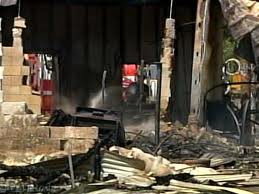
To learn more, I spoke with Greg Dolan with the Methanol Institute. The association does a lot of work with the National Biodiesel Board because methanol is a key component in biodiesel production.

A gallon of biodiesel is on average between 10-15 percent methanol, said Dolan who explained that you take the oil, could be soybean oil or vegetable oil, add methanol, then add a catalyst and you produce biodiesel. Part of the end product will be some waste methanol and some glycerin and with some production technologies, that methanol can be put back into the front end of the process.

What happens if you don’t handle the methanol safely? Things go boom.

Dolan said methanol is a flammable and toxic chemical and methanol has to be handled properly. “Some of the same precautions we use handling gasoline are also used in handling methanol. For instance, you need to use the proper materials for storage. There are specific guidelines for unloading and loading of methanol at a facility. You also need to pay attention from doing any hot work around any methanol storage. That is something you really want to stay away from. Most accidents we’ve seen at biodiesel facilities result in doing hot work around methanol storage,” he said.

Listen to my interview with Greg Dolan here: Ethanol Safety Series Part II: Methanol Safe Handling Read More

advanced biofuels, Audio, Biodiesel, biofuels, Ethanol, safety

White Paper Answers Questions About Ethanol

Joanna Schroeder

A new white paper released by Gold Eagle Co aims to answer questions about ethanol blended gasoline. Gold Eagle sells aftermarket fluids and additives such as STA-BIL Ethanol Performance Improver.Petroleum Production, Distribution and Discussion of the use of Ethanol Blended Gasoline” answers such questions as, How is gasoline produced? What is ethanol’s impact on gasoline? What is phase separation? and more.

“Through our conversations with our retail customers and consumers, we believe there is a need to educate the general public on the gasoline refinery process because there is much mis-information, particularly when it comes to ethanol-blended gasoline,” said Mike Profetto, vice president of Product Engineering at Gold Eagle Co.

“We developed a white paper to shed light on the complexity of gasoline – particularly the refining and distribution process and explain the technical aspects as to why gasoline is designed to meet ASTM specifications. The report also highlights the history of ethanol and governmental requirements for biofuels through 2022 and defines ethanol blend fuel specifications and its use throughout the U.S.,” he continued.

In 2010, as estimated 13.23 billion gallons of ethanol were produced in the States. Also in 2010, the Environmental Protection Agency approved the Green Jobs Waiver, allowing the use of E15 in cars and light duty trucks 2001 or newer. However, E15 was not approved for small engines, marine and other specialty engine types.

“We believe that by staying informed about ethanol’s functionality and impact on vehicle performance, automotive repair personnel and consumers alike can help ensure they take proper preventative measures to ensure their vehicles continue to operate smoothly,” added Profetto.

biofuels, blends, Ethanol

Novozymes Awarded DOE Grant, Joins Nidus

Joanna Schroeder

In our space, Novozymes is best known for their work in developing enzymes for the biofuels industry. However, the company is working in other areas of energy as well. For example, the U.S. Department of Energy (DOE) has selected their carbon capture project as one of 16 technologies chosen for funding. They are partnering with Doosan Power Systems, University of Kentucky, and Pacific Northwest National Laboratory on the three-year, $2 million dollar project of which 80 percent will be funded by the DOE.

The project is unique because it brings together experts in enzyme technology, power generation, gas separations, and ultrasonic technology development. Together, the group will develop and evaluate the performance of an integrated laboratory system that uses an experimental enzyme, provided by Novozymes, together with ultrasonics in a low temperature process to separate carbon dioxide from flue gas.

“Enzyme technology has enabled many industrial processes to operate with lower energy requirements and better sustainability than can be achieved by conventional approaches, which is also our goal for this project,” said Steen Skjold-Jorgensen, Novozymes vice president, research and development. “However, this project is not just about an enzyme. Innovation across disciplines and integration of processes is essential to bring new technologies forward in the CO2 capture field. We are very happy to participate together with our skilled collaborators on the project and appreciate DOE’s support in bringing such projects together.”

In other recent news, Novozymes has joined Nidus Partners to select and develop early stage technologies. Nidus was launched in September 2010 and uses its partners to help identify market opportunities and than seek out entrepreneurs to develop the technologies to meet the needs. Partners have a right of first offer for the innovations developed through Nidus.

“The investment and participation of Novozymes, a recognized world leader in bioinnovation, is another major milestone for Nidus,” stated Vicki Gonzalez, managing partner of Nidus. “This deal further confirms our unique approach in leveraging our partners’ strategic market insight to efficiently select and de-risk early-stage energy technologies.”

Carbon, Energy, Environment

NY Landfill Solar Project Completed

Joanna Schroeder

Here is unique use of solar. Carlisle Energy Services (CES) has completed its Sepctro PowerCap Exposed Geomembrane Solar Cover system in Madison County, New York. This technology will “cover” the landfill for up to 30 years. The eight-acre demonstration system feature’s the GeoTPO Geomembrane with a south-facing 40kWp DC integrated solar photovoltaic array powered by Uni-Solar. The system is expected to offset almost all of the power requirements of the Madison County ARC Recycling Facility located on site.

The Madison County landfill is the first in the country to apply this technology in a closure project and the New York State Energy Research and Development Authority provided a grant in an effort to showcase the technology to other landfill owners.

“Carlisle Energy Services is proud to have helped Madison County develop a sustainable landfill closure system that generates clean solar energy,” said Carlisle’s Director of Landfill Solutions Arthur Mohr Jr. “This project demonstrates the merits of our GeoTPO Geomembrane as a viable long-term closure system for landfill owners.”

Other plans for the site include a landfill gas system that captures the heat generated by the turbine engines to dry lumber on site. This energy will be used to heat the building. In addition, the owners are considering adding other alternative energy elements such as a windmill, hydroponic greenhouses and/or additional solar systems.

“The photovoltaic landfill cover will play an integral role in Madison County’s growing renewable energy initiative, and we are proud to demonstrate the technical and commercial feasibility of Carlisle’s unique landfill closure system,” added James Zecca, Madison County Solid Waste Department Director.

Electricity, Energy, Environment, Solar

Youth in South Africa to Attend Solar Training

Joanna Schroeder

Local youth in Durban, South Africa will be participating in a two-week solar training course compliments of Greenpeace. The 30 youth will learn about solar photovoltaic (PV) and other renewable energy technologies in addition to completing course modules covering social entrepreneurship and Greenpeace’s Energy (R)evolution report.

The PV panels were donated by the SunPower Foundation and will be installed as part of the solar training course. Once installed, the four SunPower solar panels will generate energy for two Greenpeace Africa mobile solar showcase units. They will be on display during the 17th session of the Conference of Parties (COP 17) to the United Nations Framework Convention on Climate Change (UNGCCC) taking place in Durban November 28-December 9, 2011. Each unit will utilize solar-powered multi-media technology devices, including televisions, laptops and sound systems.

“With this donation, the SunPower Foundation remains true to its mission — to empower the world’s next generation of solar leaders,” said Tom Werner, SunPower president and CEO. “We hope that the Greenpeace Solar Training course will inspire local youth to explore solar technology and create renewable solutions for energy needs in this part of the world and beyond.”

In addition to the donation of the four panels. SunPower Foundation has also announced its plans to solarize the Greenpeach Africa Johannesburg headquarters with a SunPower rooftop system later this year. Olivia Langhoff, campaigns director for Greenpeace Africa added, “This donation provides an impetus for investment and is a demonstration that renewable energy solutions are feasible.”

Education, Electricity, Energy, International, Solar

Renewable Fuels Month Proclaimed in Nebraska

Cindy Zimmerman

September is officially Renewable Fuels Month in Nebraska now after a proclamation signing by the governor today at Husker Harvest Days.

Nebraska Governor Dave Heineman joined state soybean board chair Lisa Lunz, NASCAR Nationwide driver Kenny Wallace and Alan Tiemann, chairman of the Nebraska Corn Board, in making the declaration. “Nebraska’s renewable fuels sector contributes to local communities by providing good paying jobs for thousands of Nebraskans,” said Gov. Heineman. “Renewable fuels are a critical component of becoming energy independent and by providing an alternative to imported oil. We are fortunate to have a strong biofuels industry with thousands of Nebraskans working to fuel America.”

The proclamation was coordinated through the Nebraska Corn Board and Nebraska Soybean Board, who hosted the event at Husker Harvest Days to recognize the contributions of Nebraska farmers and agribusinesses to the nation’s renewable fuel supply.

Biodiesel, biofuels, corn, Ethanol, Ethanol News, Soybeans