ACE Conference 2026

Grading Grasses for Ethanol Potential

Cindy Zimmerman

U.S. Department of Agriculture researchers have developed an inexpensive way to grade the ethanol potential of perennial grasses at a biorefinery’s loading dock.

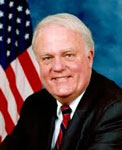
Geneticist Ken Vogel (pictured) was one of a team of USDA’s Agricultural Research Service (ARS) scientists who developed the grading process that costs only about $5 a sample rather than the $300 to $2,000 per sample that conventional analytical methods cost.

The process uses near-infrared sensing (NIRS) to measure 20 components in switchgrass biomass that determine its potential value to biorefiners. These components include cell wall sugars, soluble sugars and lignin. With this information, 13 traits can be determined, including the efficiency of the conversion from sugars to ethanol. This is the first time NIRS has been used to predict maximum and actual ethanol yields of grasses from a basic conversion process.

ARS is now working with the Near Infrared Spectroscopy Consortium (NIRSC) to commercialize the process for use at biorefineries.

Read more from ARS here.

Cellulosic, Ethanol, Ethanol News, Research, USDA

When Will Cellulosic Ethanol Match Corn?

Chuck Zimmerman

Our latest ZimmPoll asked the question, “How many years before cellulosic ethanol matches corn ethanol production?” So what did you say? 42% said More than ten years; 23% said Five to ten years; 18% said Five years; 14% said Never and 3% said Next year. We’ve seen huge strides in the efficiency of corn ethanol production and research on the use of new feedstocks but we’re not quite there for mass quantity cellulosic production. Will we be? What do you think? Feel free to add your comments here.

Our new ZimmPoll is now live. We’re asking the question, “Which is more important to rural America: GPS Service or Broadband Internet?” We thought it would be interesting you get your thoughts on this in light of the Lightsquared rural broadband service that seems to pose some serious problems for GPS service. Your input and thoughts would be greatly appreciated. Thanks.

ZimmPoll is sponsored by Rhea+Kaiser, a full-service advertising/public relations agency.

ZimmPoll

Blue Angels Perform With Biofuels

Joanna Schroeder

The Blue Angels, the U.S. Navy Flight Demonstration Squadron, performed over the Labor Day weekend using a biofuel blend at the Naval Air Station (NAS) Patuxent River Air Expo. All six F/A-18 legacy Hornets were powered with a 50-50 blend of conventional JP-5 jet fuel and a camelina-based biofuel.

Changing the kinds of fuels we use and the way we use them is critical to assuring the Navy and Marine Corps remain the most formidable expeditionary fighting force the world has ever known,” said Secretary of the Navy, Ray Mabus in a press statement leading up to the air show. “The Department of the Navy will be taking another visible step toward testing biofuel in our aircraft when all six of the Blue Angels perform using the same 50/50 blend of drop-in biofuel we’ve used in so many of our other aircraft.”

The event marked the first time an entire unit has flown on a biofuel mix.

Capt. Greg McWherter, Blue Angels commanding officer/flight leader said of the show, “As public representatives of the U.S. Navy and Marine Corps, the Blue Angels take pride in leading the country’s efforts to reduce fossil fuel consumption and increase our energy security.

McWherter, who says there is no discernible differences from the cockpit, stressed that the goal of the program was to demonstrate that there is no difference in performance between the biofuel blend and standard-petroleum-based JP-5.

In another semi-related story, the USDA is looking for Eastern Washington farmers to grow camelina as part of the Biomass Crop Assistance Program (BCAP). The program is designed to incent growers to grow emerging crops for biofuels.

advanced biofuels, Biodiesel, biojet fuel, Video

Students Launch Facebook Campaign to Raise Cash for Biodiesel Program

Joanna Schroeder

Rockwood Summit High School located in Fenton, Missouri is on the hunt for dollars to help expand their biodiesel project. But they are not selling candy bars or giving car washes on a Saturday afternoon. They have taken to Facebook to promote their fundraising campaign.

The fundraising campaign is not limited to Rockwood Summit High School. Famous Footwear and Converse have come onboard to offer up to $100,000 to any school that receives at least 75,000 votes in their contest. Of that money, $75,000 will go to the school for their project a $25,000 academic scholarship will go to the student who submitted the essay on behalf of the winning school.

The students at Rockwood Summit hope to build an educational renewable fuel facility if they win. Today, the school’s 80 gallon processor is stored in only 15 square feet of space. The monies will be used to expand the space with extra to grow. Next projects? Researching turning algae into biodiesel.

The students also want to take their biodiesel projects to the street and educate the local community about the environmental and economic benefits of the renewable fuel. They also hope to teach younger students the science behind biodiesel production.

So how do you help them win? Visit the Famous Footwear Facebook page here, and click on the Step It Up For Your School tab. From there, you need to “like” the page then click “Cast Your Vote,” and from there search for “Summit.” To take it on home you just need to Vote for them. Now tomorrow, repeat, and keep repeating until they win.

Biodiesel, biofuels

ACE Announces Winner of Merle Anderson Award

Joanna Schroeder

The winner of this year’s Merle Anderson Award goes to USDA Under Secretary for Rural Development Dallas Tonsager for his support of the ethanol industry. The honor was given by the American Coalition for Ethanol (ACE) following their ethanol conference. Tonsager, who said he was pleased to win the award, was honored for his lifetime commitment to the promotion of both agriculture and the renewable fuels industry and more specifically, his work on implementing the Rural Energy for America Program (REAP).

The REAP program is currently helping retailers in rural communities install E85 pumps and blender pumps which offer consumers various blends of ethanol that oftentimes include E20, E30 or E40.

“I am excited to receive this honor that recognizes the work that USDA is doing to help our nation develop home-grown energy that creates jobs, helps to break our dependence on foreign oil, and moves our nation towards a clean energy economy,” said Tonsager.

Merle Anderson was the founder and first president of ACE and currently serves as Chairman Emeritus of the ACE board of directors. Brian Jennings, ACE executive VP added, “His work in developing blender pump infrastructure has been tireless and Dallas has always been a champion for the ethanol industry. It means a lot for rural America to have Dallas working in Washington on behalf of agriculture and the ethanol industry,” Jennings said.

biofuels, Company Announcement, Ethanol

Solectra Renewables Awarded $2.1M DOE Contract

Joanna Schroeder

The U.S. Department of Energy (DOE) has awarded a $2.1 million contract to Solectria Renewables as part of its SunShot Initiative, to develop integrated smart-grid ready photovoltaic (PV) inverters with utility communications. The project will be completed in partnership with Electric Power Research Institute (EPRI), Detroit Edison, National Grid, and Xcel Energy. The DOE program is aimed at bringing cost-competitive solar technologies to market faster.

The purpose of a PV inverter or a solar inverter is to convert the variable DC output of the solar modules into a utility frequency AC current that can be fed into the electrical grid. A PV inverter has special functions adapted for use with PV arrays. The key objectives of the Solectria Renewables Program are to leverage ongoing investments in smart grid and related standards as well as to expand PV inverter capabilities. The company says that together these two things will help grid operators better utilize grid assets.

“We are honored to have been selected by the Department of Energy to receive this award, which is a reaffirmation of our leadership in the inverter space,” said Michael Zuercher-Martinson, CTO of Solectria Renewables. “Enabling utilities to control our SMARTGRID inverters (SGI) is the next big step towards a smarter grid that can accommodate a very high PV penetration density in a safe, secure, efficient and reliable manner.”

Detroit Edison, National Grid and Xcel Energy will supply test sites ranging from 605kW to 30MW. Each of the sites will test different aspects of the technologies being developed by EPRI and Solectria Renewables.

Electricity, Energy, Smart Grid, Solar

NASCAR Popular at Farm Progress Show

Cindy Zimmerman

farm progress show 2011There were quite a few race cars mixed in with the tractors and combines this year at the 2011 Farm Progress Show in Decatur, Illinois.

In addition Richard Childress and the American Ethanol NASCAR Sprint Series car at the Growth Energy exhibit, over at the Illinois Corn Growers exhibit, the Illinois Family Farmers NASCAR Nationwide Series driver Kenny Wallace was signing autographs and doing interviews.

Wallace said he was “blown away” by the Farm Progress Show. “This is like our Daytona 500! I’ve never seen anything like it,” he said in an interview with Domestic Fuel’s Chuck Zimmerman. The Farm Progress Show is the biggest outdoor agricultural equipment show in the country, which rotates between permanent sites in Illinois and Iowa and boasts over 500 exhibitors.

Listen to Kenny Wallace interview from Farm Progress Show here. NASCAR driver Kenny Wallace

The next big races for Wallace and all of NASCAR are coming up Chicagoland on September 16-18. Speedway president Scott Paddock, who was also visiting Farm Progress Show last week, says that triple header NASCAR weekend is a the first race in the Chase for the NASCAR Sprint Cup – the first of ten ‘playoff’ style NASCAR Sprint Cup Series races in pursuit of the 2011 championship. “NASCAR was looking for a major media market and a big platform to kick off their playoffs and they chose Chicagoland and we’re honored to have that designation,” he said, noting that the corn growers will have a very visible presence at the races.

Paddock says the partnership between NASCAR, ethanol and the corn growers was a good move. “I think it’s a compliment to the (15%) ethanol fuel blend that NASCAR believes in it enough to want to put it in their race cars.”

Listen to interview with Scott Paddock here. Chicagoland Raceway president Scott Paddock

The Fast Five 225 truck series will kick off the weekend on Friday, September 16. The Dollar General 300 Nationwide series, Kenny’s race, will be Saturday, Sept. 17 and the three day weekend will conclude on Sunday, Sept. 18 with the GEICO 400 Chase for the NASCAR Sprint Cup.

2011 Farm Progress Show Photo Album

Audio, corn, Ethanol, Farm Progress Show, Growth Energy, NASCAR

American Ethanol Partners at Farm Progress Show

Cindy Zimmerman

farm progress show 2011The partnership between American Ethanol and NASCAR was on display at the 2011 Farm Progress Show, where racing fans got a chance to meet with former driver and current team owner Richard Childress.

Pictured here with Growth Energy CEO Tom Buis, Childress said his team’s partnership with American Ethanol and the NASCAR series using a 15% ethanol blend this year is good for the country. “I’m a huge supporter of everything we do in America, from our farmers to our military,” he said. “This country has to quit depending on so much foreign energy and resources. We gotta do better.”

Childress says that NASCAR has had no problems making the transition to 15% ethanol fuel and next year they will go to fuel injection. “The fuel injection and the American Ethanol is really going to work out great,” he added.

Listen to or download interview with Richard Childress here: Richard Childress at Farm Progress Show

Buis says the partnership with the National Corn Growers Association to spotlight ethanol at NASCAR has been reaching a great audience. “We get a great reaction from the fans and people who watch it at home on television,” he said. “We couldn’t be happier. I think we’re getting our message out there.”

Listen to or download interview with Tom Buis here: Tom Buis at Farm Progress Show

farm progress show 2011Pam Johnson, an Iowa farmer who will become first vice president of National Corn Growers Association next month, says the partnership with NASCAR is exciting. “With NASCAR we’re reaching people outside the Midwest, all over the country from Richmond out to California,” Pam said at Farm Progress Show. “So we are getting the message out to a whole new group of people who need to hear the story told and we think NASCAR’s a great vehicle for that.”

Johnson added that the Illinois Corn Growers were also highlighting their partnership with NASCAR and driver Kenny Wallace. “When you get a driver out there talking about the speed and the extra power they get driving and then bringing it back to the consumer,” she said. “Hopefully we’ll all have access to E15 as those NASCAR drivers are putting in their vehicles.”

Listen to or download interview with Pam Johnson here: Pam Johnson with NCGA at Farm Progress Show

2011 Farm Progress Show Photo Album

American Ethanol, Audio, corn, Ethanol, Farm Progress Show, Farming, Growth Energy, NASCAR

Book Review – The Powers That Be

Joanna Schroeder

I felt like an academic when I read this week’s book, “The Powers That Be Global Energy For The Twenty-First Century And Beyond,” although author Scott L. Montgomery wanted the book to be “fun.” I sported my black geek glasses and curled up in a chair at a local coffee shop and attempted to give off the personae that I’m smart. Although I’m not sure anyone was fooled, I’m definitely smarter about our country’s energy options now than I was before I read the book.

This is an extremely in-depth look at what our energy landscape looks like today. It also reviews where we stand, as a world, with regard to resources and options as well as politics and policies that are driving the future. In addition, it looks at where we are headed.  As I look at our country, I’ve felt for a long-time that we are “energy illiterate” and need to become better students of energy education. While Montgomery agrees to some degree, he feels the problem lies more in lack of curriculum and the inability for people to learn about energy in a nonpartisan setting.

Montgomery writes, “Energy matters are critical to understand because they are fundamental to our way of life and because they are the subject of endless misconception, misrepresentation, and, as already noted, myth.”

Throughout the book, Montgomery takes an approach that many other authors have not and that’s the view that he doesn’t categorize energy as “dirty or clean” or necessarily “evil versus good.”  He explains that fossil fuels help build and transport renewable sources and also reminds us that every type of energy has an impact on the environment. Yes everyone, there is no “renewable” energy source that is developed, produced or transported without a fossil fuel.Read More

biofuels, biomass, book reviews, Electric Vehicles, Electricity, Energy, Geothermal, Natural Gas, Nuclear Energy, Oil, Solar, Wind

This School Year, Transport Your Kids In Cleaner Buses

Joanna Schroeder

School is in session.

Millions of children across the country have already started or will head back to class after Labor Day weekend. It’s a good time to ask the question, How clean is the air your children are breathing on the bus?

With nearly 450,000 school buses transporting more than 24 million students each day and covering more than 4 billion miles, many parents have become concerned about their children’s exposure to pollution from diesel exhaust.

One solution? Biodiesel. Biodiesel blends work in most diesel engines with little to no modifications so they can offer an immediate tool to lower toxic emissions. Today, the EPA’s Clean Bus USA program is helping schools convert buses to run with biodiesel.

There are many school districts who are already finding success with using biodiesel blends in their school buses. For instance, Medford New Jersey School District began using B20 back in 1997. Joe Biluck, Director of Operations and Technology says the fuel has performed well even in extremely cold temperatures – those below zero degrees.

“Biodiesel offers the best option to increase our reliance on domestic, renewable fuels while producing significant results in terms of emission reduction,” said Biluck. “Biodiesel’s primary attraction is its ease of integration coupled with the fact it is a technology that is not capital intensive and can be applied to older units as well as today’s vehicles.”

So parents, teachers and administrators, steal a lesson from some other schools and begin using cleaner fuels for the health of your children.

Biodiesel, biofuels