The U.S. Navy successfully concluded the largest demonstration of shipboard alternative fuel use last week when the Self Defense Test Ship (SDTS) arrived on November 17 at the Naval Surface Warfare Center Port Hueneme, Calif.
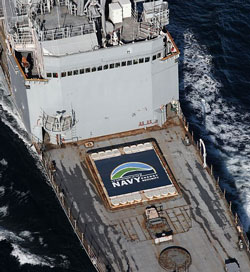 The SDTS is a decommissioned Spruance-class destroyer ex-Paul F. Foster (EDD 964) reconfigured to provide the Navy an at-sea, remotely controlled, engineering test and evaluation platform without the risk to personnel or operational assets.
The ship received approximately 20,000 gallons of a 50-50 blend of an algae-derived, hydro-processed algal oil and petroleum F-76 from the Defense Fuel Supply Point at Naval Base Point Loma on Nov. 16 and then traveled 17 hours to Port Hueneme on the fuel. According to the Navy, 100 percent of ship’s propulsion power and 50 percent of service power came from the algal oil/F-76 fuel blend.
“How can we have an impact?” asked Assistant Secretary of the Navy (Energy, Installations and Environment) Jackalyne Pfannenstiel at the demonstration’s kick-off. “We can have an impact as a technology leader, highlighting and demonstrating the viability of biofuels.”
Meeting the secretary of the Navy’s call for a drop-in fuel replacement, no changes were required to the infrastructure of the ship or fueling pier for the SDTS test. “From our perspective as the ship’s operators, there was absolutely no difference, whatsoever, in the operation or performance of the ship,” said Mike Wolfe, Naval Surface Warfare Center Port Hueneme Division underway project officer. “The fuel burned just like the traditional fuel we get from the Navy and have been burning for years. We could not tell the difference. The biggest success is that a Navy ship with engines identical to those in commissioned warships operated successfully on an overnight transit with the alternative fuel without a glitch in anything. Operationally, it was absolutely a success.”
The alternative fuels effort supports the Navy’s overall energy strategy to increase energy security and safeguard the environment.
 The president of biofuel enzyme producer
 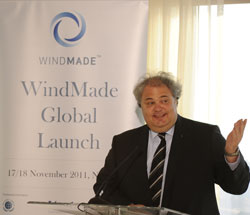 The label allows participating companies to communicate the share of wind power and other renewable sources as part of the overall power demand of their operations. The objective behind WindMade™ is to drive demand in wind power, thereby boosting investment and growing the renewable energy market.
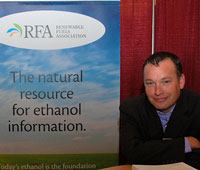 In an interview at the

 USDA has announced funding for a series of projects to convert biomass to energy through USDA’s Rural Energy for America program (REAP). The announcement this week concludes 2011 biomass project funding assistance for a total of 52 projects with just over $31 million in grant and loan note guarantees through program.
 Ethanol industry leader
  With presidential candidate Michele Bachmann in Iowa this week, the