

According to the American Farm Bureau Federation (AFBF), the retail cost of menu items for a classic Thanksgiving dinner including turkey, stuffing, cranberries, pumpkin pie and all the basic trimmings increased about 13 percent this year. That’s still less than $50 to feed ten people – not even $5 per person.
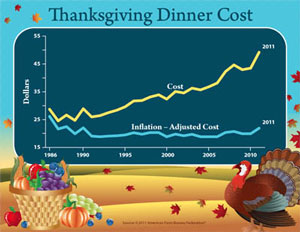 The turkey itself is what gobbled up most of the price increase this year. According to AFBF, a 16-pound turkey will cost about $21.57 this year at $1.35 per pound, an increase of about 25 cents per pound over last year. That triggered some misinformed columnists to start crying fowl and place the blame for the higher price on ethanol, as pointed out in a blog post from Growth Energy.
“Our biofuels policies are a big cause of the rising cost of food in recent years, and it just feels wrong to use food for fuel with so many families struggling to feed their families,” wrote Marie Brill of ActionAid in the Huffington Post, adding that “federal ethanol subsidies … are driving up the price of everything from eggs to milk to — yes, turkeys — and undoubtedly, some families will just have to go without.”
However, AFBF economist John Anderson says it’s more a case of basic economics – supply and demand. “Turkey prices are higher this year primarily due to strong consumer demand both here in the U.S. and globally,” said Anderson.
A more well-rounded and less emotional look at the cost of turkey comes from New York Times’ Wealth Matters columnist Paul Sullivan. “It turns out that turkey pricing is not much tied to commodities prices. Instead, other factors, like tight margins for farmers and perceptions of value, play a much bigger role,” he explains. “For most of us, the price we pay for our turkey bears little relation to what it costs to raise it.”

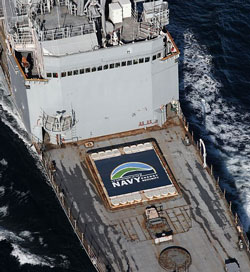 The SDTS is a decommissioned Spruance-class destroyer ex-Paul F. Foster (EDD 964) reconfigured to provide the Navy an at-sea, remotely controlled, engineering test and evaluation platform without the risk to personnel or operational assets.
  The president of biofuel enzyme producer
  The label allows participating companies to communicate the share of wind power and other renewable sources as part of the overall power demand of their operations. The objective behind WindMade™ is to drive demand in wind power, thereby boosting investment and growing the renewable energy market.
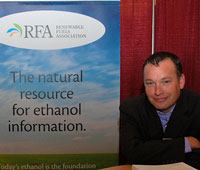 In an interview at the

 USDA has announced funding for a series of projects to convert biomass to energy through USDA’s Rural Energy for America program (REAP). The announcement this week concludes 2011 biomass project funding assistance for a total of 52 projects with just over $31 million in grant and loan note guarantees through program.