The Iowa State University professor who co-authored a new study on ethanol and gasoline prices released this week says the impact of the growing use of the domestically-produced fuel is significant.
 The new analysis from the Center for Agricultural and Rural Development (CARD), an update to a 2009 peer-reviewed paper published in Energy Policy by professors Dermot Hayes of ISU and Xiaodong Du of the University of Wisconsin, found that the growing use of American ethanol reduced wholesale gasoline prices by an average of $1.09 per gallon in 2011, up from an average impact of $0.89 per gallon in 2010. The study also found the between 2000 and 2011, gasoline prices have been reduced by an average of $0.29 per gallon, thanks to ethanol.
“Those numbers are large,” said Professor Hayes during a conference call on Tuesday during which he explained his hypotheses for the big impact of ethanol. “Think about the world before ethanol occurred. Every time a gasoline refinery would shut down, the price of gasoline would go up 10-20 cents because the U.S. was at its refinery capacity. What ethanol has done is increased refinery capacity.”
Hayes calls ethanol a “magic bullet that can squeeze ten percent more gasoline out of a barrel of crude oil.”
The original study was the result of a dissertation by Professor Du, while the Renewable Fuels Association funded the update.
Listen to Hayes’ explanation of the study here: ISU Professor Dermot Hayes






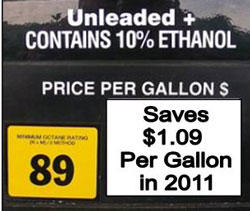 An update to a 2009 report from the Center for Agricultural and Rural Development (CARD) on the impact of ethanol on domestic gasoline prices was released today, showing that ethanol reduced wholesale gasoline prices by $1.09 per gallon nationally last year.
  Since the study is based on just 10% ethanol in the nation’s gasoline supply, Dinneen notes that increasing that under the E15 waiver approved by EPA can only result in more savings. “If you’re going to be adding 50% more of a product that is less expensive than gasoline to the overall blend, you’d be providing consumers an even more significant benefit,” he said. “We believe the economics of ethanol are going to drive E15 into the marketplace this summer.”