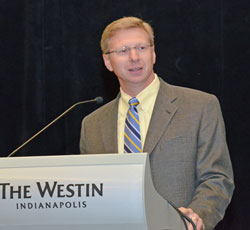
Dr. Jesper Hedal Kløverpris and Dr. Steffen Mueller have proposed a new approach to measuring the climate impact of biofuels related land-use changes (ILUC) as opposed to other land use changes: “Baseline Time Accounting Concept” and believe it should become an integrated part of future ILUC studies. According to the researchers, this model incorporates baseline time accounting into ILUC models, leading to a more accurate assessment of global warming impact. The peer reviewed study was published in the International Journal of Life Cycle Assessment.
 Jesper and Mueller explain that climate impact estimates are more precise when indirect land use emissions from the conversion of land at the agricultural frontier are compared with emissions resulting from the baseline conversion the same land. Historically, ILUC models assume a static land baseline although land use trend regionally differ.
“As many others, I have always been uncomfortable with the annualization method applied for time accounting in most previous ILUC studies because it is basically arbitrary,” said Kløverpris. “A more sophisticated approach was required to assess the actual climate impact of indirect land use change. Baseline time accounting is our proposal for a more scientifically rigorous way of dealing with the time issue in ILUC studies as the science is refined.”
More specifically, the approach incorporates two agricultural land use dynamics that they say is missing from previous time accounting models. The first is accelerated expansion which occurs in regions such as Latin America where agriculture area is expanding. Biofuel production may move up by a year or more the ongoing conversion of land to agriculture.
Globally, explain the researchers, the agricultural area will continue to expand for some decades, so a piece of land converted as an indirect result of biofuels production today would have come into production at some point regardless. That may not continue to be the case but one of the points with baseline time accounting is to assess biofuels production under the conditions prevailing when the biofuels are produced. If global land use dynamics change, so does the climate impact of ILUC.
The second dynamic is delayed reversion Read More


 Next year’s 18th Annual National Ethanol Conference (NEC): Driving Forward, sponsored by the Renewable Fuels Association (RFA) will help the ethanol industry continue to lead the nation to a stronger, more energy independent America. With an agenda supporting this goal, the event will highlight many regulatory, marketing and policy issues including:


 The company is planning to install the technology, which recovers corn oil as a co-product from the ethanol production process, at its Stockton, California plant. The company has awarded