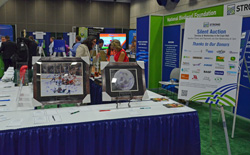
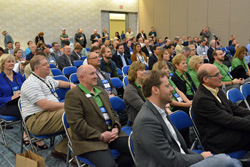
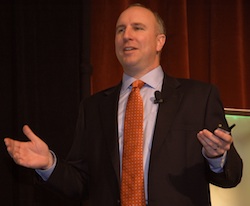
Director of bio-based products for the United Soybean Board (USB), Michael Erker, was one of the many attendees of the 2014 National Biodiesel Conference. He works with many bio-based products including biodiesel. He gives insights into what bio-based products that contain biodiesel include and shares how involved USB is in funding biodiesel research.
“When we talk about bio-based products made from soybean oil or meal, that includes biodiesel. Biodiesel soy methyl ester are a great solvents. You not only get biodiesel, you get many other products like hand cleaners, paint strippers or other personal care products.”
USB gets very involved with research projects and are major funders for biodiesel. You can bet that they have had their hand in about all research projects the National Biodiesel Board has conducted. Michael also shared their investment with Ford and research to bring soy tires to vehicles nationwide.
You can listen to Chuck’s complete interview with Michael here: Interview with Michael Erker