
 RMD has become a gold sponsor of the Wind Energy Summit South Africa taking place April 9-10, 2014 in Cape Town. During this industry meeting, RMB will share their experience of successful financing during the round one development at Hopefield wind farm. The summit brings together the key decision makers of South African wind, including the National Treasury and the Department of Environmental Affairs, NERSA, Eskom, Nedbank Capital, Gestamp Wind, Siemens and Suzlon.
- Lignol Energy Corporation has announced that it has closed the transaction previously announced to acquire all of the current outstanding and issued ordinary shares of Territory Biofuels Limited increasing its ownership of TBF from 55% to 100%. TBF owns the largest biodiesel plant in Australia with an annual capacity of 140 million litres with plans to re-start operations in the latter half of 2014.
- National Cooperative Bank provided $82 million in financing for solar projects during 2013. The Bank worked with Strata Solar of Chapel Hill, North Carolina on 15 solar projects around the state that provided 94 MW of power. The projects the Bank financed resulted in 94 MW of power, which equates to powering 11,250 homes.
- Submissions and nominations for the 2015 Zayed Future Energy Prize are open. The prize, an annual US$4 million award, recognises individuals, organisations and schools who have made significant strides to advance the fields of renewable energy and sustainability. Submissions will open globally across five categories: Large Corporation, Small and Medium Enterprise (SME), Non-Governmental Organisations (NGO), Lifetime Achievement and Global High Schools. In the Lifetime Achievement category, nominations are also being be accepted.

Georgia Biodiesel Maker Installs Shockwave Reactor
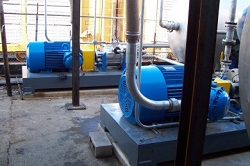 A Georgia biodiesel maker has installed a reactor that the system’s builder says will transesterify vegetable or animal fats in just seconds. This article from Biodiesel Magazine says World Energy in Rome, Ga., has put in the Hydro Dynamics Inc. ShockWave Power Reactor (SPR) BD 50 at the 50 million gallon a year refinery.
“Harnessing the power of cavitation, the ShockWave Power Biodiesel Reactor drives the transesterification reaction to completion in seconds,” stated Hydro Dynamics. “In true continuous or batch systems, the SPR gives biodiesel producers greater feedstock flexibility and the power to achieve consistently superior quality. The SPR can improve processes to reduce monoglycerides and reduce catalyst utilization.”
Hydro Dynamics says the ShockWave Power technology, now in its 8th year, is used widely throughout the biodiesel industry with 500 million gallons of annual reactor capacity now sold.
REG Making $13.2 Million Upgrade to Biodiesel Plant
 Renewable Energy Group, Inc. (REG) is making a $13.2 million improvement to one of its Iowa biodiesel plants. The Ames, Iowa-based biodiesel giant, already the country’s biggest producer of the green fuel, broke ground on the improvements at its Newton biodiesel refinery.
“This investment shows our continuing confidence in biodiesel for the long-term,” said Daniel J. Oh, President and CEO of Renewable Energy Group, Inc. “It furthers our efforts to enhance our lower-cost, multi-feedstock biodiesel business by continuing to broaden our customer base and provide more options for our customers to choose from.”
The upgraded process, including distillation, removes impurities and leaves behind the purest form of the fuel. The final product far exceeds quality standards set by the biodiesel industry, while meeting the company’s more rigorous REG-9000® quality specifications.
“This is a great investment for Newton,” [Iowa Rep. Dan] Kelley said. “I couldn’t be more pleased with the commitment that REG is showing our community. Biodiesel production is important to Iowa. By making biodiesel here in Newton, REG is providing quality jobs while contributing to energy security.”
REG officials added the upgrade allows them to use lower-cost raw materials. REG is already North America’s leading biodiesel producer, with eight active refineries in four states that have a combined nameplate production capacity of 257 million gallons.
We Have A Farm Bill!
 Today the U.S. Senate voted 68-32 to pass the 2014 farm bill after years of work by both Agriculture Committees. The House passed its version of a conference bill Jan. 29, and now the farm bill goes to President Obama’s desk.
The President is expected to sign the bill into law. The Agricultural Act of 2014 expands bio-energy production, supporting non-food based advanced biomass energy production such as cellulosic ethanol and woody biomass power. Specifically, the new Farm Bill funds biomass initiatives for the next five years:
- Bio-Based Markets for $3 million per year
- Biomass Research and Development for $3 million per year
- Biorefinery, Renewable Chemical and Bio-Based Product Manufacturing Assistance Program for $100 million in 2014 and $50 million in 2015 and 2016
- Biomass Crop Assistance Program for $25 million per year
- Bioenergy for Advanced Biofuels for $15 million per year
“America’s farmers are core to the innovation that’s driven down our dependence on foreign oil – and this policy will keep them doing it, said Adam Monroe, regional president of the Americas for Novozymes, a global leader in bioenzyme production. There’s already enough concern about energy policy in America with EPA’s proposed revisions to the Renewable Fuel Standard. It’s a power sign to see policy certainty surrounding the energy programs in the farm bill. We thank Congress for taking action and we urge President Obama to swiftly sign it.
Growth Energy is also supportive of the Farm Bill with CEO Tom Buis commenting, “This legislation will encourage further development in biofuels by continuing to fund essential programs such as the Biorefinery Assistance Program, Rural Energy for America Program and Biomass Crop Assistance Program.
“The bottom line is that this bill helps create jobs in rural America and advances first and next generation biofuel production that will help improve our environment and reduce our dangerous addiction to foreign oil.
Ormat Completes Kenyan Oklaria III Geothermal Plant
Ormat Technologies has successfully completed construction and reached commercial operation of Plant 3 in the Olkaria III geothermal power plant complex located in Naivasha, Kenya. With Plant 3 online, the complex’s total generation capacity has increased to 110 MW. The power generated by the Olkaria III is sold under a 20-year power purchase agreement (PPA) with Kenya Power and Lighting Company Limited (KPLC).
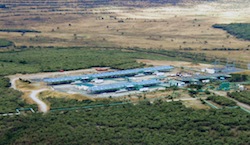 The Olkaria III complex was financed with a $310 million debt facility provided by the Overseas Private Investment Corporation (OPIC). In November 2013, Ormat drew down the remaining $45 million available under the project finance debt facility for the completion of Plant 3.
“Olkaria III is a prime example of our multi-stage approach to project development generating higher investment returns and reducing risk,” said Dita Bronicki, chief executive officer of Ormat. “In less than one year, we’ve completed construction of two additional plants and, over the course of five years, more than doubled the facility’s generating capacity.”
Bronicki added, “Due to our operational expertise and innovative technology, we’ve accomplished that growth ahead of schedule resulting in a significant increase in revenues. As we complete this project, we remain committed to support the growing power needs of Kenya with this indigenous, reliable and environmentally friendly source of electricity. Kenya is an important market for our future growth due to its high geothermal potential and we are focusing our efforts on increasing our operation in Kenya.”
BioEnergy Bytes
- Randy Olson, executive director of the Iowa Biodiesel Board (IBB), has resigned to take a position with the U.S. Soybean Export Council. According to Mark Cobb, a biodiesel producer and petroleum distributor who serves as IBB Chair, Olson’s efforts leave the biodiesel industry in Iowa stronger.
- ROUSH CleanTech has hired Ford Motor Company veteran Rob Stevens as its new vice president of strategy. In this position, Stevens will spearhead future product and customer strategy.
- CEOs from the wind industry will debate how to get ‘back to business’ in the current climate and other business leaders such as Google will discuss new opportunities at the upcoming EWEA 2014 Annual Event, March 10-13, 2014 in Barcelona Spain. Portuguese Energy Minister Moreira da Silva and IEA chief Maria van der Hoeven will speak on the opening day on 10 March. There will be a range of press activities, thirty conference sessions and an exhibition hall with hundreds of companies present.
- Iowa Governor Terry Branstad has been named the new Vice Chairman of the Governors’ Biofuels Coalition.
Louis Dreyfus Purchases ICM SMT Technology
Louis Dreyfus Commodities has signed a contract to purchase two Selective Milling Technologies (SMT) from ICM. The systems will be installed at Louis Dreyfus Commodities Grand Junction, LLC, located in Grand Junction, Iowa, and Elkhorn Valley Ethanol, LLC,  located in Norfolk, Nebraska. According to ICM, SMT is a value-added technology that increases ethanol yield, reduces viscosity and increases oil recovery.
“Our ethanol plants are both located in areas of high feedstock production and we are committed to responsibly investing in these assets to give them further strategic advantages in the industry,” said Bruce R. Chapin, Vice President – Chief Operating Officer, North American Region for Louis Dreyfus. “We are excited to choose Selective Milling Technology as a value-added technology not only because of its proven ability to increase ethanol and oil recovery yields, but also because of the potential we see with ICM’s line of sight that builds upon the SMT platform.”
Chris Mitchell, president of ICM, Inc., said, “ICM is very pleased to continue offering SMT as a yield enhancement solution for our ethanol plant customers. SMT is ICM’s platform technology to our proprietary Fiber Separation Technology and Generation 1.5 Technology. We appreciate the opportunity to work with Louis Dreyfus Commodities, a global merchandiser of commodities and processor of agricultural goods.”
Marathon Buying Ohio Biodiesel Plant
 Big oil producer Marathon Petroleum Corp. is buying an Ohio biodiesel plant. This company news release says Marathon has agreed to buy the 60 million gallon per year Felda Iffco facility in Cincinnati
“MPC has been a producer and large blender of ethanol for many years, and this acquisition will broaden our renewable fuels portfolio with a quality asset,” said Mike Palmer, senior vice president of supply distribution and planning. “We continue to grow our biodiesel blending volumes and this acquisition will be a natural value chain fit. Also, the facility is located in the heart of MPC’s Midwest assets, providing efficiencies in our product supply logistics.”
The deal is expected to be finalized in April. No details were disclosed.
Microorganism for Waste-to-Biodiesel Patented
 A Spanish company has patented a microorganism that will help produce biodiesel from organic waste. Neol announced its patent on Neoleum, a microorganism that will produce oils for industrial use.
Obtained oils are highly versatile and their composition makes them ideal raw material for the production of biofuels such as biodiesel and biokerosene or for other industrial application such as biolubricants, surfactants …
Neoleum™ presents a significant advantage as it is extremely productive; with a one cubic meter bioreactor it is obtained the same oil as in one hectare of oil palm. This translates into environmental, economic and social benefits, in that food resources are not used for the production of energy and waste is managed in a more suitable way.
Neol officials went on to say this transformation process of industrial waste is called bioconversion and marks “a turning point in the production of second generation biofuels.”
Princeton Power, EnStorage Awarded BIRD Grant
Princeton Power Systems and EnStorage have been awarded a $950,000 grant from the Israel-U.S. Binational Industrial Research and Development Foundation (BIRD). The grant will support the commercialization and deployment of an energy storage system based on EnStorage’s proprietary hydrogen bromide (HBr) flow battery and Princeton Power Systems’ inverters and site controller. The first system will be deployed to support a photovoltaic (PV) installation and would be able to support the grid for at least six hours per day for a min imum of 20 years.
“The BIRD Foundation grant will enable our companies to develop a comprehensive solution for PV installations and various other applications,” said Marshall Cohen, Chairman of Princeton Power Systems. “We aim to develop inverters as well as software for EnStorage’s HBr technology to add to our long-term energy-storage offering.”
The commercial system will be a 150kW/900kWH containerized system, to be based on EnStorage’s grid connected 50kW/100kWH technology demonstrator.
“Our partnership with Princeton Power Systems will allow us to expedite the commercialization of our technology,” said Arnon Blum, CEO of EnStorage. “The ability to deploy our battery at a customer site and rely on Princeton Power Systems’ experience in optimizing the interaction between the grid and our battery’s performance will serve as a significant step for future deployments.”