ACE Conference 2026

BioEnergy Bytes

Joanna Schroeder

  • BioEnergyBytesDFAbengoa has acquired 25% of the Beijing-based water company, GreenTech. The deal is currently under the standard review process by the Chinese Government and is expected to be approved in the second quarter of the year. GreenTech is a leader in the Chinese wastewater treatment and reuse market. Its current clients range from the municipal sector to the industrial sector, and the company has over 40 references in water treatment with a combined capacity of 2.1 million cubic meters (m3) per day.
  • SunEdison has announced it has completed construction of a 117 MW (megawatt) DC (direct current) portfolio of utility-scale photovoltaic (PV) solar power plants across the United Kingdom. The portfolio is comprised of eight separate solar power plants.
  • S&C Electric Company, a company focused on renewable energy integration, has announced the first real-world deployment of a new service offering to remotely monitor S&C’s Wind-Turbine Style Vista® Switchgear. This new service was pioneered on Vista switchgear at Infigen Energy’s 50-MW Kumeyaay Wind Farm, located 65 miles east of San Diego in Boulevard, Calif.
  • Solectria Renewables, LLC, has announced that its SMARTGRID 500 Inverters (SGI 500) have been purchased by NuGen Capital for five projects totaling over 13 MW in Massachusetts. All five systems in Massachusetts are ground-mounted. They are located in Swansea, Lunenburg, Whatley and Hadley. These projects generate net metering credits from the facilities and produce credits that will be made available to manufacturers and municipalities in the area via their utility provider.
Bioenergy Bytes

Prairie Horizon to Add Renewable Diesel Facility

Joanna Schroeder

Prairie Horizon Agri-Energy is one of only a handful of ethanol plants moving into the production of biodiesel. The biorefinery announced plans to form a partnership with WB Services to add a renewable diesel production facility into the existing ethanol plant.

“With this announcement, Prairie Horizon continues to meet its goal of providing leadership in the renewable fuels industry,” said Mike Erhart, CEO of Prairie Horizon Agri-Energy. “We are very excited and eager to partner with WB Services and get under construction and put this product in the marketplace.”

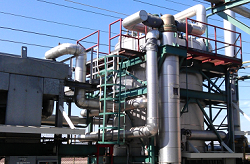
SONY DSCWB Services, LLC, will design, construct and operate the renewable diesel plant utilizing patented renewable diesel process technology. (Learn about WB Services in this audio interview with WB Services’ Bernie Hoffman).

According to Ron Beemiller, President and CEO of WB Services, “This plant will be the first of its kind—the first renewable diesel plant to fully integrate into an existing ethanol operation. This is a very exciting time for both Prairie Horizon Agri-Energy and WB Services, we look forward to working with PHAE’s exceptional leadership team on this project.”

Currently, Prairie Horizon Agri-Energy is a 40 million gallon per year nameplate ethanol plant, which began operations in 2006. With the completion of the facility, renewable diesel nameplate production will be 3 million gallons per year, and will also produce denaturant, fuel gas, and steam for use at the existing facility. Prairie Horizon Agri-Energy also has a significant investment in the renewable and biodiesel plants under construction by Green Energy Products in Sedgwick, Kansas. Design work has already begun, and construction is scheduled to begin in the middle of 2014.

advanced biofuels, Biodiesel, Ethanol, Renewable Energy

DOE Announces Offshore Wind Energy Projects

Joanna Schroeder

The U.S. Department of Energy has announced funding for three offshore wind demonstrations. The projects will receive up to $47 million each over the next four years to deploy innovative, grid- connected systems in federal and state waters by 2017. The projects are located off the coast of New Jersey, Virginia and Oregon.

twisted jacket formation for offshore wind energyFishermen’s Energy will install five 5-megawatt direct-drive wind turbines approximately three miles off the coast of Atlantic City, New Jersey. This project will utilize an U.S.-developed twisted jacket foundation that is simpler and less expensive to manufacture and install than traditional offshore wind foundations.

Dominion Virginia Power will install two 6-megawatt direct-drive wind turbines 26 miles off the coast of Virginia Beach, utilizing a U.S.-designed twisted jacket foundation. Dominion’s project will demonstrate installation, operation and maintenance methods for wind turbines located far from shore. Additionally, the Dominion project will install and test a hurricane-resilient design.

Principle Power will install five 6-megawatt direct-drive wind turbines approximately 18 miles off the coast of Coos Bay, Oregon. The U.S.-developed WindFloat semi-submersible floating foundation will be installed in water more than 1,000 feet deep, demonstrating a solution for deep water wind turbine projects and lowering costs by simplifying installation and eliminating the need for highly specialized ships.

The Energy Department’s efforts to advance innovative offshore wind technologies support the Obama Administration’s comprehensive National Offshore Wind Strategy to develop a sustainable, world-class offshore wind industry. As part of that strategy, the Energy Department continues to work with partners across the government, including the Department of the Interior, to conduct resource assessments, streamline siting and permitting, and overcome technical and market challenges to installation, operations, and grid connection.

Government, offshore wind, Renewable Energy

Research Finds Real-Time Biodiesel Analysis

John Davis

Biodico logoNew research shows a way to conduct quality analysis in real-time. Biodico’s VP of Research and Development, Trey Teall, presented the results of a five-year research project at the recent American Oil Chemists’ Society (AOCS) Annual Meeting & Expo in San Antonio, Texas that focused on the use of Fourier Transform Near-infrared Spectroscopy (FT-NIRS) to provide real-time in-situ analysis of the biodiesel production process as an alternative to conventional ASTM biodiesel methodology.

TreyteallASTM 6751 protocols require the use of techniques that are relatively time-consuming and provide data about the state of the biodiesel reaction kinetics after the fact. For example, the use of gas chromatography to determine mono, di and tri glycerides, and free glycerin will take a trained technician over 45 minutes. It requires that a sample be drawn, reacted (silylated) and run through the GC; and the results indicate what the reaction state was instead of what it is in real time. In contrast, Teall’s research has shown that the use of FT-NIRS can be conducted with sensors imbedded into various production process streams and provide highly accurate near-instantaneous data about the state of the reaction. It can also detect low level contaminants to ensure that finished biodiesel meets the requirements of ASTM D 6751 for finished biodiesel.

The research is continuing and is funded by grants from the California Energy Commission and is in collaboration with the Naval Facilities Engineering and Expeditionary Warfare Center, California Polytechnic University at San Luis Obispo, University of California Santa Barbara, and Marquette University.

Biodiesel

Biodiesel By-Product Innovation Award Announced

John Davis

Glycerine Innovation Award2Research that looks to overcome roadblocks to innovative uses for the biodiesel by-product, glycerin, has been honored. The National Biodiesel Board and the American Cleaning Institute presented their 2014 Glycerine Innovation Award at the American Oil Chemists’ Society’s annual meeting.

The 2014 honoree is Dr. Xiaofei “Philip” Ye, Associate Professor at the University of Tennessee’s Department of Biosystems Engineering & Soil Science. The ACI/NBB Glycerine Innovation Award recognizes outstanding achievement for research into new applications for glycerine, with particular emphasis on commercial viability.

Dr. Ye undertook his research in response to the rapid growth of the biodiesel industry worldwide resulting in the production of large amounts of glycerine, creating an urgent need to quickly and effectively convert crude glycerine into value-added chemical products.

While three major commodity chemicals can be derived from glycerine – acrylic acid, lactic acid, and propylene glycol, which serve as building blocks for environmentally friendly plastics and polymers, there have been “bottleneck problems” hindering the industrial production of these chemicals from glycerine. Dr. Ye’s research focuses on innovative technology development to overcome these problems, while his modeling showed economic promise for the commercial production of value-added chemicals from glycerine.

Biodiesel, NBB

New Record Distillers Grains Exports

Cindy Zimmerman

Distillers grains exports set a new monthly record in March, while U.S. ethanol exports rebounded from the previous month, according to the latest numbers.

distillers-grainsThe Renewable Fuels Association (RFA) reports that March exports of U.S. distillers grains, which is the animal feed co-product from dry mill ethanol plants, were a record 1.16 million metric tons. March shipments were up 28% from February and topped the one million mark for just the fourth time in history. China accounted for half of the export shipments, with Mexico and South Korea taking the second and third place slots. Year-to-date, distillers grains exports as of March totaled 2.97 million metric tons, a 65% increase over the same period a year ago, putting the U.S. on pace to export a record 11.9 million metric tons this year.

At the same time, total U.S. ethanol exports, including both denatured and undenatured, were 84.0 million gallons in March, up 25% over February and just slightly below the January total of 86.2 million gallons. Canada and Brazil were top destinations in March, with both the Philippines and Nigeria re-entering the market. Meanwhile, U.S. ethanol imports totaled just 5.3 million gallons in March, making the United States a net exporter by a wide margin for the seventh straight month.

Distillers Grains, Ethanol, Ethanol News, Exports, RFA

Deepwater Wind Unveils Right Whale Protection Agreement

Joanna Schroeder

An historic offshore wind energy announcement was made today that will help to protect the right whale while development occurs of an offshore wind farm known as the Deepwater ONE Offshore wind farm. The project is being developed off the coast of Rhode Island and North American Right WhaleMassachusetts coasts, an area where the endangered right whale is frequently seen. With less than 500 right whales believed to be alive, they are highly endangered and can become confused due to underwater sounds caused by noise from the vessels doing the pre-construction site activities. The noise also impacts the right whale’s ability to communicate.

A coalition of leading environmental and conservation organizations — Conservation Law Foundation (CLF), Natural Resources Defense Council (NRDC) and National Wildlife Federation (NWF) — and Deepwater Wind today announced an agreement to implement additional protections that will minimize potential impacts on North Atlantic right whales and other marine mammals from underwater noise and construction vessels during the developer’s site characterization and assessment activities.

“We take our responsibility to be a national leader in responsible offshore wind development very seriously, and ensuring marine mammals are protected is just one way we’re fulfilling our commitment,” said Jeffrey Grybowski, CEO of Deepwater Wind during a press call this morning.

Deepwater Wind reached another similar agreement in the Mid-Atlantic Wind Energy areas (the area where the Cape Wind project is in development) and has committed to tailoring its business to protect marine animals in every area it develops a project.

Click here to listen to the media call:Historic Offshore Wind Right Whale Protection Agreement

Deepwater Wind in July 2013 acquired a 30-year lease to develop the Deepwater ONE project in the Rhode Island-Massachusetts Wind Energy Area, located in Rhode Island Sound, after winning the first-ever competitive lease auction for offshore wind energy development in America. The lease area covers approximately 256 square miles in the Atlantic Ocean, roughly 30 miles east of Montauk, N.Y. and roughly 17 miles south of Rhode Island, between Block Island, R.I., and Martha’s Vineyard, Mass.

Read More

Alternative energy, Environment, offshore wind, Renewable Energy

EIA’s Annual Energy Outlook 2014 Laughable

Joanna Schroeder

According to the SUN DAY Campaign, the U.S. Energy Information Administration’s (EIA) official launch of the complete Annual Energy Outlook – 2014 doesn’t pass the laugh test. In follow-up remarks to the preview report launched a few weeks ago, EIA’s projections for renewable electricity generation are way under the mark.

For example, the AEO2014 “Reference case,” EIA notes: “Renewable electricity generation in the United States is projected to grow by 69% from 2012 to 2040…, including an increase of EIA Annual Energy Outlook 2014more than 140% in generation from nonhydropower renewable energy sources. … Although nonhydropower renewable generation more than doubles between 2012 and 2040…, [renewable energy’s] contribution to U.S. total electricity generation is still just 16%.”

Two other scenarios offered by EIA – the Low Economic Growth and the High Oil and Gas Resource cases – suggest even lower penetration rates by renewables, cites the SUN DAY Campaign. EIA also offers several other scenarios – including the No Sunset and CHG25 cases – in which “renewables account for 24% and 27%, respectively, of total electricity generation in 2040. … In fact, renewable penetration of electricity supply in both cases meets or surpasses 16% by 2020, which is the level attained in the Reference case by 2040.”

Significantly, says the SUN DAY Campaign, these latter projections are higher than those presented in the past by EIA. However, while more credible, these scenarios will also almost certainly prove to be unduly conservative. In fact, the association cites, based on the actual growth rates for renewable energy sources (i.e., biomass, geothermal, hydropower, solar, wind) over the past decade, multiple other studies, and even analyses from EIA itself, it is likely that renewables will comprise a much larger share of the nation’s electrical generating supply by 2040 — perhaps two, three or more times higher than the Reference case level forecast by EIA.

In conclusion, SUN DAY Campaign says there are multiple grounds for challenging EIA forecasts.

Clean Energy, Electricity, Renewable Energy

DNV GL & Texas Tech Partner on Wind Energy Education

Joanna Schroeder

Student’s attending Texas Tech University now have more educational opportunities around wind energy. The University’s National Wind Institute and DNV GL are collaborating on a teaching project to expand the availability of wind power courses. Classes will be provided through both in-class and online channels enabling global access to cutting edge instruction and utilizing real-life case studies from the wind energy industry. This collaboration will strengthen future workforce development and allow students in remote locations to participate in a high-quality, certified education process.

Cielo Wind Power farm in Texas“The National Wind Institute strives to educate the next generation of wind energy professionals,” said John Schroeder, director of the National Wind Institute (NWI). “This partnership with DNV GL is another yet another step forward to advance wind energy research and education.”

The program adds depth to Texas Tech’s wind energy program by adding four classes containing up-to-the-minute wind industry case studies developed and led by DNV GL experts who can draw on the company’s 30-year history of involvement in all aspects of the wind industry.

By combining DNV GL’s industry expertise with Texas Tech’s academic excellence, students will have access to wind industry experts to provide current, real-world experiences to supplement the academic fundamentals while working to attain either a managerial or a technical focused Wind Power Certificate from Texas Tech. The program is open to qualified undergraduate and graduate students, and each course will contain cutting edge content from DNV GL, which is known for its high-quality workforce training and thought leadership in the renewable energy industry.

“Renewable energy professionals worldwide already rely on a variety of DNV GL’s existing training programs,” said Kevin Smith, director at DNV GL. “We are excited to participate with Texas Tech in training the wind industry’s future workforce and graduates with industry specific knowledge and case studies so they have increased familiarity with the latest business needs and challenges. We look forward to further collaboration with Texas Tech to educate the wide range of professionals required to meet national wind energy goals – both in the U.S. and other countries.”

This collaboration is slated to last three years and planned to start July 2014 once details are finalized.

Education, Electricity, Wind

BioEnergy Bytes

Joanna Schroeder

  • BioEnergyBytesDFAccording to a recent report from Navigant Research, annual wind power installations in 10 selected markets in Africa and the former Soviet Union will grow from 1,636 megawatts (MW) in 2014 to 3,350 MW in 2023. While growth rates in wind power markets in the developed world have plateaued or, in some cases, fallen, developing economies are expected to see robust growth in the coming years. Strong political support, rising electricity demand due to rapid economic growth, and an imperative demand for energy diversification, are all contributing to an optimistic outlook for wind power development in emerging markets.
  • Rentech Inc. has acquired all three of New England Wood Pellet’s manufacturing facilities, a $34.5 million investment that adds 240,000 tons to Rentech’s annual pellet output.
  • Greenway Innovative Energy, Inc., provider of proprietary, mobile Gas-to-Liquids (GTL) technology, has entered into a Sponsored Research Agreement (SRA) with the University of Texas at Arlington to further refine and enhance its cutting-edge technology which converts natural gas to clean synthetic fuels. The purpose of the Research Agreement with the University is to continually improve the existing Fisher-Tropsch synthesis process for the conversion of natural gas into liquid hydrocarbons, or synthetic fuels.
  • Genomatica announced the appointment of Kaspar Evertz, Ph.D., as Executive Vice President, Commercial. Evertz will lead the company’s business development, licensing, and technology transfer teams with a focus on licensing its process technologies, and the delivery and execution of those licenses. He also will be responsible for securing strategic partners to support the development of additional commercial processes through sponsored development programs.
Bioenergy Bytes