US Ethanol Production Sets Records

Joanna Schroeder

New records were set in 2015 for U.S. ethanol production and blending according to data from the Energy Information Administration (EIA). Last year ethanol production hit a record high of 14.81 billion gallons while refiners and blenders integrated a record 13.69 billion gallons into the U.S. gasoline supply. The industry’s monthly average output in December 2015 also crested the 1 million-barrel-per-day mark for the first time in history.
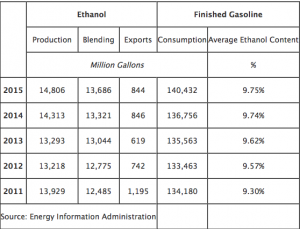
Screen Shot 2016-02-29 at 8.30.41 PMData from the U.S. Environmental Protection Agency (EPA) shows that output levels of corn ethanol were primarily responsible for a record generation of 14.83 billion Renewable Identification Numbers (RINs) used by obligated parties to track compliance under the Renewable Fuel Standard (RFS).

Renewable Fuels Association (RFA) President and CEO Bob Dinneen said that while the numbers are impressive, the American ethanol industry is prepared to do more. Unfortunately, added Dinneen, mismanagement of the RFS program and the oil industry’s intransigence to adopt higher-level ethanol blends like E15 kept the ethanol industry from realizing its full potential. EPA set the 2015 blending obligation for renewable fuel at just 14.05 billion gallons, rather than the 15 billion gallon level established by Congress – an act that is being challenged in federal court.

“The U.S. ethanol industry had an incredible year in 2015, but the failure of the White House and EPA to enforce the RFS as designed by Congress means our nation missed a huge opportunity to provide consumers with even larger volumes of domestically produced, low-carbon, high-octane biofuels,” said Dinneen. “There is no doubt that the ethanol industry could have produced even more renewable fuel if the Administration had stood firm on implementation of the statutory RFS volumes, rather than caving to the oil industry’s ‘blend wall’ narrative.”Read More
Ethanol, Ethanol News, RFA, RFS

University of Illinois Identifies Ideal Bioenergy Crops

Joanna Schroeder

New research from the University of Illinois has identified what bioenergy crops are best for certain regions while minimizing effects on water quantity and quality. The study was based on replacing current vegetation with crops for ethanol production and looked at how each crop would impact water quantity and quality in soils.

“We expect the outcome of this study to support scientifically sound national policy decisions on bioenergy crops development especially with regards to cellulosic grasses,” wrote Atul Jain, professor of atmospheric sciences at University of Illinois, regarding a paper published by the journal Environmental Science & Technology.

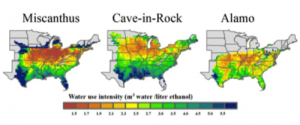
This figure shows how much water is used to produced one unit of ethanol (defined as water use intensity) for each energy crop. (Image courtesy of Atul Jain.)

This figure shows how much water is used to produced one unit of ethanol (defined as water use intensity) for each energy crop. (Image courtesy of Atul Jain.)

Today, corn is the primary feedstock for ethanol production in the U.S. Prior research has found that several bioenergy grasses such as Miscanthus and switchgrasses such as Alamo and Cave-in-Rock causes less nitrogen loss as compared to corn. Nitrogen is an important nutrient for crops and a key ingredient in fertilizer, but nitrogen often washes away into rivers and other bodies of water where it is detrimental to aquatic ecosystems.

Researchers argue that another advantage bioenergy grasses and switchgrasses have over corn is their deep root system that allows them to draw water and nutrients from deeper soil levels and enables them to be more resilient in poor growing seasons.

“Growing bioenergy grasses, in general, can mitigate nitrogen leaching across the United States,” said Yang Song, a graduate student and the study’s lead author. “However, the greatest reduction in nitrogen leaching occurs when bioenergy crops displace other cropland or grassland, because energy crops consume more water and less nitrogen fertilizer than the crops and grasses that they replace, resulting in less water runoff and nitrogen loss.”Read More

biomass, Ethanol, feedstocks, Research

Federal Activities Report on Bioeconomy Released

Joanna Schroeder

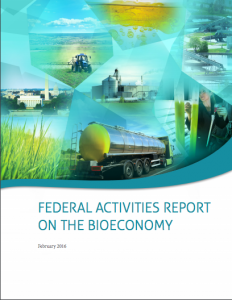
USDA has released a new report, “Federal Activities Report on the Bioeconomy.” According to Dr. Catherine Woteki, the report was developed to create awareness of federal agency activities that are helping to develop and support the bioeconomy. The “bioeconomy” is an emerging part of the U.S. economy, says Woteki, that utilizes renewable biological resources to produce fuels, power and biobased products.

Screen Shot 2016-02-29 at 11.16.10 AMAccording to the Department of Energy (DOE), the U.S. has the potential to sustainably produce one billion tons of biomass. This could displace 25 percent of U.S. transportation fuels, 50 billion pounds of bio-based products, and generate 85 billion kWh of electricity. To reach this would mean tripling the size of current U.S. biomass usage. USDA, DOE, and other federal agencies have activities in place that provide a foundation for the existing bioeconomy.

The Federal Activities Report on the Bioeconomy introduces the Billion Ton Bioeconomy Vision—the government’s new, collaborative vision of what America could achieve by expanding efforts to develop the bioeconomy. Moving forward, the Biomass R&D Board will be hosting a series of workshops and webinars to gather input for the vision from stakeholders and the public, which will be released later this year.

biochemicals, bioenergy, biofuels, biogas, biomass, biomaterials

White Mountain Biodiesel Expands

Joanna Schroeder

White Mountain Biodiesel, located in North Haverhill, New Hampshire, has announced it has begun a plant expansion. Once completed, in about two years, the plant will have been expanded by 10,000 square foot and added 1,186,000 gallons of additional processing and storage tanks. When the expansion goes online, the biodiesel production will increase from 3,000,000 gallons per year to more than 16,000,000 gallons per year, and become the largest biodiesel facility in New England.

White Mountain Biodiesel logoAccording to a press statement, the improvements will be made using proprietary technologies developed by White Mountain over the last nine years of operations. The planned improvements are also expected to provide significant cost reductions as a result of increased plant efficiencies. Presby Construction has been hired to complete the new building addition, and the tank installation, piping, pumps and electrical improvements will be completed the White Mountain team.

As part of the expansion, the company has begun the purchase of its own fleet of tankers and pedal trucks to enable sales of blends as high as B99.9 to retail customers within New Hampshire, Maine and Vermont. White Mountain is working directly with Suntec pumps and other manufacturers to develop a reliable pump configuration to enable home heating systems to function reliably on higher blends of biodiesel. All the trucks acquired will be pre 2007 models without DPF or DEF systems allowing them to be operated on high biodiesel blends. These vehicles will also be used to pick up used cooking oil from New England collectors and for the delivery of glycerine and other waste products to New England digester facilities. The company says it is also exploring opportunities with Caterpillar to supply generators capacity of running B100 to supply the plant’s entire electrical needs.

In addition, White Mountain says the company has begun to take legislative action in the state to include biodiesel as part of the state’s Renewable Fuels Portfolio. The company has also submitted its first set of documentation to obtain its BQ-9000 designation.

advanced biofuels, Biodiesel

BioEnergy Bytes

Joanna Schroeder

  • BioEnergyBytesDF1Loyola University Chicago is hosting a free Collegiate Biodiesel Workshop March 17-19, 2016. The workshop will bring together students, staff, faculty and members of the biodiesel community to discuss biodiesel efforts on college campuses as well as discuss best practices and lessons learned along with sharing resources and network. Click here for more information.
  • Gevo, Inc. has announced that it has entered into a license agreement and a joint development agreement with Porta Hnos S.A. to construct multiple isobutanol plants in Argentina using corn as a feedstock. The first plant is to be wholly owned by Porta and is anticipated to begin producing isobutanol in 2017. The plant is expected to have a production capacity of up to five million gallons of isobutanol per year. Based on projected isobutanol pricing, Gevo estimates that it could generate approximately $1 million in annual revenues once the plant is operational, through royalties, sales and marketing fees, and other revenue streams such as yeast sales.
  • According to the U.S. EPA, a total of 1.74 million domestically produced D3 cellulosic biofuel RINs were generated in January, including 285,432 for ethanol, 1.29 million for renewable compressed natural gas and 161,044 for renewable liquefied natural gas.
  • GE has announced that it has been selected by Belgian Eco Energy to build the largest greenfield, 100 percent biomass-fired power plant in the world. The supercritical plant, which will be powered by wood chips and agro residues, will generate approximately 215 MW of cleaner energy for the industry and nearby households reaching over 60 percent efficiency when operating in cogeneration mode.
Bioenergy Bytes

U of Illinois Miscanthus Research Breakthrough

Joanna Schroeder

University of Illinois researchers have studied genetic markers of miscanthus to identify early developmental traits that will improve yield. According to the researchers, “this study begins to establish links between reproducible genetic markers and a number of key agronomic traits in Miscanthus sinensis.” The research paper was published in GCB Bioenergy, “Mapping the genome of Miscanthus sinensis for QTL associated with biomass productivity.”

Miscanthus_1Over a period of three years, researchers measured developmental and biomass traits over a period of three establishment years in the offspring of a cross between Miscanthus sinensis cultivars ‘Grosse Fontaine’ and ‘Undine.’ It can take three-four years for a miscanthus crop to have a reliable yield. Next, the team extracted DNA from the plants and examined the resulting single nucleotide polymorphisms, or SNPs, to develop a genetic map. The technique improves upon older types of genetic markers that were not as tightly linked to particular genes controlling important biomass traits.

“It represents one of the very first maps that was made and it’s also one of the first times we were able to map a number of genes associated with biomass productivity, and determine the locations of those genes in the Miscanthus genome,” said U of I geneticist Jack Juvik.

On a practical level, the researchers saw strong positive correlations between biomass yield and plant basal circumference, height, and tiller (stem) number, suggesting that plants that are able to grow taller and produce more tillers in the first few years may achieve higher yields in the long term. They also found negative correlations between flowering time and yield, with early flowering individuals producing less biomass. The researchers breeders could make use of that information to improve early selection of plants with enhanced biomass productivity to accelerate the breeding program.

“The advantage to marker-assisted breeding is that you can grow seedlings, collect DNA, and probe for a large suite of DNA markers that are linked to genes that confer the characteristics you want. That can save a lot of time, because you can identify potential phenotypes without having to wait 3-4 years to get a mature plant,” explained Juvik. “The value of this kind of system in Miscanthus is substantial in terms of breeding progress.”

In addition to saving time and providing breeders with specific traits to look for in high-yielding plants, the techniques used in the study and the initial results establish a jumping-off point for future work.

Juvik notes, “This is the starting point. We’ve continued this work and applied it to other populations and to other questions about breeding Miscanthus. This sets up the foundation for moving into a range of different applications.”

advanced biofuels, biomass, Research

Platt’s & DOC Partner on Trade Opps for Ethanol

Joanna Schroeder

Platts has entered into a strategic agreement with the U.S. Department of Commerce’s (DOC) International Trade Administration (ITA) to provide fundamental forecasting data and in-depth analysis for ethanol producers looking for export opportunities.

Sarah Cottle, Platts global content director of agriculture, said of the announcement, “We’re pleased to be recognized by the U.S. Commerce Department’s International Trade Administration as a hallmark of quality, for our independent biofuels data and analytics. We look forward to working with the ITA to further the understanding and transparency in biofuels and agriculture markets and trade.”

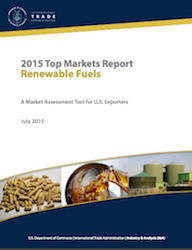
2015 Top Fuel Markets ReportAccording to Platts, its data and analysis will underpin the qualitative insights found in the ITA Renewable Fuels Top Markets Report that will be updated later in 2016 as part of the ITA agreement with Platts. The ITA provides U.S. businesses with tools and resources required to navigate the unique and rapidly growing biofuels marketplace through its Top Markets Report.

“We’re pleased to welcome Platts as a partner in our efforts to strengthen the U.S. economy and support local jobs through expanding U.S. exports,” said Deputy Under Secretary for International Trade Ken Hyatt who was a speaking at the recent National Ethanol Conference in New Orleans. “With more than 95 percent of potential customers living outside U.S. borders, it’s imperative that American companies of all sizes consider the benefits of selling their products abroad. We believe this strategic agreement provides us with a unique opportunity to significantly enhance our analysis of potential exports for the U.S. biofuels industry and increase awareness of opportunities for U.S. exports globally.”

Ethanol, Exports

Research Looks Into Gas Prices

Joanna Schroeder

Your eyes do not deceive. I paid $1.40 per gallon for ethanol-blended fuel on Thursday, February 18, 2106 in Fairfield Glade, TN. Photo credit: Joanna Schroeder

Your eyes do not deceive. I paid $1.40 per gallon for ethanol-blended fuel on Thursday, February 18, 2106 in Fairfield Glade, TN. Photo credit: Joanna Schroeder

As I pulled into a gas station in Fairfield Glade, Tennessee last week I couldn’t believe the price per gallon of fuel with ethanol. After nearly $5.00 per gallon of gas a few years ago in states such as California, I never thought I’d see prices drop below $2.00. But they have and continue to stay. While this is great news for drivers, Big Oil is not too happy about the billions of dollars they are losing with cheap oil. Crude Oil prices have fallen 23 percent in 2016, and 70 percent in the last 20 months – prices the world hasn’t seen in more than a decade.

According to AAA, the national average for gas this week is $1.70 per gallon – 55 cents less than this time last year. Interestingly, anti-biofuel advocates are using cheap oil as a call to end the Renewable Fuel Standard (#RFS) and stop blending corn-based ethanol into our nation’s fuel supply.

Professor Bruce Babcock of Iowa State University says oil companies are making “thoroughly outrageous claims” about what it would cost them, and you, to keep up with the plan to reduce greenhouse emissions. In his paper “Compliance Path and Impact of Ethanol Mandates on Retail Fuel Market in the Short Run,” co-authored by Sébastien Pouliot of Iowa State, Babcock found the impact on consumer prices is “close to zero.” This paper was recently selected to be published in the American Journal of Agricultural Economics.

“One of the reasons for writing this paper was to debunk the myths for justifications of getting rid of the RFS,” Babcock said. “This takes one of the justifications away.”

biofuels, Ethanol, Research, RFS

API Continues to Lambaste #RFS

Joanna Schroeder

The American Petroleum Institute (API) continues to lambaste the Renewable Fuel Standard (#RFS) as the energy policy draws criticism from all sides. Cited as the most effective energy policy ever enacted in the U.S. by supporters, API remains steadfast in its efforts to get the legislation repealed.

gas station in fairfield glade TN

Gas station in Fairfield Glade, TN promoting ethanol-free fuel. Photo credit: Joanna Schroeder

Shortly before a Senate committee oversight hearing on Wednesday, API’s Downstream Group Director Frank Macchiarola said during a press call, “Ahead of the hearing, we are reminding policy makers and the public that the oil and natural gas industry is stepping up our call for Congress to protect consumers from this harmful mandate. We continue to seek the repeal of or significant reforms to the RFS. Since the inception of the ethanol mandate a decade ago, the U.S. has undergone an energy transformation from a nation of energy dependence and scarcity to one of energy security and abundance. It is well past time to reform outdated energy policies to reflect the energy realities of today and tomorrow.”

Macchiarola added that API is hopeful support in Congress for repealing or modifying the RFS is growing. (Although if the current presidential race is any indication, this is in fact not true.)

Growth Energy responded to the remarks stating once again that the oil industry is spouting its “same old, disproven talking points about ethanol and the RFS”. The organization points to the fact that ethanol is the most tested fuel in American history; it’s a less expensive choice for consumers at the pump; and that NASCAR drivers have raced more than eight million miles on ethanol.

“Though this kind of rhetoric should be shocking, it no longer is,” said Tom Buis, co-chair of Growth Energy. “The oil industry has made a habit of repeatedly trotting out bogus studies for the single purpose of blocking competition and consumer choice to protect their profits. The fact is that rigorous testing and unbiased studies from the government and other industries have repeatedly demonstrated that ethanol and other biofuels are a less expensive, cleaner and better performing alternative to oil.”Read More

biofuels, Ethanol, Growth Energy, politics, RFS

UNCTAD Report: Advanced Biofuels Here Now

Joanna Schroeder

Screen Shot 2016-02-25 at 9.16.21 AMSecond generation biofuels made from non-food biomass are here right now according to a new report from UNCTAD. “Second-Generation Biofuel Markets: State of Play, Trade and Developing Country Perspectives,” finds these biofuels are a commercial reality in the context of advanced technologies, economic pressures and a political will to act on climate change. The report focuses on the role advanced biofuels can play in meeting global climate and energy goals and how to make the technology available in developing countries.

With a specific focus on cellulosic ethanol, the report provides a wide-ranging review of the second-generation biofuels sector, maps selected cellulosic ethanol projects, and details recent policy developments from around the world. A key factor in decreasing costs for the industry has been process improvements that have allowed the market to expand, the report finds.

The United States has the largest installed capacity for cellulosic ethanol production and the greatest number of working second-generation biofuel facilities, the report found, followed respectively by the People’s Republic of China, Canada, the European Union (EU) and Brazil. As of 2015, there were no cellulosic ethanol projects on the African continent and in Latin America (excluding Brazil); however, progress has been made in bagasse-fired electricity co-generation and biomass cook stoves in these regions.

The report finds two main strategies have given traction to the growth of advanced biofuels. The first is a market-segmentation strategy in conventional/advanced cellulosic biofuels used in the U.S., and more recently in the EU with the adoption of limits for conventional biofuels, resulting in premium pricing. The second is the availability of national development bank loans that have reduced risk and promoted growth in the industry, especially in China and Brazil. Low interest rates and a venture-capital culture have also played a role in advancing the position of second-generation biofuels.

The report concludes with five suggestions for the responsible development of the second-generation global biofuels industry and is an update from a similar UNCTAD report published in 2014.

advanced biofuels, Cellulosic, Ethanol, Research