Show Me Ethanol Celebrating 10 Years

Cindy Zimmerman

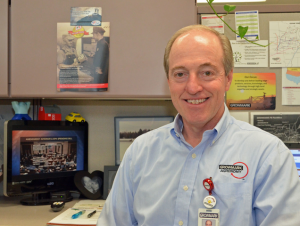
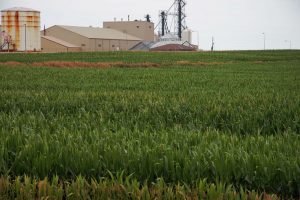
Show Me Ethanol (SME), a dry-mill ethanol production facility located in Carrollton, Missouri is celebrating its 10th anniversary this year. The plant broke ground in March 2007 and began commercial production in May 2008. Today, the facility produces more than 60 million gallons of ethanol and 160,000 tons of distiller grains animal feed per year. SME marked the occasion in a ceremony last week at the plant.

“It’s been an amazing decade here at Show Me Ethanol,” said General Manager Richard Hanson. “We have accomplished so much, producing above our initial capacity and helping to grow ethanol co-products like DDGS and distillers corn oil. We are pleased to reach this anniversary and look forward to continuing to contribute to our economy, energy security, and environment.”

Renewable Fuels Association President and CEO Bob Dinneen congratulated the RFA member plant on the milestone. “True to its name, Show Me Ethanol has led by example and proven the many benefits of renewable fuels to the Carrollton community, the state of Missouri, and our nation,” said Dinneen.

SME is operated by 40 employees, has more than 460 investors, and uses more than 20 million bushels of Missouri corn every year. In 2012, the company also began producing distillers corn oil, which is sold into the animal feed and biodiesel markets.

Ethanol, Ethanol News, Facilities, RFA

Siouxland Ethanol Educates Tomorrow’s Drivers

Cindy Zimmerman

Pam Miller (back row center) visits 5th Grade class at Harney Elementary School

Pam Miller, Board Chair and Director of Industry and Investor Relations for Siouxland Ethanol in Nebraska, recently visited a local fifth-grade classroom to educate the next generation of drivers about ethanol.

Using the Renewable Fuels Association’s “Ethanol in the Classroom” curriculum as a guide, Miller says the students at Harney Elementary in South Sioux City Community Schools sat with rapt attention as she outlined how ethanol is produced, its environmental and economic impacts, and the overall use of the renewable fuel.

“The ethanol curriculum is an incredibly useful tool,” Miller wrote in a blog post for RFA. “It’s broken down into three levels: Grades 3-5, Grades 6-8, and Grades 9-12. After selecting the appropriate level, students choose a vehicle that runs on ethanol to navigate through the program. These students loved selecting the vehicles (the choices are a sports car, a motorcycle, a small car, or a pick up truck), and tracking the progress along the way. At the end of each stop, they completed activities to test how much they learned and then earned badges.”

Two weeks after her classroom visit, Miller returned the favor by hosting the students for a tour at Siouxland Ethanol. “I was surprised at how much the students remembered, including that ethanol is made primarily from corn and that the fuel is transported via railcars to the West Coast,” said Miller. “It won’t be long before these fifth graders are driving and I want to make sure they understand the numerous economic, environmental and energy security-related benefits of this fuel made in their own community.”

Read more.

Education, Ethanol, Ethanol News, RFA

NBB and Cummins Have Some Fun with Biodiesel

Cindy Zimmerman

Photo courtesy of Joseph Sanders Photography

National Biodiesel Board Director of Sustainability Don Scott recently joined a group from Cummins Inc. for some high-powered diesel fun.

The crew from Cummins was passing through Missouri while road testing a group of vehicles equipped with Cummins’ recently released R2.8 Turbo Diesel engine. Scott invited them to rev their engines and ride through Big Muddy National Wildlife Refuge as they crossed the state, and they took strong interest in his road-tested (and off-road tested) family truckster.

Cummins recently released these 2.8L engines for the aftermarket, which represents the first time Cummins has sold engines specifically for aftermarket conversions. But Scott converted a Jeep Wagoneer ten years ago using a Cummins engine to gain fuel economy and to burn biodiesel instead of gasoline while camping, exploring, and taking family outings.

“I joined NBB, because I wanted to protect the environment, but also because I wanted to do so while driving diesel trucks,” Scott said. “We take our work seriously creating jobs and reducing emissions by growing the biodiesel industry, but every so often we get to have a little fun in the process.”

Watch a short video on the Cummins Inc. Instagram where the roaring diesel engines can be appreciated in full. All new Cummins Engines are approved to run blends of biodiesel up to 20 percent.

Biodiesel, NBB

NCGA President Working Hard for Ethanol in DC

Cindy Zimmerman

NCGA president Kevin Skunes in meeting with Sen. Heidi Heitkamp

National Corn Growers Association (NCGA) president Kevin Skunes has probably spent more time in Washington DC over the past month or so than on his farm in North Dakota working hard to protect the Renewable Fuel Standard (RFS) and the important market of ethanol for corn growers.

Last week, Skunes joined the American Coalition for Ethanol (ACE) in visits to Congressional offices. “For the fly-in we go to offices that we wouldn’t normally go to…states that might not be as friendly to ethanol,” said Skunes during an interview at the fly-in.

Since before Commodity Classic, NCGA has been working to educate the administration about Renewable Identification Numbers (RINS) and why they are so important to the overall success of the RFS. “RINs do matter to farmers,” Skunes said. “I think that over the last month and a half, they have come around to see that it would be very detrimental to cap the price of RINs and I hope that we are making some headway.”

Listen to that interview here: Interview with NCGA president Kevin Skunes

2018 ACE DC Fly-in Photo Album

NCGA this week submitted formal comments to the U.S Department of Justice opposing the proposed settlement between Philadelphia Energy Solutions and the EPA regarding the outstanding RFS compliance obligations the refiner has included in its Chapter 11 bankruptcy filing. That situation is what originally brought the RIN price issue to the attention of the administration.

Skunes tweeted on Tuesday this week that he had a chance to visit with Vice President Pence about the RFS. “He said we are looking for a “win, win” solution, I asked him if we could meet to talk about what that solution looks like! He said let’s talk!” Skunes tweeted on Tuesday.

ACE, Audio, corn, Ethanol, Ethanol News, NCGA

First of Three Ethanol Safety Webinars Next Week

Cindy Zimmerman

Next week, the Renewable Fuels Association and TRANSCAER® will be holding the first of three ethanol safety webinars for ethanol emergency response teams. The webinars are scheduled for April 4, May 23, or July 25.

The “Train the Trainer” webinars are funded through a Federal Railroad Administration/TRANSCAER® grant. A single webinar can train a group of individuals, who can then turn around and pass that information forward, equipping entire communities with the knowledge necessary to respond to any potential ethanol-related emergency.

The webinar is intended to develop instructors to lead operations-level training. The webinar, led by national hazardous materials trainer Joel Hendelman, is open to all professional individuals above the technical level of training who are interested in learning how to teach ethanol emergency response. These professional individuals must also have an awareness level of hazardous material storage, handing and emergency response. The webinar is intended to develop instructors to lead operations-level training.

The free webinars will be held from 2:00-4:00 pm ET, but registration is limited to the first 100 attendees per webinar. Certificates of attendance will be awarded following the completion of the safety seminar.

In addition, RFA and TRANSCAER® are hosting two ethanol safety seminars in Jersey City, N.J., at the end of next week, April 6-7. The seminars will be held at New Jersey City University from 8:30am-4:00pm. Registration is free, but limited, and lunch will be provided. Certificates of Attendance will be awarded following completion of the safety seminar. The seminars are designed for individuals who respond to ethanol-related emergencies, as well as emergency planning committees and safety managers.

For more information or to register, visit www.rfa.traincaster.com

Ethanol, Ethanol News, RFA, safety

Iowa Blender Pump Program Demand Exceeds Funding

Cindy Zimmerman

The Iowa Renewable Fuels Infrastructure Program (RFIP) is already out of funding for 2018, but many more retailers are interested in offering higher blends in the state.

During the third of its four scheduled meetings, the RFIP board awarded funds to 15 projects for retailers around the state to install the necessary equipment to offer higher blends of ethanol and biodiesel. Due to lack of funds, some retailers were turned away and no funds remain for any fourth quarter applications. This is the second straight year that demand has exceeded funding for the program.

“RFIP is the definition of a successful program,” said Iowa Renewable Fuels Association Policy Director Grant Menke. “We’ve seen the number of retail stations offering higher biofuel blends increase dramatically, and interest in the program is still at an all-time high. It is critically important the state continue to make this investment and sustain this momentum toward higher blends.”

RFIP cost-share grants are offered to Iowa retailers wishing to upgrade fueling infrastructure to offer E15, E85 and/or biodiesel blends to help increase consumer access to renewable fuels. For every dollar of state funding invested in the program, four dollars of private investment has resulted, totaling over $138 million in private economic activity.

Reimbursement can be up to 70 percent of the installation costs, up to a maximum of $50,000 per project, with a five-year commitment.

Biodiesel, blends, Ethanol, Ethanol News, Iowa RFA

ND Farm Couple Makes ACE Fly-in a Priority

Cindy Zimmerman

Pam and Mike Clemens with Sen. Heidi Heitkamp

Husband and wife farmers Mike and Pam Clemens from North Dakota spent last week in Washington DC with the American Coalition for Ethanol (ACE) meeting with lawmakers on Capitol Hill.

Mike says ethanol is very important to their family farm in the tiny town of Wimbledon. “It really has changed over the last 20 years when we used to grow just wheat and barley and now we switched to corn and beans and ethanol fits right in as a market for us,” he said.

Pam says her story when she visits Congressional offices is that ethanol has had such a positive impact on their operation and their community that three of their five grown children have returned to the farm. “To have five children and have 3 of the 5 that come back with such gusto and excitement is the reason I want them to hear that message,” she said. “We got to plant more corn because of the ethanol plants going up and all of that excitement brought them back.”

The Clemens’ have been to about four of the ten ACE Fly-ins so far and they strongly encourage others to join the effort. Listen to my interview with them here:

Interview with Mike and Pam Clemens at ACE fly-in

2018 ACE DC Fly-in Photo Album

ACE, Audio, corn, Ethanol

Ethanol and Biodiesel Groups Oppose PES Settlement

Cindy Zimmerman

The Renewable Fuels Association (RFA) and the National Biodiesel Board (NBB) both submitted comments to the Department of Justice yesterday opposing the proposed bankruptcy settlement agreement with Philadelphia Energy Solutions (PES).

RFA commented that the proposed settlement agreement, which covers the refiner’s Renewable Volume Obligations (RVOs) for January 2016-April 2018, should be rejected “because the terms are patently unfair, unreasonable, and inconsistent with the purposes of the RFS program.”

“By allowing PES to retire only 138 million RINs for its pre-effective date obligation of more than 500 RINs, DOJ and EPA have effectively waived approximately three-quarters of PES’s RVOs for this period….Exacerbating its noncompliance, PES reportedly had been also selling roughly 40 million RINs in the fall of 2017, even as the March 2018 RVO compliance deadline approached. This is a classic case of a regulated entity being allowed to have its cake and sell it, too—while PES seeks to escape from its financial responsibilities under the RFS program, it embraces that same program for the limited purpose of profiting from it,” RFA added.

NBB similarly commented that the proposed settlement would harm the renewable fuels industry and undermine the intent of the RFS program by excusing more than 70 percent of the company’s compliance obligations for the two-year period.

“While PES continues to blame the RFS for their woes, the fact is, the bankruptcy is a mess of their own making. Poor management and a failure to respond to changes in the crude oil market is to blame,” said Kurt Kovarik, NBB’s vice president of federal affairs. “PES should not be rewarded for deliberately failing to comply with the decade-old Renewable Fuel Standard. Doing so is akin to rewarding a toddler in the midst of a temper tantrum. Instead, the government should hold PES to the same renewable volume obligation as all other refiners. Not doing so could severely hinder the RFS’s goals of enhancing energy security, protecting the environment, and building our nation’s rural economy.”

The U.S. Bankruptcy Court of Delaware has to approve PES’ proposed settlement agreement on April 4.

Biodiesel, Ethanol, Ethanol News, NBB, RFA, RFS

Ethanol Report on Custom Ethanol Chopper

Cindy Zimmerman

Several hundred lucky motorcycle lovers got the chance to see a brand new, E85-capable American Chopper designed by Paul Teutul, Jr. when it was unveiled at East Kansas Agri-Energy on Saturday. The rest of the world will have to wait until the sweet ride officially debuts on the new season of the Discovery Channel’s American Chopper this summer.

Discovery Channel crews filmed the unveiling of the Renewable Fuels Association custom motorcycle at the plant in Garnett, Kansas and a crowd of more than 500, mostly on motorcycles, were part of the show. The price of admission was the promise to keep any photos of the bike private until after the episode airs.

In this edition of The Ethanol Report, RFA Vice President of Industry Relations Robert White talks about the collaboration with Paul Jr. and how the custom build will take RFA’s message to motorcyclists to the next level.

Ethanol Report on Custom Ethanol Chopper

Click on the photo for a larger version, and see more photos on the RFA Facebook page.

Subscribe to the podcast via RSS
Subscribe via iTunes

Audio, Ethanol, Ethanol News, Ethanol Report, Motorcycle, RFA

Growth Energy Formally Protests PES Settlement

Cindy Zimmerman

Growth Energy has filed comments with the Department of Justice formally objecting to a proposed bankruptcy settlement between the Carlyle Group’s Philadelphia Energy Solutions (PES) and the U.S. Environmental Protection Agency (EPA) that would absolve the refinery of key obligations under the Renewable Fuel Standard (RFS).

“The proposed settlement sends the wrong message to industry stakeholders, implying that there are no consequences for violating the law,” said Growth Energy CEO Emily Skor. “The Carlyle Group pulled hundreds of millions of dollars out of the company and failed to make the clean energy investments that have allowed other refiners to thrive. The EPA should not reward the Carlyle Group by allowing PES to escape more than 70 percent of its obligations under the Clean Air Act. If this sue-and-settle-style settlement is approved, it sends a terrible message to investors who have played by the rules. With farm income at a 12-year low, rural America can’t afford another handout to refinery owners.”

Among Growth Energy’s objections to the settlement is that it unjustifiably permits the retirement of 138 million Renewable Identification Number (RIN) credits for the 2016 and 2017 compliance periods and the first quarter of 2018 against a Renewable Volume Obligation (RVO) of 467 million RINs plus the obligation PES incurs in the first quarter of 2018, likely totaling well over 500 million RINs – a discount of more than 70 percent.

Ethanol, Ethanol News, Growth Energy, RFS, RINS