ACE Conference 2026

Corn Growers Winning with Enogen

Cindy Zimmerman

Corn prices are barely at break-even levels right now, so every advantage a grower can get to make a little extra per bushel is well worth it these days.

Steve Stenzel of Hamburg, Iowa has been growing Enogen corn for four seasons now and he says it has worked out very well for him. “We’ve been very happy with the yields and the premium,” said Stenzel during an interview at the recent Iowa 250 NASCAR race presented by Enogen. He provides corn for two different ethanol plants in southwest Iowa. “I like the Enogen product in that farming is providing that enzyme (for the ethanol plant) that otherwise would be brought in commercially from another industry.”


Enogen corn farmers from several states attended the race earlier this month, courtesy of Syngenta, and most are looking at a corn crop right now that is rated as much as 86 percent good to excellent. With the possibility of yet another bin-busting crop, growers are pleased that Enogen corn offers the potential to earn up to a $.40/bu (on average) premium for grain delivered to the ethanol plant. Enogen corn is expected to generate approximately $28.5 million of additional revenue for local growers in 2018 through per-bushel premiums.

Listen to comments from a few growers and seed dealers at the race from Iowa, Nebraska, Minnesota, and North Dakota –
Comments from guests at Syngenta Enogen race

Interview with Steve Stenzel, Iowa Enogen corn farmer

NASCAR Xfinity Series Iowa 250 presented by Enogen Photo Album

AgWired Precision, Audio, corn, Enogen, enzymes, Ethanol, Ethanol News, Syngenta

Report Contradicts EPA Chief

Cindy Zimmerman

EPA Administrator Scott Pruitt and NAFB president Tom Cassidy in April – photo credit Spencer Chase

Yet another revelation in the Environmental Protection Agency small refinery exemption saga came to light this week, thanks to the investigative journalism of Reuters, reporting Tuesday that EPA “consistently ignored recommendations from the Department of Energy (DOE) to reject or limit waivers to oil refiners seeking exemptions from the Renewable Fuel Standard (RFS).”

This contradicts what EPA Administrator Scott Pruitt has been saying for months now in claiming the agency is obligated to give waivers to refiners who meet certain objective criteria. “And oh by the way, DOE is involved in that,” Pruitt said during a meeting with members of the National Association of Farm Broadcasting (NAFB) in April. “What’s happened historically, that has not worked well, is that DOE and EPA have not been working together collaboratively – we have. We use their data and we make informed decisions based upon their data.”

Listen here: Pruitt defends small refinery exemptions

Pruitt said the same thing when he met with farmers and ethanol producers in the Midwest earlier this month, leaving many now questioning his credibility.

“Administrator Pruitt just finished telling crowds of struggling farmers that the massive increase in EPA handouts wasn’t driven by his loyalty to a few wealthy refiners,” said Growth Energy CEO Emily Skor. “In fact, those waivers are at odds with everything we hear from the Department of Agriculture, President Trump, and now the Department of Energy.”

American Coalition for Ethanol (ACE) CEO Brian Jennings says, “Administrator Pruitt’s … less than truthful answer to farmers in South Dakota blaming the DOE for requiring EPA to hand out waivers like candy is the last straw. Disagreeing is one thing — lying to cover up something you did that impacts rural families’ livelihoods is another.”

Renewable Fuels Association CEO Bob Dinneen says Pruitt is “ignoring the Department of Energy, just as he’s ignoring the President of the United States – he doesn’t care.”

ACE, Audio, EPA, Ethanol, Ethanol News, Growth Energy, RFA, RFS

Ethanol Report on EPA RFS Proposal

Cindy Zimmerman

At one time, the ethanol industry would have been thrilled with the Environmental Protection Agency (EPA) proposal for 2019 RFS blending requirements, which maintains the 15 billion gallon statutory level for conventional biofuels and increases the levels for advanced biofuels. But that was before EPA Administrator Scott Pruitt started handing out small refinery exemptions like Halloween candy resulting in over 2.5 billion gallons of demand destruction – by EPA’s own admission.

Renewable Fuels Association president and CEO Bob Dinneen says he is especially infuriated because the announcement was delayed on Friday to change language in the proposal “that would have, at least for future small refinery waivers, created a more transparent process by which those gallons would have been reallocated.”

In this Ethanol Report, Dinneen reacts to the proposal, and to a Reuters report that EPA ignored Department of Energy recommendations to limit waivers. Ethanol Report on EPA Proposed 2019 RVOs

Subscribe to the podcast via RSS
Subscribe via iTunes

EPA, Ethanol, Ethanol News, Ethanol Report, RFA, RFS

EPA Releases 2019 Biofuel Proposal

Cindy Zimmerman

The Environmental Protection Agency released its proposal for 2019 biofuel obligations under the Renewable Fuel Standard (RFS) Tuesday, maintaining the statutory level for corn ethanol while increasing advanced biofuels, but failing to address the small refinery exemptions that have decimated demand and effectively lowered the required amount of biofuels to be blended.

Under the proposed rule, conventional renewable fuel volumes would be maintained at the implied 15-billion gallon target set by Congress for 2019, the advanced biofuel standard would be increased by almost 600 million gallons over the 2018 standard – including an increase of 100 million gallons for the cellulosic biofuel standard and a 330 million gallon increase for the biomass-based diesel standard for 2020.

EPA is also “taking comment on a host of ways to improve market transparency, including by limiting who can participate in the Renewable Identification Number (RIN) market and the length of time a RIN can be held.”

The biofuels industry would be more pleased with the rule if it had addressed the gallons lost due to refinery waivers.

National Biodiesel Board VP of Federal Affairs Kurt Kovarik – “We welcome the Administration’s proposal to grow the biodiesel volumes, following two flatlined years. This is a positive signal for our industry and we’re pleased the EPA has acknowledged our ability to produce higher volumes…The fact remains, though, instability in the RFS program caused by the EPA has done significant damage that can only be rectified for biodiesel through consistent and predictable growth in volumes.”

American Coalition for Ethanol CEO Brian Jennings – “While EPA says it is proposing to maintain the 15-billion-gallon conventional blending target for 2019, in reality Administrator Pruitt’s ongoing actions will reduce ethanol blending far below 15 billion gallons…The proposal to modestly increase cellulosic and advanced RVOs for 2019 is welcome but EPA’s waivers and exemptions have collapsed RIN prices across-the-board discouraging investment in the production and use of cellulosic and advanced biofuels.

Growth Energy CEO Emily Skor – “The EPA proposed 15 billion gallons for conventional biofuels, but that still isn’t a real number we can count on. This plan fails to ensure those gallons will, in fact, be blended. By neglecting to reallocate gallons lost to waivers, the EPA is doubling down on another year of an estimated 1.5 billion gallons in demand destruction…The EPA cannot continue to enrich the largest oil companies and refiners at the expense of struggling U.S. farmers.”

Renewable Fuels Association CEO Bob Dinneen – “The proposal means nothing until EPA reallocates those lost gallons and sets forth a more transparent and rational process that assures small refinery waivers are not abused or granted unnecessarily. Unfortunately, over the past few days, Administrator Pruitt buckled yet again to pressure from the oil industry and removed language from this proposal that would have indicated the Agency’s interest in addressing what has clearly become an abused process.”


ACE, advanced biofuels, Biodiesel, biofuels, corn, EPA, Ethanol, Ethanol News, Growth Energy, RFA, RFS

Keeping Up With Corn Research

While the content shared during sessions at the 2018 Corn Utilization and Technology Conference was very technical, it was valuable to Mark Sponsler, Executive Director of the Colorado Corn Growers Association.

“Behind any market development effort, and at the root or the base of any new technology that represents market demand, there has to be a foundation of solid research,” Sponsler said.

Sponsler uses the opportunity to learn where the research is headed and what the future holds for corn and potential markets for corn. Whether it is the future of cellulosic ethanol or the development of corn-based products to replace those currently derived from petroleum, it’s information that Sponsler wants to know.

He said Colorado is like many other states that are looking to redefine the focus of research investments and sometimes choosing between funding production technology or product development. Often the budget of one state association is not big enough to do both. Sponsler said many times several states will work together on projects that expand markets for corn, using ethanol production and promotion as a prime example of that kind of effort.

Interview with Mark Sponsler, Colorado Corn Growers Association

2018 Corn Utilization & Technology Conference Photo Album

AgWired Energy, AgWired Precision, Audio, corn, CUTC

Groups Support Biodiesel Tax Credit

Cindy Zimmerman

A diverse group of trade associations are presenting a united front to Congress in support of maintaining and extending the current biodiesel blenders tax credit.

Eight organizations joined the National Biodiesel Board in a letter to House Speaker Paul Ryan (R-WI), Senate Majority Leader Mitch McConnell (R-KY), House Democratic Leader Nancy Pelosi (D-CA), Senate Minority Leader Charles Schumer (D-NY), House Ways and Means Committee Chairman Kevin Brady (R-TX), and Senate Committee on Finance Chairman Orrin Hatch (R-UT).

“To provide certainty in planning, we believe Congress should extend the full $1.00 per gallon tax credit for 2018 and 2019. Beyond that, we are seeking long-term certainty, including a permanent tax incentive at a level that will continue to foster growth in the domestic biodiesel market,” the letter reads. “Extending the biodiesel blenders credit will allow us to continue to provide the economic and environmental benefits associated with the program.”

Groups signing the letter include the Advanced Biofuels Association, the American Trucking Associations, National Association of Convenience Stores, National Renderers Association, NATSO – Representing America’s Travel Centers and Truckstops, New England Fuel Institute, Petroleum Marketers Association of America, and Society of Independent Gasoline Marketers of America.

The groups also noted that the “on-again, off-again” nature of the credit disrupts access to capital, frustrates the sector’s ability to make investments, and hinders companies’ ability to hire and expand. The trade associations urged Congress to restore the tax credit for 2018 and 2019, and provide long-term certainty to the industry through a permanent tax incentive.

Read the letter.

advanced biofuels, Biodiesel, NBB, transportation, Trucks

National FFA and AgriNovus Indiana Announce Blue Room

The National FFA Organization and AgriNovus Indiana have joined together to announce the “Blue Room” will debut at the 2018 National FFA Convention & Expo in Indianapolis Oct. 24-27.

The Blue Room is the kickoff to Blue 365, an initiative that will bring this same innovation into classrooms and impact more than 650,000 members nationwide. FFA student members are the future leaders of the food industry, which is relying on this generation to meet unparalleled challenges to feed a growing world population.

The 17,000-square-foot interactive Blue Room will center on the challenges facing our community—from respecting the planet to the urgent matter of feeding the world. This cutting-edge approach will focus on experiential learning and thought-provoking exposure to the convergence of agriculture, technology, human health, engineering, and more.

Corteva Agriscience, the agriculture division of DowDuPont, and Elanco are also proud participating sponsors of The Blue Room and supporting partners of AgriNovus Indiana.

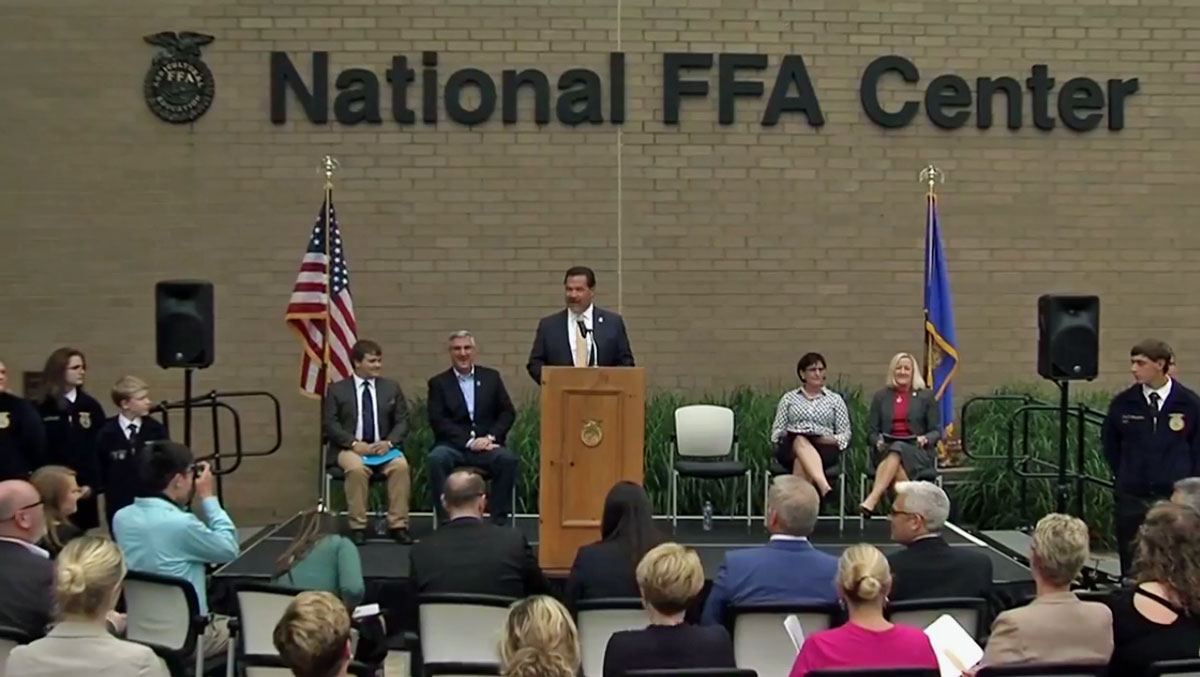
Making the Blue Room announcement Monday in Indianapolis were National FFA CEO Mark Poeschl, AgriNovus Indiana president and CEO Beth Bechdol, Indiana Gov. Eric Holcomb, and FFA alumnus Loren King. Listen to their remarks here: National FFA and AgriNovus Indiana Announce Blue Room

Agribusiness, AgWired Animal, AgWired Energy, AgWired Precision, Audio, Education

Doggett Interim CEO for NCGA as Novak Joins CropLife America

Jon Doggett has been named interim CEO for the National Corn Growers Association (NCGA) starting August 1, taking over for Chris Novak, who becomes president and CEO of CropLife America (CLA) in August.

Novak will become just the fifth staff leader of CLA in its 85-year history on August 20. He replaces Jay Vroom, who has been CEO since 1989 and announced his plans to retire last year. Novak has served as NCGA CEO since October 2014, after six years as CEO of the National Pork Board.

Doggett has been with NCGA since 2002 and has served as Executive Vice President since 2014. Prior to that, he served as Vice President, Public Policy, and continues to manage the organization’s 11-person Washington office and lead its public policy efforts.

Raised on his family’s Montana ranch, Doggett has substantial knowledge of production agriculture and more than 30 years of agricultural policy experience. Before joining NCGA, Doggett served 11 years at the American Farm Bureau Federation, where he was the Bureau’s lead lobbyist on a number of public policy issues, including ethanol, climate change, land use, conservation, and endangered species. Doggett also worked for the National Cattleman’s Beef Association/Public Lands Council and served as senior legislative assistant for former Montana Congressman Ron Marlenee.

An announcement regarding the formal search process for a permanent CEO will be made at a later date.

Ag group, AgWired Animal, AgWired Energy, AgWired Precision, corn

House Subcommittee Hearing on Advanced Biofuels

Cindy Zimmerman

The House Energy and Commerce Subcommittee on Environment held its fourth hearing this year aimed at addressing issues related to fuels and vehicles, this time focusing on advanced biofuels under the Renewable Fuel Standard (RFS).

Among those who testified at the hearing on Friday were Advanced Biofuels Association president Mike McAdams, National Association of Truck Stop Operators representative Robin Puthusseril, Renewable Energy Group (REG) CEO Randy Howard on behalf of the National Biodiesel Board (NBB), and Advanced Biofuels Business Council Executive Director Brooke Coleman. Click on names for links to written testimony.

Listen to opening comments from subcommittee chairman Rep. John Shimkus (R-IL) and statements from these four witnesses. Advanced biofuels hearing 6-22-18

advanced biofuels, Audio, Biodiesel, biofuels, Cellulosic, Ethanol, Ethanol News, NBB, RFS

Lamberty Focused on E10 in Mexico and E15 in US

Cindy Zimmerman

Right after the Fuel Ethanol Workshop (FEW) wrapped up in Omaha this month, word came that a Mexican federal court overturned an injunction blocking ethanol blends from climbing to 10 percent from 5.8 percent, allowing most of the country to move forward with E10 blends.

That was very good news as American Coalition for Ethanol senior vice president Ron Lamberty returned to Mexico last week for the third time this year to speak at a meeting of Mexican petroleum equipment installers and retailers in León about equipment compatibility and other practical considerations when implementing and selling up to E10 blends for the first time.

“Like we’ve seen as ethanol expanded in the U.S., ethanol’s competitors in Mexico have created roadblocks to higher ethanol use,” Lamberty said. “One of those roadblocks was removed when a Mexican court overturned the injunction.” That injunction was put in place a year ago and ethanol opponents are expected to continue litigating the expansion of ethanol in the country.

Lamberty joined the U.S. Grains Council for two other technical workshops this year in Monterrey and Tijuana. “Now that E10 is a real possibility in most of Mexico, and “the math” of adding ethanol is so attractive, I explained to these station owners how they can differentiate themselves from competitors and still make better margins,” Lamberty added.

Back here in the states, Lamberty continues to help retailers with the ins and outs of offering E15, which has its own roadblocks in the way. At FEW, Chuck Zimmerman talked with Lamberty about the ever changing policy landscape for getting a Reid Vapor Pressure waiver to allow E15 to be sold during the summer months.

Interview with Ron Lamberty, ACE

2018 Fuel Ethanol Workshop Photos

Fuel Ethanol Conference content sponsored by

Coverage of the Fuel Ethanol Conference is sponsored by Syngenta Enogen

ACE, Audio, E15, Ethanol, Ethanol News, Exports, FEW