

A new report looks at the technology behind biodiesel production.
 The Iowa-based Council for Agricultural Science and Technology (CAST) has released a new CAST Commentary—Convergence of Agriculture and Energy: III. Considerations in Biodiesel Production:
This new CAST Commentary reviews the technology of biodiesel production in the United States and outlines major issues and policy implications associated with its expanded production and use. Specific topics include:
 · Introduction to biodiesel fuels, their current use and future needs for development
· Summary and illustration of the biofuel production process
· Overview of quality requirements and concerns
· General characteristics of biofuels; advantages and disadvantages compared with petroleum diesel
· Economics of biodiesel production—current supply and demand, role of the U.S. government, existing and potential feedstocks, production costs, and technological advances
· Balance of energy—both energy requirements for production and potential energy output
· Conclusion, glossary, and complete reference list
“Biodiesel is developing into a widely accepted alternative fuel,” says Task Force Chair Dr. Jon Van Gerpen, University of Idaho, Moscow. “Quality concerns have been addressed, and most fuel today integrates easily into the existing diesel fuel infrastructure. Further expansion of the industry will require new or larger sources of vegetable oils and animal fats that can be produced at prices that allow biodiesel to compete with petroleum-based diesel fuel.”
The commentary will be presented at the National Farmers Union and the National Coalition for Food and Agriculture Research in Washington, D.C. You can get a free copy of the commentary at the CAST web site, www.cast-science.org.
 Dr. Steffen Mueller, principal research economist at the University of Illinois at Chicago’s Energy Resources Center, studied the carbon footprint of the Illinois River Energy facility near Rochelle, Illinois which produces 55 million gallons of ethanol annually.
 The City of Birmingham, Alabama will test a transit bus that will run on hydrogen next year.
 Students from the University of Colorado are spreading the good news of biodiesel… and going mobile to do it.
 The project West is referring to is a self-contained biodiesel trailer called ESTER, short for “fatty acid methylester,” or scientific name for biodiesel…
  Iowa State University has received an $885,000 U.S. Department of Energy grant to see how small particles can be used to help make biodiesel production bigger.
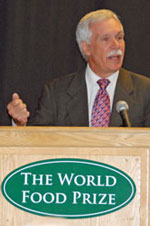 “We walked through the B&I loan guarantee program, which has been used by their memberships, and we assured them that this was a long-standing program that we would use to help finance businesses in rural America, some of them may be ethanol facilities,” Schafer said. “We assured them that no specific money was being set aside only for the ethanol industry.”
 Inspiration for the design came from the legendary Cooper Climax F1 car of the 50’s and is drawing on Britain’s vast Motor Sport Heritage while keeping a firm eye to the future. It is not a retro car, it is a modern Super Car designed with the discerning enthusiast in mind. It is revolutionary and has been designed to set a new standard in the niche vehicle sports car market. The Climax is bespoke and exclusive, quintessentially British, hand-finished, with excellent performance and superb handling.
 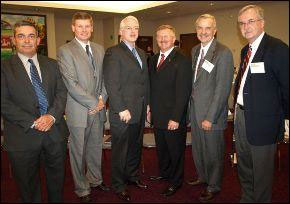 Speakers included USDA Undersecretary Tom Dorr; editor Morton Sosland of Sosland Publishing Co.; and Randy Schnepf, agricultural economist with the Congressional Research Service.
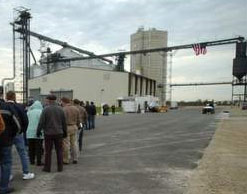 The world’s largest ethanol producer opened a third plant in Ohio on Friday.