

 The Sioux Falls Landfill is now providing methane gas to help power the daily operations of POET’s 105 million gallon per year ethanol plant in Chancellor, South Dakota.
 POET CEO Jeff Broin joined representatives from the City of Sioux Falls and the Landfill Methane Outreach Program (LMOP) of the U.S. Environmental Protection Agency (EPA) for a ribbon cutting ceremony at the Sioux Falls Landfill on Friday.
Among those on hand for the event was LMOP program manager Swarupa Ganguli with the EPA, who explained that the program is a voluntary partnership that promotes the use of landfill gas as an energy source. “This is one of three projects in the country where landfill gas is used in the production of ethanol and the first in the state of South Dakota,” said Ganguli. “The annual environmental benefits from using this gas for power is equal to removing emissions from more than 27,000 passenger vehicles, removing carbon dioxide emissions from more than 344,000 barrels of oil or sequestering carbon with nearly 34,000 acres of pine or fir forests.
The 10-mile, low-pressure pipeline from the Sioux Falls Regional Sanitary Landfill began supplying methane to the plant at the end of February, ahead of the expected completion date. The POET plant will utilize the landfill gas in a wood waste-fuel boiler to generate process steam. Combined, the two alternative energy sources will initially offset up to 90 percent of the plant’s process steam needs currently met using natural gas and has the potential to replace 90 percent of the plant’s total energy needs (combined with waste wood) over time.
 The very first “Ask the Expert” event will take place at the
  Hey – in case you haven’t heard,


 “We were really pleased to see the quantified reduction of CO2 and other pollutants,” said Ryan Donovan, VP of Operations and Business Development of States Logistics. “This is something that we can take to our customers, like Clif Bar & Company, and they can show their customers. We all benefit from having this information available to show the efforts being made to reduce carbon footprint throughout the supply chain.”
 “This information is valuable to any fleet using biodiesel,” said Tom Verry, Director of Outreach and Development for NBB. “We picture eventually offering this as a value-add report for BioTrucker Fuel Card holders.”
 Gulf Ethanol Corporation has annouced the change of its name to Gulf Alternative Energy Corporation. The name change encompasses the added focus of the company’s biomass processing technology.
 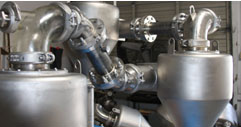 With their main office in Houston, Texas, Gulf Alternative Energy develops cellulosic ethanol pre-processing and production technologies for the ethanol producers in North America. The Company plans to use its patented, exclusive technology to retrofit existing corn-based ethanol plants for cellulosic ethanol production and also for use in the design and construction of its own cellulosic ethanol production facility.
  This edition of the “Ethanol Report” discusses the critical decisions being made regarding renewable fuels and indirect land use on both the federal and state level. Comments are from
  Chuck Woodside, chief executive officer of
  “There is a wealth of information and research on climate change that we need to gather and communicate to our members and policymakers,” said Steve Ruh, chairman of the task force and a farmer in Sugar Grove, Ill. “We also know there is a need for more research to fill the gaps for policy and legislative initiatives that will help us maintain economic and environmental sustainability.”