

 In a bid to stay afloat in these tough economic times, Seattle-based Imperium Renewables has laid off more than half of its staff at its Grays Harbor biodiesel plant.
This story from the Seattle Times says the laying off of the 24 workers is due to the economic downturn and recent tariffs on American biodiesel implemented by the European Union:
The cuts will help it “survive and grow when the market turns around for the biofuels industry,” company president and founder John Plaza said in a statement Thursday. He said Imperium faces “dramatically reduced global demand for biodiesel, high feedstock prices and extreme volatility in the petroleum fuel markets.”
The latest blow to the company was a tariff imposed this month by the European Union on biodiesel imported from the U.S. The EU said U.S. subsidies on biodiesel allowed producers such as Imperium to undercut European manufacturers.
Plaza said that along with the plunge in energy prices, “the recession has led to a drastic reduction in demand for fuels of all types, but especially for biofuels.”
As you might remember, the Grays Harbor plant can produce 100 million gallons of biodiesel annually, but company officials won’t say how much it is producing now.
 It’s a lucky seven for National Wind, LLC, as the company has announced the formation of Little Rock Wind, LLC, its 7th Minnesota-based, community-owned wind energy company. The latest venture in Big Stone County will develop up to 150 megawatts of wind energy generation within the county.
 Rear Adm. Robert Bianchi, Commander, NEXCOM, and Captain Markham Rich, Commanding Officer, NAS Oceana hosted the ceremony with principal guests and speakers Congressman Glenn Nye, D-VA 2nd District and Bob Dinneen, President and CEO, Renewable Fuels Association.
 This latest edition of Domestic Fuel Cast communicates some important information for those who communicate the story of renewable energy.
 “This conference is designed to help communicators evolve the skills they are going to need to be successful in communicating why consumers should adopt their product.”
 According to the
  Southeast Missouri State University (SEMO), in Cape Girardeau, Missouri, will be saving money as well as doing its part to save the environment. Facilities management have devised a recycling and waste management plan and will also purchase flexible fuel vehicles (FFVs).
 This week I read the book,
 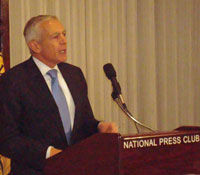 “We have to build the cellulosic industry on the foundation of corn-based ethanol,”