

 The final in a series of Farm Foundation conferences looking at agricultural issues in the modern economy will be held next week in Little Rock, Arkansas and will focus on extension services and renewable energy.
The Transition to a Bioeconomy: The Role of Extension in Energy conference will be June 30-July 1 at Little Rock’s Doubletree Hotel:
The program features experts working in renewable energy, biofuels, energy efficiency and new energy technologies. Presenters include industry leaders, staff from USDA and the U.S. Department of Energy, and researchers working in energy efficiency, renewable energy and new energy technologies.
Plenary sessions will address the important role of Extension educators in providing consumers with timely information on energy-related programs and research findings. An outlook on renewable energy technologies will also be featured. In addition to plenary sessions, six workshops are planned to allow participants to focus in on specific areas of interest. Workshop topics are:
* Risk Management for Energy Investments
* Making Energy Efficiency Choices
* Energy Crop Agronomics
* Forestry
* Harvest, Storage and Logistics
* Extension and Other Delivery Methods
There still seems to be time to register for the event, but I’m not sure about availability at the Doubletree Hotel.
More information is available at this Farm Foundation Web site.
 In what could be considered a paradox, an oil company has a car that won’t need any non-renewable petroleum.
 “I think everyone is really interested in moving forward,” Buis said. “Obviously we are going through some rough spots, economically, but I think people are optimistic and at the end of the day we will all win.”
 A Minnesota biodiesel facility is getting a $25 million USDA Rural Development loan that will help the refinery expand the number of feedstocks it is able to turn into the green fuel… including the by-product of another green fuel:
 USDA Rural Development is providing SoyMor Biodiesel a $25 million guaranteed loan to purchase equipment that will enable SoyMor to convert multiple types of feed stocks, including an unrefined corn oil waste product from nearby ethanol facilities, into biodiesel. In its current configuration, the plant only has the ability to process soybean oil.
 The main focus of the new $6 million, 11,000-square-foot
 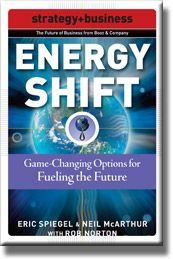 The world’s energy paradigm is shifting and this shift is going to affect every company, CEO, and person in the world. But how? It’s a question I’ve often wondered about so this week I read, “Energy Shift: Game-Changing Options for Fueling the Future.” This book was unique in that it targets business leaders and helps them understand the major forces that are changing how business is being done today. The authors Eric Spiegel and Neil McArthur both work for
 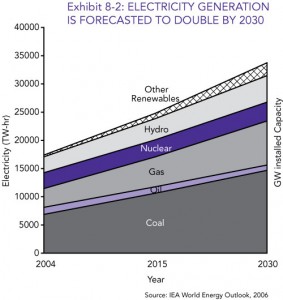 “One additional factor that may push demand even higher in the future is the advent of electricity as an alternative energy source for transportation: the the extent that
  Everything. According to the
  I reported several months ago about
  Part of the agreement includes allowing USDA to have oversight for agricultural carbon offset programs instead of EPA. “The climate change bill will include a strong agriculture offset program run by the U.S. Department of Agriculture that will allow farmers, ranchers, and forestland owners to participate fully in a market-based carbon offset program,” said Peterson. “This agreement also addresses concerns about international indirect land use provisions that unfairly restricted U.S. biofuels producers and exempts agriculture and forestry from the definition of a capped sector.”
 According to the Governors Biofuels Coalition, U.S. Energy Secretary Steven Chu said in Des Moines the nation’s car manufacturers ought to make all new automobiles able to run on E85 ethanol-blended fuel. But Chu said the government could face resistance should it insist on the new standard, despite two of the nation’s three main automakers’ having recently filed for bankruptcy protection.