

The Director of Technical Services for the Renewable Fuels Association (RFA) has been recognized by ASTM International for her work on behalf of America’s ethanol producers to make sure fuel ethanol meets standards and has access to petroleum markets across the country.
 Kristy Moore received the Award of Appreciation from ASTM International’s Committee D02 on Petroleum Products and Lubricants, which has jurisdiction over 725 standards relating to those materials.
 With RFA, Moore works on a number of technical and safety issues important to the ethanol industry and oversees the Technical Committee, the longest standing committee within the RFA. Moore and the committee have been responsible for increasing market share for ethanol, including opening new markets for ethanol including the southeastern states.
“This is a well deserved award,” said Chuck Corr, Manager, Biofuels Technical Service at Archer Daniels Midland and current chair of RFA’s Technical Committee. “We are all appreciative that the RFA provides a forum for the techies to work together on the many technical issues facing the industry. We are also thankful that Kristy is available to provide assistance at every turn.”
ASTM International is one of the largest voluntary standards development organizations in the world-a trusted source for technical standards for materials, products, systems, and services.
 If you’re interested in learning something about pitching stories to bloggers you might want to participate in a today’s webinar that’s part of the
  Students in Minnesota and South Dakota are the latest recipients of Clean Air Choice Scholarships.
 A team of students from Ohio State University are in the lead after the first phase of the three-year
  Launched in late 2008 by the Government of Canada, General Motors, the U.S. Department of Energy, and others, 17 university teams from the U.S. and Canada competed. Approximately half of the teams, including the Ohio State team, designed extended-range electric vehicles, six teams utilized plug-in hybrids, two teams experimented with fuel cell plug-in hybrids using renewable resources, and one team designed an all-electric vehicle. Every team used lithium-ion batteries and then retrofitted them to become plug-in batteries.
 A landfill is now one of the sources of power for a the Lafarge Tulsa Cement Plant.
  The state of Washington has missed its goal of having biodiesel and ethanol make up at least 20 percent of its state vehicle fuel use. And that has prompted the founder of one of the nation’s biggest biodiesel facilities… which just happens to be located in Washington… to make the case that it didn’t have to happen.
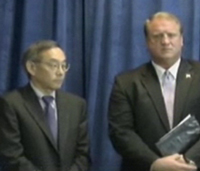 “I don’t want to prejudge what they’re going to find, but if the existing automobile fleet can handle 15 percent, I would say let’s make that a target and go to 15 percent,” Chu said. “This is very important for decreasing our oil independence.”
 Minnesota is the place this summer for biofuel promotions! The state that boats the most E85 fueling locations will offer E85 at a discounted rate at a handful of sites within the next couple of months.
 Summer is officially here and with it summer driving season (and high gas price season). As people pack their bags and head to the gas station to fill up for summer vacation, EcoDriving USA, a campaign from the
  Concerns about the impact that soy-based biodiesel might be having on the environment (and, I know, that’s another story and debate of its own), Seattle officials have stopped buying biodiesel for the city’s fleet.