

 More state vehicles in Texas will be running on something other than the non-renewable petroleum the state is known for.
This post on Examiner.com says the new law, effective September 1st, will require at least half of the 27,000-vehicle state fleet will run on alternative fuels 80 percent of the time:
“House Bill 432 addresses the fact that our state is a leader in the research and production of alternative fuels, but we lack the infrastructure to get drivers who would use it to fuel their vehicles”, Governor Perry said at a ceremonial bill signing in Dallas last week. “Since our state already spends money on a fleet, this bill requires it to include vehicles that use alternative fuel. That will drive the creation of a basic distribution infrastructure and take advantage of the fuels we produce in Texas, including natural gas coming from the Barnett Shale”.
Earlier this year, Dallas-based AT&T announced it was working to build up to 40 new compressed natural gas (CNG) fueling stations and retire its fleet of gasoline-powered vehicles and invest up to $565 million in alternative fuel vehicles.
 Officials at a biodiesel plant in Mississippi have finished the commissioning process for the 8-million-gallon-a-year facility.
 Kum & Go L.C. has recently opened an E85 station in Neosho, Missouri. The company, headquartered in West Des Moines, Iowa, opened the 3,400-square-foot convenience store after only 84 days of construction.
 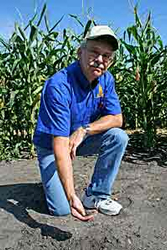 When the ethanol by-product known as dried distillers grains with solubles (DDGS) is heated at high temperatures under limited oxygen to make synthesis gas, or syngas, the remains are a fine, dust-like ash. SDSU Soil Testing Laboratory manager Ron Gelderman set out to learn whether that residue could be applied to fields as a soil nutrient, since the ash likely would be discarded in a landfill otherwise.
 Culver
  A
A The depot will use a gasifier from Packer Engineering to convert grass, leaves, branches and other biomass into syngas, a gas mixture that contains carbon monoxide and hydrogen. The syngas can then be used to create cellulosic ethanol, bio-electricity or hydrogen. Although the proposal calls for trying all three fuel types, Keller said it would be more practical to concentrate on producing just one fuel when the depot is built.
 The Colorado Corn Growers Association, the Governor’s Biofuels Coalition, Western Convenience Stores and Southern Colorado Clean Cities in Colorado Springs are partnering to celebrate the opening of a new E85 pump location at 227 West Fillmore Street in Colorado Springs, Colorado, on August 26. This will be the ninth station selling E85 in Colorado Springs.
  The Obama administration’s
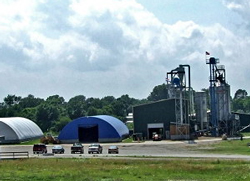
  Agriculture Secretary Tom Vilsack says the biomass facility is taking wood, corn stalks and other crop residue and converting it into pellets that can be used to produce energy or a substitute for propane on the farm.