

 The USDA is handing out another $13 million in loans and grants for 233 renewable energy projects in rural areas of 38 different states.
The projects were announced in this press release and during a speech at the Farm Progress Show in Illinois, that included some of the highlighted projects:
The loan guarantees and grants can be used for renewable energy systems, energy efficiency improvements, feasibility studies and energy audits. These funds are not part of the American Recovery and Reinvestment Act.
In Story City, Iowa, Milford Wind Energy, LLC, has been selected to receive a $1.8 million guaranteed loan and a $500,000 grant to build a 900 kilowatt wind turbine for energy generation. When complete, the turbine is expected to produce nearly 3.3 million kilowatts of electricity annually and generate more than $200,000 in electricity that will be sold to the local utility company. Construction of the turbine is expected to be completed next year.
REAP funding is already contributing to increased renewable energy production. For example, in 2003, USDA Rural Development approved a $300,000 renewable energy grant to Lincolnland Agri-Energy, LLC., in Palestine, Ill. The 453-farmer cooperative operates a livestock feed production plant and a 49-million-gallon-per-year ethanol plant. The grant enabled the cooperative to by a $1.4 million thermal oxidizer to control plant emissions. This critical piece of equipment removes 75 percent of the emissions from the dryer exhaust without reducing plant performance. The oxidizer has another benefit: the heat it produces is captured in a steam recovery system and turned into energy. Lincolnland’s USDA grant produced 37 local jobs.
You can read the complete list of projects here.
 On a warm, clear summer evening in Central Missouri, the night air practically thunders to life as 3,000 horsepower of tractor-pulling power is started and modified machines of farm implement heritage rumble down a dirt track. While the behemoths of the National Tractor Pullers Association Midwest Extreme Truck and Tractor Pull are pushed to the limits of what an engine will do, they are doing it with a green blend of soybean-based B20 biodiesel.
 This United Soybean Board (USB) and soybean checkoff sponsored event is a chance to highlight the great performance of the green fuel in these extreme conditions.
 “While overall it may only be a couple of dozen jobs on a statewide basis, it is an important signal because we were in a period of real economic turmoil in the ethanol sector, but yet we didn’t see layoffs in those plants, even the ones that went through bankruptcies, and in a couple of cases we saw companies use this time to modify their plants to create addition production capabilities, such as corn oil extraction,” Sneller said.
  U.S. ethanol production is on the rise with the news that the industry has set new production records. According to the Energy Information Administration (EIA), American ethanol facilities produced 694,000 barrels per day (b/d) in June 2009. That is up 109,000 b/d from a year ago.
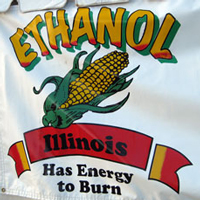 Everywhere you go at the 2009 Farm Progress Show in Decatur, Illinois this week, people are talking about ethanol.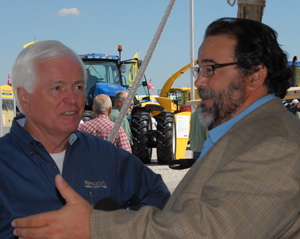
 Saying it is on a path less taken, a Houston, Texas company is looking for alternatives to alternative energy.
 A new, eight-million-gallon-a-year biodiesel plant in Washington state has come on line with the opening of the facility’s canola crusher, joining its biodiesel brewer that began refining last November.
 Legislation that increases the amount of biodiesel state and local governments in Illinois must use has been signed into law by Gov. Pat Quinn.
  AE Biofuels, Inc., a global vertically integrated biofuels company, and Pearson Fuels, an alternative fuels provider, have been awarded $6.9 million by the US Department of Energy to build 55 E85 fueling facilities in the state of California. The alternative fueling sites will be built within the next 42 months.
  Mike Lewis of Pearson Fuels said, “I am excited to see that we are now in a stronger position to bring alternative fuel infrastructure to the hundreds of thousands of flexible fuel vehicles already on the California roads while measurably reducing the State`s dependence on foreign oil imports.” Pearson Fuels already has 13 E85 stations within California. He claims that construction of the projects should begin by the end of 2009.
  U.S. Sen. Chuck Grassley (R-Iowa) will play host to a pair of EPA officials at an Iowa biodiesel plant this coming Thursday at 3 pm. Let’s hope he can use the opportunity to teach them the REAL math behind the amount of corn and soybeans it takes to make ethanol and biodiesel.