The potential of a historic corn crop in the United States – planted on fewer acres – demonstrates the country’s farmers can produce more than enough corn for both food and ethanol production, said Tom Buis, Chief Executive Officer of Growth Energy.
“There’s a mountain of corn out there – plenty of grain to meet demand for food and fuel,” Buis said. “Ethanol producers know that American farmers are the most efficient in the world, and this year’s corn crop stands to prove it yet again. The critics do not understand the productive capacity of America’s farmers, and their ability to produce more than enough to meet the food, feed and fuel needs of our nation. ”
Last week, the analytical firm Informa Economics raised its forecast for the 2009 corn crop to more than 13 billion bushels – an average yield of 162.6 bushels, grown on 5 million fewer acres than last year. If this forecast comes to be realized, it would be the largest in American history. An even bigger forecast was made by Allendale Inc., which is calling for a corn crop or 13.127 billion bushels. USDA’s next official estimate will be released on Friday and most are expecting it to be higher than last month.
“Ethanol opponents would have you believe that using corn for ethanol forces up prices for food. We have a surplus of corn, so where is the drop in food prices? Opponents to renewable ethanol would have you believe global food demand forces indirect land use changes when an acre of corn in the U.S. goes to ethanol instead of food. Yet we’re growing more corn out of fewer total acres,” Buis said.
 The new category was introduced by the Dakar Rally organizers at the request of Brazilian rally veteran and former rally winner Klever Kolberg, who will drive the first-ever flex-fuel vehicle to take part in the prestigious race next year – a Brazilian-made 2010 Mitsubishi Pajero Sport model equipped with flex-fuel technology, with support from the
  This edition of “The Ethanol Report” features an interview with
 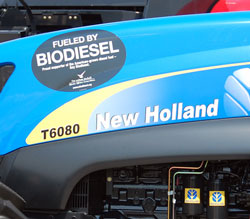 New Holland sponsored coverage of last week’s Farm Progress Show on our sister website,
  The clock is ticking down on the comment period for the expanded Renewable Fuels Standard, better known as RFS2. The Environmental Protection Agency will be taking comments until September 25th – just 18 days from now.
 Dinneen calls the principal of indirect land use being considered by the EPA “not just not scientifically sound, but silly” because it literally equates an acre of land used to grow ethanol in the United States with an acre of Brazilian land forest being destroyed. “This is a very big issue and we’re a long way from having it resolved.”
 CEO Leonard Kosar says America needs a hero in the biofuels business. “HERO BX stands for high-quality biodiesel and that is what we produce everyday using multiple feedstocks,” said Kosar. “In the future, we will utilize our proprietary blending technology to determine what the most efficient and cost competitive second and third generation feedstocks are and add them to our feedstock portfolio. We are not only a biodiesel company, we are a fuel technology company.”
 Two years ago, a biodiesel-powered motorcycle made a 3,000 km (1,800 miles) trip across Australia(see
  I was going to begin my review with a bad cliche, “solar never sleeps,” but alas it does since it harnesses the energy of the sun. But I couldn’t think of anything else clever so I decided to run with it. This week I reviewed the book, “
 Approximately 55 percent of the crop, or 438.56 million tons, is intended for ethanol production, which will generate 9.13 billion liters of