

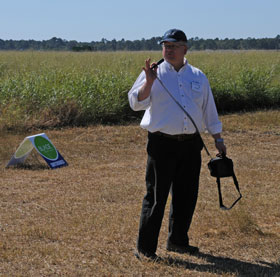
 We’ve certainly heard a lot about switchgrass as a biomass option for the production of ethanol. How many of you have seen it growing?
That’s it behind Cory Christensen, Director of Product Managment, Ceres, who was conducting Sunbelt Ag Expo presentations in the field. He says it’s a first season stand of their Blade energy crop. It was developed specifically for the southeast. Since it’s the first season for this crop they won’t harvest it at Sunbelt until next year. A mature yield for the crop is about 8 tons per acre of dry matter. By the second season next year it will be at 80 percent of maturity.
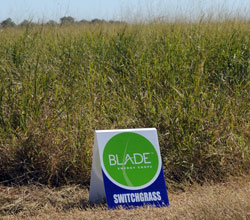 Switchgrass is native to the United States everywhere east of the Rockies. Ceres, has been working on varieties that will yield better in different growing environments though. Cory says that they don’t expect it to displace corn in Iowa but in the southeast with the difficulties in cotton and tobacco it becomes a viable alternative on open acres. He provides some estimates of what the crop can mean financially as the market for a fuel crop like switchgrass develops.
Cory describes the current market as a “developing market.” They have a map that shows developing opportunities where plants will be located to process energy crops. He says that biomass is a local business so you need to be located near a biorefinery. He also points to the USDA’s Biomass Crop Assistance Program that provides monetary assistance to facilitate the transition of eligible land to energy crops.
You can listen to my interview with Cory below:
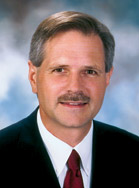 “We’re excited about this initiative because it’s a win for consumers, farmers, retailers and ethanol producers,” said Gov. John Hoeven, during a Friday news conference announcing the state Department of Commerce Biofuels Blender Pump incentive program.
 Dallas-based Evolution Fuels, Inc. has announced a plan to put the biodiesel it produces in five of its own truck stops.
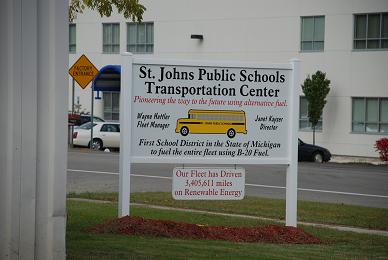 A school bus in Michigan has just hit 300,000 miles, and the bulk of those miles have come while running on biodiesel.
 Coming to Omaha, Nebraska on November 10-12, the Operators’ School is designed to educate ethanol producers on the ins and outs of alcohol production, the latest troubleshooting techniques and technology used in the industry. The three day conference will be held at Scott Conference Center at 6450 Pine Street.
  According to the
  The second award included the Clean Fuels Foundation and the
  President Clinton was the keynote speaker during the closing session at the
 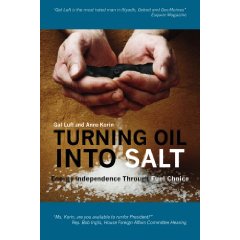 What do salt and oil have in common? In its time, the world was overdependent on the strategic commodity (oil today and salt more than 100 years ago). Our country (nor the world) is “salt dependent” but the world is oil dependent, but not in the way that most people define oil dependence. “That is what energy independence means: that it no longer matters who holds the reserves, that oil becomes much less relevant to global affairs, that it becomes just another commodity,” writes Gal Luft and Anne Korin, in “Turning Oil Into Salt Energy Independence Through Fuel Choice.”
 Representatives from the
  A Minnesota corn grower has been named to the board of directors for
  Pestorious also served three years on the Board of Directors of the American Coalition for Ethanol, representing the Minnesota Corn Growers Association, as well as on the board of the Ethanol Promotion and Information Council, until its merger with Growth Energy last year, and previously served as a member of the Renewable Fuels Association in his role for the last 10 years as Chair of POET-Glenville. He also serves on the boards of POET-Hanlontown (Iowa), a 50-million gallon-a-year plant, and POET-Lake Crystal (Minn.), a 55-million gallon-a-year plant, and serves as Chair of SoyMor, a 30-million gallon biodiesel plant.