


Ethanol pump at a Petrobras station in Sao Paulo
With a shortfall of sugarcane due to excessive rain, Brazil’s Agriculture Minister Reinhold Stephanes announced that they are considering reducing the amount of mandatory ethanol blended with gasoline. Today, all stations are required to sell gasoline mixed with a minimum of 20-25 percent ethanol. If enacted, the change could take effect as soon as this week but Stephanes has not disclosed what the new percentage will be.
Above average rainfall plagued Brazil over the past few months, slowing down the harvest, and ultimately, some sugarcane was left in the field. Consequently, the region of Sao Paulo, the number one producing state of both sugarcane and ethanol, saw its ethanol production numbers down by 8.3 percent compared to last year. According to UNICA, (Brazilian Sugarcane Industry Association) the region will product 5.86 billions gallons from this harvest.
The rain has also caused ethanol prices to rise at the pump leading to a reduction in hydrated ethanol sales, a trend that began surfacing in June 2009. According to UNICA, this reduction, “is a consequence of higher hydrous ethanol prices at the pump resulting from a combination of weather-related difficulties during the harvest and the approaching inter-harvest period which normally lasts from December to April the following year.” In addition to Brazil being “energy independent,” the country also boasts the largest fleet of flex-fuel vehicles in the world.

 As the EPA gets closer to implementing the new Renewable Fuels Standard (RFS-2), those attending this year’s
  “Because oil is a limited commodity and it is my feeling that big oil sees the ‘handwriting on the wall’” says Lee. “They know that alternative fuels are here to stay” adds Mike Shook, partner in Agri Process Innovations. Shook adds that “just as government inaction made the smaller producers nervous, I look back at 2009 and note the massive investments that big oil has made in this industry”. Both Lee and Shook agree that the biodiesel industry is headed up in a big way. “This industry will continue to adjust to problems, and it will continue to grow” says Lee, “and just like many industries before it, the inefficient players will shake out and the efficient players will make money”.
 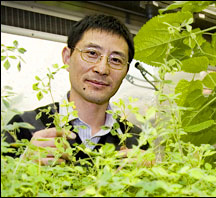 “Increasing the ‘digestibility’ of plant matter is one main approach to making plants a viable alternative energy source,” said Brookhaven biochemist Chang-Jun Liu. Plants with less lignin in their cell walls are easier to break down and convert to fuel products.
 This week, the
  The first issue of the
  ZimmComm New Media is the social media sponsor of AG CONNECT Expo. This is the new show being produced by the
  The
The  The report, which was funded by
