The Low Carbon Fuel Standard is set to go into effect in less than two weeks yet there are concerns among the ethanol industry that regulations will be implemented without having the appropriate reporting and compliance tools in place.
 Bob Dinneen, President and CEO of the Renewable Fuels Association submitted a letter earlier this week to Dean Simeroth, Chief of the Criteria Pollutants Branch at CARB. In the letter, Dinneen wrote, “Many of our member companies, including both ethanol producers and marketers, have raised numerous questions regarding LCFS reporting and compliance requirements. Unfortunately, the final regulation order and the supporting materials released Nov. 25, 2009, did little to address these lingering questions and concerns.”
As declared in the ruling, the first year of the program will require quarterly and annual reports; however, mandatory greenhouse gas reductions will not be enforced until 2011. The problem with meeting this requirement lies in the fact that the means of demonstrating compliance with the program and submitting reports is still unavailable to regulated parties.
“With the CARB about to implement far reaching regulations for its Low Carbon Fuel Standard, it is vital that the agency have in place all of the methods and systems necessary to collect information to make the program operate,” said Dinneen. “Unfortunately, those methods and systems are not in place – a situation which is likely to cause confusion and delay in getting the program up and running.”
Several of the issues identified included: reporting requirements for ethanolproducers when ownership of fuel is transferred once the fuel is inside the State of California; CARB’s definition of “neat ethanol”; if CARB was developing a standardized application form for the submission of information on delivery methods; why the CARB had not yet publicly released its online Compliance and Reporting Tool (CRT) and when it intended to do so; and more.
Dinneen concluded, “It is incomprehensible that implementation of a regulation could occur before the means of demonstrating compliance is completed and accessible to regulated parties. For these reasons and others, we believe the Office of Administrative Law will be forced to return the LCFS package to CARB and require the agency to complete its unfinished work related to the compliance and reporting system.”



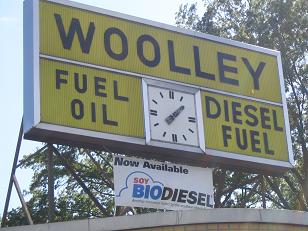 The first commercial service station in New Jersey that offered biodiesel is celebrating the first anniversary of that historic event.
 It could become the next great fuel source from the agricultural community. A Nebraska-based biomass supplier and manufacturer has debuted a product it touts as “Coal from the Farm.”
 Next Step COO Russ Zeeck explained that PowerPellets solve the logistical and operational problems that have thus far prevented wide-scale use of biomass to generate electricity. “Utilities have long been aware of the environmental benefits of burning biomass, but they’ve had a hard time adopting it,” said Zeeck.
 Representatives of the
  At the climate summit in Copenhagen, U.S. Agriculture Secretary Tom Vilsack
 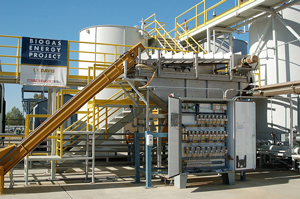 Under the agreement, USDA intends to increase the number of anaerobic digesters supported by USDA programs. Beyond promoting the digesters, the agreement will encourage research, and development of new technologies to help dairies reduce greenhouse gas emissions. Anaerobic digester technology is a proven method of converting waste products, such as manure, into electricity. The technology utilizes generators that are fueled by methane captured from the animal manure. Currently, only about 2 percent of U.S. dairies that are candidates for a profitable digester are utilizing the technology. Dairy operations with anaerobic digesters routinely generate enough electricity to power 200 homes.
  Fourteen major airlines from the United States, Mexico, Canada and Germany, led by the Air Transport Association (ATA), have agreed to buy up to 750 million gallons of renewable jet fuel and diesel derived from camelina and produced by Seattle-based