

2010 National Ethanol Conference Photo Album
Despite the bad economy and continued attacks by detractors, ethanol provided a significant economic impact for the nation in 2009.
 According to “The Economic Contribution of the Ethanol Industry to the Economy of the United States” by economist John Urbanchuk, the economic activities of the ethanol industry put an additional $16 billion into the pockets of American consumers in 2009, added $53.3 billion to the nation’s Gross Domestic Product and displaced crude oil imports amounting to a value of $21.3 billion.
“While 2009 was a really rough year for the overall economy, the ethanol industry grew and expanded,” Urbanchuk said during the 15th annual National Ethanol Conference in Orlando on Tuesday, where he presented his findings. “I think it’s one of the shining stars in the manufacturing sector.”
Listen to or download an interview with John Urbanchuk from the 2010 NEC in the player below:
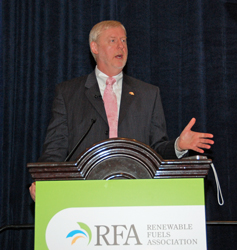 The vice chairman of Global Product Operations for General Motors told attendees of the 15th Annual National Ethanol Conference that his company will keep putting more flexible fuel vehicles on the road, but more ethanol pumps are needed to fuel them.
 Compared to last year,

 The mood is definitely a little brighter at this year’s
 The U.S. Grains Council is holding its