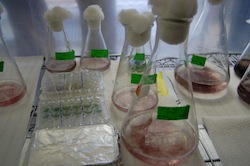
 There just might be gold in algal biofuels and the team from Scripps Institution of Oceanography, based at the University of California San Diego (UCSD-SIO), is intent on finding it. UCSD-SIO has been researching micro and macro algae (seaweeds) for their potential to produce biofuels for more than 40 years. Researcher Greg Mitchell believes the search will be well rewarded in the benefits it will provide the country including offering solutions for energy security, hunger, water use, land use, biodiversity, and climate.
Seaweeds, a macro form of algae, hold great promise because of their potential for very high yields and high oil production while thriving on non-arable land. Another benefit is that they grow well in saline water. Traditionally crops will not excel in salt water and in some areas of the country valuable agricultural land has been taken out of production due to high concentrations of salt.
But as all researchers know, not all algae is created equal. There are strains of seaweeds that hold great promise for bio-energy and others that hold great promise for producing other products such as high protein meals for replacing non-sustainable ocean-caught fishmeals in aquaculture and other animal diets.
In fact, many algae companies that began with the mission of producing algal fuels have now refocused on producing algae products for the pharmaceutical, plastics, health, and agricultural feed industries. For example, there are strains of seaweeds that UCSD-SIO has been studying that grow well inland and can be used to recycle artificial seawater and waste nutrients from chicken ranches or pig farms. Algae has also been used in farm fish operations from cleaning the ponds to providing feed.Read More





 A
A