In a new study from Air Improvement Resource, Inc. (AIR) commissioned by the Renewable Fuels Association (RFA), the requirements of the Renewable Fuels Standard (RFS2) can be met with ethanol if more infrastructure is put into place. In addition, more flex-fuel vehicles (FFVs) are needed. The report concludes that if “blender pumps” are made available at nearly one-third of the approximately 162,000 gas stations in the U.S., and if automakers honor and expand their commitment to produce FFVs, the majority of RFS2 requirements can be met with ethanol alone.
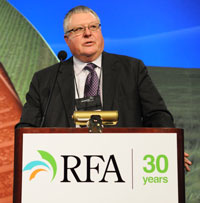
 “Achieving the goals of the RFS2 and giving Americans more control over their energy future can be done with smart policies and targeted investment that expand ethanol refueling infrastructure and use,” said RFA President and CEO Bob Dinneen. “In a climate of fiscal concerns, this report demonstrates that we can meaningfully expand the ethanol market, reduce our reliance on imported oil, and create jobs without breaking the bank. Addressing the infrastructure needs of America’s renewable fuels policy cannot be based on a wish list. It must be grounded in sound research and analysis that identifies policy needs and the needs of the marketplace. This report clearly highlights part of the path forward.”
The AIR study examines 27 future scenarios regarding available ethanol volumes, FFV availability, ethanol use in non-FFVs, and the availability and location of blender pumps and/or E85 pumps. Based on the results of the scenarios, certain conclusions were drawn about the role ethanol can play in meeting the RFS2, which requires the use of 36 billion gallons of renewable fuels by 2022.
However, there are concerns growing that RFS2 goals will not be met, in part due to several anti-ethanol amendments in the Continuing Resolution that were passed by the House several weeks ago designed to “balance the federal budget”. The amendments inhibit the EPA from rolling out E15 and also disallow government funds to be used to install blender pumps and ethanol infrastructure such as ethanol pipelines.
According to RFA, expanding the use of ethanol will take a multi-pronged approach. Recently the EPA approved the used of E15 for conventional cars and light duty trucks model year 2001 or newer could help to grow the market for ethanol to 20 billion gallons over the next several years. However, RFA notes that even if E15 is ultimately approved for use in all conventional vehicles, meeting long-term RFS2 requirements will require the use of mid-level blends of ethanol higher than E15 (so fuel blends that contain more than 15 percent ethanol, 85 percent gasoline). Read More