

How domestic fuel can fight higher gas prices was the focus of a hearing today before the Senate agriculture committee.
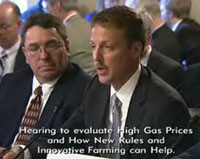 “Fundamentals and Farming: Evaluating High Gas Prices and How New Rules and Innovative Farming Can Help” featured a panel that included POET CEO Jeff Broin who testified on how the industry needs market access to help alleviate high gas prices by increasing ethanol supplies through expansion in cellulosic ethanol.
“The solution to keep gas prices lower is for American motorists to have an alternative to gasoline,” Broin said. “That alternative is available today – in homegrown, renewable ethanol.”
Broin also encouraged ethanol tax credit reform by redirecting those funds to build out ethanol blender pump infrastructure along with a requirement for Flex Fuel Vehicles and loan guarantees for dedicated ethanol pipelines. “With those elements in place, the oil industry would no longer enjoy exclusive access to 90 percent of the fuel supply,” Broin said. “The best way to lower prices for consumers is to allow ethanol to compete with oil in the marketplace.”
Listen to or download Broin’s testimony here: Jeff Broin testimony
Also testifying was Kansas livestock and grain producer Stan Townsend, a sixth generation farmer, who talked about the high cost of farming. “In 1988, when I started, a new tractor was $41,000. That tractor today is $281,000,” he said.
As a livestock producer, Townsend said he understands the impact of higher corn prices yet supports ethanol production. “Ethanol has provided the industry with the unique opportunity to incorporate the use of high-quality DDGs into our feed cycle, one of the many ways we can mitigate our costs and remain profitable,” he said.
Listen to or download Townsend’s testimony here: Townsend testimony
 Back by popular demand, the fifth
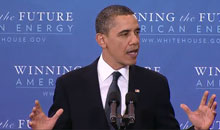 “In an economy that relies on oil, rising prices at the pump affect everybody – workers and farmers; truck drivers and restaurant owners,” said the president during a speech in Georgetown. “The only way for America’s energy supply to be truly secure is by permanently reducing our dependence on oil.”





 As President Obama was preparing to outline his vision for America’s energy future in Washington this week, the president of the
  Dinneen encourages the President to continue working with the industry and Congress on efforts to transform existing ethanol policies to address fiscal concerns while still helping ethanol grow and evolve. “The ethanol industry has stepped up to the plate and said we’re willing to reform our tax incentives so we can reduce costs,” he said. “I hope we’re looking more deeply at what we want our energy future to be. I hope we’re looking at all energy tax incentives – do we still need to be subsidizing petroleum, for example?”
 It’s pretty much a