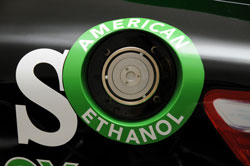
American Ethanol will dominate the Kansas Speedway track on Sunday, but the driver who will pilot the American Ethanol car during the the Sprint Cup Series STP 400 race dominated the track on Saturday, winning his first Camping World Truck Series race of the season.
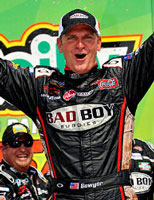 The win was a big deal for Clint Bowyer, who is from Emporia, Kan., as it was his first NASCAR national-series victory in his home state.
“This place means a lot to me. I watched this place being built. I dreamed of being able to race here in anything, and to be able to roll into victory lane … is pretty cool.” Bowyer, however, has unfinished business at his home track. “I want to win a Cup race here bad,” said Bowyer, who will start 27th in Sunday’s STP 400 Cup event.
Just like the Nationwide and Sprint Cup, ethanol is part of the NASCAR truck series, as all vehicles are fueled with Sunoco Green E15. In addition, American Ethanol, which is a partnership between Growth Energy and the National Corn Growers Association, provides weekly prize money for eligible competitors in the NASCAR Nationwide Series and NASCAR Camping World Truck Series based on finishing position.
On Sunday, race fans will see the American Ethanol logo and paint scheme on Clint Bowyer’s No. 33 Chevrolet in the Sprint Cup Series STP 400, as well as the American Ethanol logo along the backstretch wall of the 1.5-mile Kansas Speedway that will draw attention to the partnership between ethanol and NASCAR.
“It’s truly an honor to have American Ethanol on the No. 33 Chevrolet this weekend,” said Bowyer. “Born and raised in Kansas, I support American farmers as they strive to develop energy independence for our country and I look forward to representing American Ethanol both on and off the track this weekend at Kansas Speedway.”
Domestic Fuel has been providing on-site coverage of the Nationwide Series STP 300 at Chicagoland Speedway this weekend in Illinois and will be covering the Kansas race as well.


 Kenny Wallace is racing well early here in the STP 300 NASCAR Nationwide Series race. I’m doing a photo album update and will do another one after the race and winners press conference. I just heard an ethanol commercial in our press room live feed. Sounds great.