ACE Conference 2026

SunPower Biodiesel Goes Into Production

Joanna Schroeder

SunPower Biodiesel is official producing biodiesel at its plant located in Cumberland Wisconsin. The plant is using locally grown canola oil to produce the biodiesel. To celebrate, SunPower held a grand opening event that included a biodiesel workshop, plant tours and a ribbon cutting ceremony.

“Sun Power is very unique in our region,” said Laura Richard, Wisconsin Clean Cities, Southeast Area. “It’s a full circle. The canola is grown here in Wisconsin, the oil is processed into biodiesel, and they sell it right back to fuel users. They have a huge positive impact on their community and the state of Wisconsin.”

The SunPower Biodiesel plant was the pillar for the creation of an International Biofuels Research and Development Park. To aid in the success of the project, the plant received funds from the Wisconsin Clean Transportation Program (WCTP) to help with the purchase of equipment as well as for operating capital. WCTP is administered jointly by the Wisconsin Department of Administration – Office of Energy Independence and Wisconsin Clean Cities—Southeast Area.


Biodiesel, biofuels

Propel Offers Sacramento, CA Drivers B20

Joanna Schroeder

Biodiesel is gaining traction in California. This week Propel Fuels began selling B20 biodiesel at two of its Sacramento area fuel stations. Propel says its B20 is a blend of 20 percent American made biodiesel and 80 percent petro-diesel, and provides motorists increased performance, longer engine life and reduced emissions. Next, Propel added B20 to its Roseville stations as well as its station in Sacramento on Folsom Boulevard in response to customer demand. In addition to biodiesel, Propel also sells E85 and you can find their biodiesel and E85 stations in its biofuel station locator.

“As high fuel prices force drivers to think about what they put in their tanks, we are proud to offer a higher blend of biodiesel that provides premium performance and guaranteed quality at no additional cost,” said Matt Horton, CEO of Propel. “By providing a new choice at the pump, we are enabling Sacramento’s drivers to be part of the solution, making progress towards reducing carbon emissions and our nation’s dependence on imported oil.”

Propel is using biodiesel sourced from recycled vegetable oils. Biodiesel is safe to use in current diesel vehicles and serves to reduce harmful tailpipe emissions while improving performance and efficiency. While not all vehicles are manufactured to use B20 blends, more and more auto companies are producing diesel vehicles designed to operate using B20 including all 2011 GM and Ford diesel vehicles and Cummins engines.

In addition to offering B20 in ares of California, Propel has sold B20 in Washington State since 2007, with a very positive response from consumers. More information on Propel’s B20 can be found here.

Biodiesel, biofuels, E85

Nebraska Ethanol Fuel Promotion at Tractor Museum

Cindy Zimmerman

Gas powered tractors can get free ethanol blended fuel from the Nebraska Ethanol Board at an antique tractor show this weekend.

The Nebraska Ethanol Board is offering three gallons of free E10 to the first 25 registered gas powered tractors at the University of Nebraska-Lincoln Larsen Tractor Museum’s open house Saturday, June 4th from 10 am to 2 pm. Registered entrants can pick up their coupon for three free gallons of E10 from the Nebraska Ethanol Board at the 1920 Model T Ford on display at the Museum.

The promotion calls attention to the fact that many older vehicles, including the Model-T and several antique tractors, were originally designed to run on ethanol fuels.

Ethanol, Ethanol News

Marquis Energy and NASCAR

Chuck Zimmerman

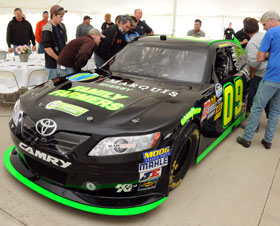
The President of Marquis Energy is Mark Marquis, seen here introducing NASCAR driver Kenny Wallace to the crowd attending yesterday’s event held at the Hennepin ethanol plant. I spoke with Mark and learned that Marquis Energy is a real family type business that he had built after growing up on a family farm in this area and branching out into the grain business. In my interview with him you’ll hear him talk about plans to double the size of the Hennepin plant.

Mark is a Growth Energy board member. He says the organization saw the long term agreement with NASCAR as a great opportunity to help get in front of American consumers who will feel more confident about putting higher blends of ethanol in their cars after seeing how well it performs in the race cars. They’ve accomplished that through American Ethanol, a partnership with the National Corn Growers Association. The local NASCAR Nationwide Series STP 300 race on Saturday provided his company with an opportunity to make a special contribution to the effort. He says NASCAR is very popular with his employees and the farmers who send in about 150 trucks of corn a day to the plant. Mark Marquis Interview

You can hear Mark’s introduction of Kenny and Kenny’s remarks in this video clip:

Marquis Energy Appreciation Day Photos

American Ethanol, Audio, corn, Ethanol, NASCAR, Video

Gearing Up For A NASCAR Weekend

Chuck Zimmerman

Domestic Fuel goes NASCAR this weekend. I’ll start things off with the Nationwide Series STP 300 at Chicagoland Speedway on Saturday with support from the Illinois Corn Marketing Board. Then Cindy will pick up at the Sprint Cup Series STP 400 at Kansas Speedway on Sunday with support from the National Corn Growers Association. It is going to be fun. So why are we doing this? Because these speed machines are running on a fifteen percent blend of ethanol thanks to a long term sponsorship deal between NASCAR and American Ethanol.

I got my trip started off today at Marquis Energy in Hennepin, IL. The company is a major sponsor of the #09 car that Kenny Wallace will be driving in Joliet, IL on Saturday. Kenny and the actual car he’ll be driving (pictured) made an appearance today at Marquis Energy’s Appreciation Day festivities. I’ll have some interviews to share with you later from that event. In the meantime you can see photos, including more of the car and Kenny online: Marquis Energy Appreciation Day Photos.

corn, Ethanol, Ethanol News, NASCAR

Ethanol Groups Support Open Fuel Standard

Cindy Zimmerman

While one biofuels group has expressed concern about Open Fuel Standard legislation, the three main ethanol organizations in the country are in favor of it.

Renewable Fuels Association LogoRenewable Fuels Association President and CEO Bob Dinneen says they endorse the Open Fuel Standard Act introduced by Representatives John Shimkus and Elliot Engel. Additionally, the RFA has endorsed similar legislation offered by Senators Tom Harkin and Richard Lugar. “Ethanol remains the only proven, widely available alternative to gasoline today and will so for the foreseeable future,” Dinneen said. “Investments in vehicle technologies that can accommodate a wide range of ethanol blends will necessarily expand the market for ethanol and create new opportunities for developing and nearly commercial ethanol technologies. More ethanol-ready vehicles are a critical component to the nation’s strategy to end our addiction to oil.”

ACEAmerican Coalition for Ethanol (ACE) Executive Vice President Brian Jennings says the legislation offers a wide range of fuel choices for both consumers and energy independence advocates. “ACE strongly supports the Open Fuels Standard because it provides consumers with meaningful fuel choices, including American-made ethanol. With gas prices hovering at four dollars a gallon, and with oil companies unapologetic about massive profits, and refusing to even consider changes to their favored tax status, it is time for us to create real competition in the fuel marketplace, and this legislation does just that,” he said.

Growth Energy“Each additional Flex Fuel vehicle on the road gives consumers a choice in their fuels, while lowering the price at the pump and strengthening our energy security,” said Growth Energy President Jim Nussle. “Our nation’s dependence on foreign oil is unsustainable and is hurting our economy and national security. It’s time to invest in smart policies like these that will create competition in the fuels market and break the stronghold that oil companies and Middle East cartels have on our nation.”

H.R. 1687, the Open Fuel Standard Act of 2011, would require that 50 percent of new automobiles in 2014, 80 percent in 2016, and 95 percent in 2017 would be warranted to operate on non-petroleum fuels in addition to, or instead of, petroleum based fuels.

ACE, Ethanol, Ethanol News, Government, Growth Energy, RFA

Propane Green Autogas Solutions Act Proposed

Joanna Schroeder

The Open Fuel Standard is not the only piece of fuel legislation that has been proposed recently. On May 27, 2011, the Propane Green Autogas Solutions Act was introduced to the House of Representatives and Senate by House Republican Conference Secretary Representative John Carter (R-TX) along with Senator Ben Cardin (D-MD). The bill aims to extend existing propane autogas tax credits through 2016 for the purchase of propane-powered vehicles as well as to the refueling infrastructure and fuel itself.

Other legislators sponsoring the Propane GAS Act include Representatives Dan Boren (D-OK) and Mike Rogers (R-AL), as well as Senator Roy Blunt (R-MO) and Debbie Stabenow (D-MI).

“Providing more incentives for vehicles using propane autogas can play a key role in infusing competition into the U.S. transportation fuel market, stimulating job growth and reducing our nation’s dependence on foreign oil,” said U.S. Congressman John Carter (R-TX). “Propane is a proven and cleaner-burning alternative fuel. This bill puts into motion the necessary steps to help solidify a place for propane autogas on the nation’s menu of fuels that insures a more cost-effective, domestically produced fuel option exists for American drivers.”

According to organizations such as CleanFUEL USA, propane autogas is the most widely used alternative fuel in the world and the third most used fuel after gasoline and diesel. Today, it is primarily used in the transportation sector in fleet vehicles. More than 90 percent of the propane used in the states is produced in North America and a national infrastructure is already in place.

Curtis Donaldson, founder and CEO of CleanFUEL USA said of the proposed bill, “Our nation’s supply and demand issues for transportation fuel is teetering on a tipping point of no return – one where all viable options should be on the table. Propane autogas is the ‘right here, right now’ fuel, and we applaud Congressman Carter in initiating the Propane GAS Act. As a U.S. Representative for Texas (a global leader in the energy industry), Carter truly understands both the needs and opportunities to diversify our energy mix and his efforts on this bill is a clear indication of that.”

Legislation, Propane

Group Calls Open Fuel Standard Bad for Biofuels

Cindy Zimmerman

advance biofuelsA new analysis done by Advanced Biofuels USA finds that the Open Fuel Standard (OFS) is “bad for advanced biofuels and will add to environmental damage if passed and implemented.”

The Open Fuel Standard Act was introduced recently in the House and a similar bill in the Senate. The bills mandate that specific percentages of vehicles be built to operate on alternative fuels. However, Robert Kozak with Advanced Biofuels USA says while on the surface that may seem to benefit the biofuel industry, “there is a very significant part of the “alternative fuels” definition that should give all biofuel, and especially advanced biofuel producers pause.”

Of main concern to Kozak is the inclusion of “methanol produced from non-renewable natural gas … on equal grounds with renewable biofuels.”

“For the biofuels market, implementation of the OFS would immediately mean that gasoline blenders could use a 10% natural gas (NG) methanol to meet EPA oxygenate requirements. Depending on the price charged by a large methanol producer such as Methanex for the initial sale of NG-methanol, existing ethanol sales could plummet,” according to Kozak.

Read the analysis here.

advanced biofuels, biofuels, Ethanol, Ethanol News, Government

Bill Would Require Origin Labeling for Fuel

Cindy Zimmerman

Congressman Bruce Braley (D-Iowa) this week introduced legislation that would require all gasoline sold in the U.S. to carry country-of-origin labeling (COOL).
“I am introducing legislation in the House that would require a label that clearly states the nation of origin for the fuel you’re pumping,” Braley said in a Huffington Post op-ed yesterday, penned with retired General Wesley Clark of Growth Energy. “The legislation, dubbed “COOL for Fuels,” will require the Department of Energy to conduct a study and implement its recommendations to ensure American consumers have the ability to decide at the gas pump whether they want to purchase domestic fuel products or gas produced by potentially hostile oil-producing nations.”

Clark urged the public to sign on as a citizen co-sponsor of Congressman Braley’s country-of-origin labeling legislation. “Americans need to know what this addiction is costing us in real terms, and country-of-origin labeling is a commonsense way to get that message across,” said Clark.

Growth Energy president Jim Nussle says the law would create more market transparency for American consumers of foreign petroleum. “Congressman Braley’s bill would let U.S. drivers know where they are sending their dollars when they fill up at the pump. American motorists should know where their money is going – whether it is staying here or being sent overseas to the coffers of foreign nations,” said Nussle.

Growth Energy first introduced the concept of country of origin labeling for fuel during a press conference at the 2009 Farm Progress Show.

Ethanol, Government, Growth Energy

Bi-Fuel Ethanol-Diesel Vehicle Debuts in Brazil

Joanna Schroeder

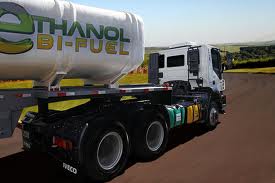
Typically flex fuel vehicles are a combination of ethanol and gasoline or diesel and biodiesel. But inroads have been made to create flex fuel vehicles that use a combination of ethanol and diesel fuels. Iveco, FPT Industrial and Bosch officially debuted the Iveco Trakker Bi-Fuel Ethanol-Diesel vehicle at Agrishow last week in Ribeirão Preto, the country’s largest agricultural show.

The Takker contains an FPT Industrial Cursor 9 engine that can run on an ethanol and diesel mixture and is geared toward sugarcane and ethanol producers in the country. In early tests, the vehicle has successfully been using a 40 percent ethanol / 60 percent diesel blend and providing a 6 percent reduction in fuel costs. Development of the bi-flex vehicle began in 2010 with support from UNICA, the Brazilian Association of Sugarcane Producers and part of an ethanol industry “green policies” program.

The next step is for the prototype to be tested by Raizen, a joint venture company between Cosan and Shell during the 2011 harvest.

“We are still at the early stages of development and certainly we expect to reach a higher Ethanol-Diesel substitution rate bringing even lower operational costs,” said Renato Mastrobuono, Product Development Director for Iveco Latin America.

The Iveco Trakker Bi-Fuel prototype is a 6×4 truck used for 63 ton GCM that can be used in several applications on the sugar-cane plantations, such as articulated liquid tank transport. It uses a 360CvCommon Rail Cursor 9 engine. The truck has two tanks – one for ethanol and one for diesel- as well as an electronic control unit for each fuel, a pressure pump for the ethanol system and a lambda sensor for the exhaust manifold.

The ethanol is injected directly into the intake manifold during the admission stage. After the compression stage, the diesel is injected to promote combustion, and the system does not need any anti-knock additives.

“Another plus of the Bi-Fuel technology is that the engine can be fully reversed to diesel only application, which will make it easier to resell the vehicle after its use in the sugar-cane environment,” added Mastrobuono.

biofuels, Brazil, Ethanol, Flex Fuel Vehicles