ACE Conference 2026

American Ethanol Partners at Farm Progress Show

Cindy Zimmerman

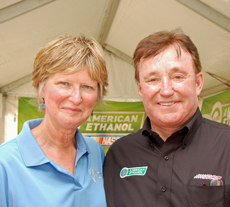
farm progress show 2011The partnership between American Ethanol and NASCAR was on display at the 2011 Farm Progress Show, where racing fans got a chance to meet with former driver and current team owner Richard Childress.

Pictured here with Growth Energy CEO Tom Buis, Childress said his team’s partnership with American Ethanol and the NASCAR series using a 15% ethanol blend this year is good for the country. “I’m a huge supporter of everything we do in America, from our farmers to our military,” he said. “This country has to quit depending on so much foreign energy and resources. We gotta do better.”

Childress says that NASCAR has had no problems making the transition to 15% ethanol fuel and next year they will go to fuel injection. “The fuel injection and the American Ethanol is really going to work out great,” he added.

Listen to or download interview with Richard Childress here: Richard Childress at Farm Progress Show

Buis says the partnership with the National Corn Growers Association to spotlight ethanol at NASCAR has been reaching a great audience. “We get a great reaction from the fans and people who watch it at home on television,” he said. “We couldn’t be happier. I think we’re getting our message out there.”

Listen to or download interview with Tom Buis here: Tom Buis at Farm Progress Show
farm progress show 2011Pam Johnson, an Iowa farmer who will become first vice president of National Corn Growers Association next month, says the partnership with NASCAR is exciting. “With NASCAR we’re reaching people outside the Midwest, all over the country from Richmond out to California,” Pam said at Farm Progress Show. “So we are getting the message out to a whole new group of people who need to hear the story told and we think NASCAR’s a great vehicle for that.”

Johnson added that the Illinois Corn Growers were also highlighting their partnership with NASCAR and driver Kenny Wallace. “When you get a driver out there talking about the speed and the extra power they get driving and then bringing it back to the consumer,” she said. “Hopefully we’ll all have access to E15 as those NASCAR drivers are putting in their vehicles.”

Listen to or download interview with Pam Johnson here: Pam Johnson with NCGA at Farm Progress Show

2011 Farm Progress Show Photo Album

American Ethanol, Audio, corn, Ethanol, Farm Progress Show, Farming, Growth Energy, NASCAR

Book Review – The Powers That Be

Joanna Schroeder

I felt like an academic when I read this week’s book, “The Powers That Be Global Energy For The Twenty-First Century And Beyond,” although author Scott L. Montgomery wanted the book to be “fun.” I sported my black geek glasses and curled up in a chair at a local coffee shop and attempted to give off the personae that I’m smart. Although I’m not sure anyone was fooled, I’m definitely smarter about our country’s energy options now than I was before I read the book.

This is an extremely in-depth look at what our energy landscape looks like today. It also reviews where we stand, as a world, with regard to resources and options as well as politics and policies that are driving the future. In addition, it looks at where we are headed.  As I look at our country, I’ve felt for a long-time that we are “energy illiterate” and need to become better students of energy education. While Montgomery agrees to some degree, he feels the problem lies more in lack of curriculum and the inability for people to learn about energy in a nonpartisan setting.

Montgomery writes, “Energy matters are critical to understand because they are fundamental to our way of life and because they are the subject of endless misconception, misrepresentation, and, as already noted, myth.”

Throughout the book, Montgomery takes an approach that many other authors have not and that’s the view that he doesn’t categorize energy as “dirty or clean” or necessarily “evil versus good.”  He explains that fossil fuels help build and transport renewable sources and also reminds us that every type of energy has an impact on the environment. Yes everyone, there is no “renewable” energy source that is developed, produced or transported without a fossil fuel.Read More

biofuels, biomass, book reviews, Electric Vehicles, Electricity, Energy, Geothermal, Natural Gas, Nuclear Energy, Oil, Solar, Wind

This School Year, Transport Your Kids In Cleaner Buses

Joanna Schroeder

School is in session.

Millions of children across the country have already started or will head back to class after Labor Day weekend. It’s a good time to ask the question, How clean is the air your children are breathing on the bus?

With nearly 450,000 school buses transporting more than 24 million students each day and covering more than 4 billion miles, many parents have become concerned about their children’s exposure to pollution from diesel exhaust.

One solution? Biodiesel. Biodiesel blends work in most diesel engines with little to no modifications so they can offer an immediate tool to lower toxic emissions. Today, the EPA’s Clean Bus USA program is helping schools convert buses to run with biodiesel.

There are many school districts who are already finding success with using biodiesel blends in their school buses. For instance, Medford New Jersey School District began using B20 back in 1997. Joe Biluck, Director of Operations and Technology says the fuel has performed well even in extremely cold temperatures – those below zero degrees.

“Biodiesel offers the best option to increase our reliance on domestic, renewable fuels while producing significant results in terms of emission reduction,” said Biluck. “Biodiesel’s primary attraction is its ease of integration coupled with the fact it is a technology that is not capital intensive and can be applied to older units as well as today’s vehicles.”

So parents, teachers and administrators, steal a lesson from some other schools and begin using cleaner fuels for the health of your children.

Biodiesel, biofuels

DOE Announces Another $12M in Funding

Joanna Schroeder

The Department of Energy closed out August with the announcement of an additional $12 million to fund three small-scale projects in Illinois, Wisconsin and North Carolina. Announced by U.S. Energy Secretary Steven Chu, the technologies selected were chosen to help accelerate the development of advanced drop-in fuels and biochemicals.

Drop-in fuels have received much attention from both investors and the government because they can replace current fuels – either diesel or gasoline- without making any changes to the current transportation system.

“Producing advanced, drop-in biofuels in the U.S. will reduce America’s dependence on foreign oil and support development of a new industry that will create jobs in rural communities across the country,” said Secretary Chu. “These investments aim to accelerate the discovery of innovative solutions that could drive down the cost of biofuels production and boost their availability in the marketplace.”

All three technologies use thermochemical processes designed to improve the economics and efficiency of converting biomass into fuels and other products. According to the DOE, this type of process uses heat and catalysts to convert the biomass in a controlled environment, into a liquid or gas. From there, they are then chemically transformed into fuels and other products.

The following projects were selected:

LanzaTech of Roselle, Illinois will receive up to $4 million to develop a cost-effective technology that converts biomass-derived ethanol into jet fuel using catalysts. It will also produce a valuable bio-product called butadiene that could be used to improve the overall economics of the fuel production process.

Research Triangle Institute of Research Triangle Park, North Carolina will receive up to $4 million to integrate two processes: a thermochemical process that produces a bio-crude intermediate from biomass, and a hydroprocessing technology that effectively and efficiently upgrades the bio-crude into gasoline and diesel.

Virent Energy Systems, Inc. of Madison, Wisconsin will receive up to $4 million to convert biomass into oxygenated chemical intermediates using an innovative thermochemical technology and upgrade the intermediates to a hydrocarbon, which can then be refined and blended into gasoline and jet fuel, as well as high value chemicals.

advanced biofuels, biochemicals

Two Dot Wind Farm Moving Forward

Joanna Schroeder

The Two Dot community wind farm located about 90 miles Northwest of Billings, Montana has taken another step forward in the development of its wind energy project. NorthWestern Energy and OwnEnergy, a developer of community wind projects, announced the signing of a 25-year Qualifying Facility Agreement for the 9.7 megawatt Two Dot Wind Farm.

OwnEnergy will sell the wind energy to NorthWestern Energy and the two organizations negotiated a long-term rate well below the current rate of $69.21. As a result, OwnEnergy obtained curtailment provisions that are more favorable than ones traditionally found in a Qualifying Facility Agreement.

“Thanks to this agreement, our customers will benefit from the addition of a renewable energy source at a rate more beneficial to ratepayers,” said John Hines, Vice President – Supply for OwnEnergy. “With our other recent wind QF purchases, we are nearing the limit of installed wind capacity that we are allowed to purchase through this tariff.”

The Montana Public Service Commission set a rate for NorthWestern Energy to purchase up to 50MW of wind generation. When the company reaches the cap, the MPSC will reexamine the wind QF tariff and related policies.

The Two Dot Wind project is owned by Dave Healow and Dana Dogetrom and exemplifies community wind projects. The wind farm will not only create renewable electricity, but also provide jobs for members of the community.  It is expected to be completed and in production by the spring of 2012.

Jacob Susman, founder and CEO of OwnEnergy, added, “This is an exciting milestone for OwnEnergy, Two Dot Wind, LLC and the local Montana community. NorthWestern has once again shown true leadership, demonstrating that power generation can be environmentally friendly at the same time as being cost-effective.”

Electricity, Energy, Wind

GROWMARK Supplies Domestic Fuel for Farm Progress Show

Cindy Zimmerman

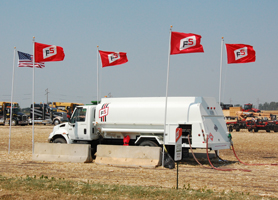
farm progress show 2011When the cars, trucks, tractors, combines and other equipment at the 2011 Farm Progress Show in Decatur, Illinois needed fueling up, GROWMARK FS was there on-site to serve up home-grown fuel.

Mark Dehner, GROWMARK marketing manager for refined and renewable fuels, says they have been the official Farm Progress Show fuel supplier for many years. “It takes a lot of fuel. The demonstrations for tillage, for harvest, the main fuel is diesel fuel for the heavy equipment. That’s our Dieselex Gold proprietary diesel fuel with a biodiesel blend,” Dehner says. “We also have a ten percent ethanol blend gasoline for the gasoline-powered units.”

Dehner says the GROWMARK FS system started marketing ethanol back in the late 70s and they started field trials with biodiesel in the 90s and started selling it in the year 2000. “So biodiesel and ethanol have been a part of our Farm Progress Show for some time,” he said.

They have a fuel truck that stays out on the demo fields throughout the show to provide free fuel for all the equipment whenever necessary.

Listen to or download Chuck Zimmerman’s interview with Mark Dehner at FPS here: GROWMARK's Mark Dehner at Farm Progress Show

Audio, Biodiesel, Ethanol, Ethanol News, Farm Progress Show, GROWMARK

RFA CEO Visits Farm Progress Show

Cindy Zimmerman

farm progress show 2011The Renewable Fuels Association (RFA) president and CEO Bob Dinneen visited with farmers, friends and the farm media at the 2011 Farm Progress Show in Decatur, Illinois this week.

Dinneen has been traveling around the Midwest this month and says he is always amazed by the ability of the nation’s farmers to do their job, no matter what Mother Nature throws at them. “The fact of the matter is, the American farmer is the most productive and efficient in the world,” Bob says. “We will get through this and there will be enough supply to meet the needs for grain that exist.”

Ethanol Report PodcastOn the other hand, Dinneen is frustrated with the inability of Congress to do its job. “It’s got everything to do with a dysfunctional Congress that couldn’t agree on whether or not Mother’s Day was a good thing,” he said, adding that in terms of energy policy, nothing is happening right now. “They’re focused right now on this super committee which is a recipe for more gridlock. There’s no way those 12 members are going to be able to come up with a plan to address the country’s needs in terms of the budget and taxes.”
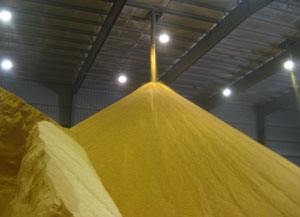
In this Ethanol Report interview with Dinneen from Farm Progress Show, he also talks about the Republican presidential candidates and what is happening with the 15% ethanol waiver.

Listen to or download the Ethanol Report here: RFA CEO Bob Dinneen at the 2011 Farm Progress Show

Audio, Ethanol, Ethanol News, Ethanol Report, Farm Progress Show, Farming, RFA

POET To Sell Antibiotic-Free DDGS

Joanna Schroeder

POET had announced that they are now selling antibiotic-free dried distillers grains (DDGS) with solubles. Today, they sell more than 4 million tons of Dakota Gold DDGS to a variety of feed markets. On occasion, fermentation can be disrupted due to things such as a bacterial infections, and an antimicrobial agent can be used to control the contamination.

Over the last few years, POET has developed and tested a new process that eliminates the need for antibiotics to control fermentation disruptions. The testing was done with participation of egg-farming customers and support from the United Egg Producers (UEP).

“POET partnered with UEP in a recently completed study showing that adding DDGS to layer diets can dramatically reduce ammonia emissions from the farm,” said Chad Gregory, Senior Vice President at United Egg Producers. “Their antibiotic-free process is another example that demonstrates POET’s commitment to animal agriculture.”

Mark Giesemann, Ph.D., Director of Technical Services at POET Nutrition added, “Since it was introduced more than 15 years ago, Dakota Gold has built a reputation for consistency and quality. “We had to ensure that any adjustments in our process didn’t compromise that reputation. After a few years of testing and development, we’ve found that the DDGS from the antibiotic-free process are of the highest quality.”

Company Announcement, Distillers Grains, Ethanol

REG Adds Bioheat & Biodiesel Sales Manager

Joanna Schroeder

Paul Predaris has joined Renewable Energy Group (REG) as the company’s new Biodiesel Sales Manager. In his role, he will oversee the company’s Bioheat development of the biodiesel market in the Northeastern United States. This part of the country is rapidly adopting Bioheat for home heating and Predaris will closely work with home heating oil and petroleum distributors as well as terminal owners to expand the market.

“Bioheat and biodiesel demand in the Northeast is rapidly expanding due to progressive state and local energy policy and the Renewable Fuels Standard. As America’s largest biodiesel producer, we are committed to focusing our nationwide distribution and logistics resources in this region and the addition of Predaris to our team is evidence of that commitment,” said REG Vice President of Sales and Marketing, Gary Haer.

“Predaris’s extensive experience in the region and knowledge of the biodiesel industry allow him to effectively partner with down-stream supply chain partners in making Bioheat and biodiesel more widely available,” he added.

Prior to joining REG, Predaris spent nearly 15 years with Sprague Energy Corporation in Portsmouth, New Hampshire. He has also served on the board of directors for several state oil and heat councils and associations.

Biodiesel, biofuels, Company Announcement

New E85 Station Opens in St. Paul, Nebraska

Joanna Schroeder

It’s no coincidence that we’re seeing a few new E85 stations opening this week. We’re heading into Labor Day weekend and many us will be driving to visit friends and family. For those flex-fuel vehicle drivers, you have a new E85 station that just may be on your travel route. Aurora Cooperative at 614 2nd Street in St. Paul, Nebraska is the home of the state’s newest E85 pump. While you can fill up now, the station will be having a grand opening celebration on Thursday, September 8, 2011 from 11:00 am to 1:00 pm.

During the E85 event, the station will offer an 85 cent discount on E85 for a fill-up of up to 30 gallons. Also available is E10 and regular gasoline. This is Nebraska’s 68th E85 pump and today, there are more than 100,000 Nebraskan motorists who own a flex-fuel vehicle (FFV). Not sure if your car is an FFV? You can check by visiting the Nebraska Ethanol Board website at www.ne-ethanol.org/ffv.

“E85 and other ethanol fuels burn cleaner than gasoline and the ethanol is produced here in Nebraska. As manufacturers produce more Flex Fuel Vehicles each year, there is an opportunity to expand the use of high level ethanol blends,” said Todd Sneller, Nebraska Ethanol Board Administrator.

Kim Clark, Ag Program Manager with the Nebraska Corn Board added, “We are pleased that ethanol, grown and produced right here in Nebraska by our corn farmers, can be offered locally.”

E85, Ethanol