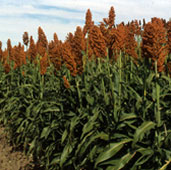
 Louisiana State University is getting $17 million from USDA to study how to turn sugar cane and sorghum into biofuels.
The project is one of the five announced yesterday by Agriculture Secretary Tom Vilsack, focused on developing aviation biofuels from various types of biomass. “We have an incredible opportunity to create thousands of new jobs and drive economic development in rural communities across America by continuing to build the framework for a competitively-priced, American-made biofuels industry,” said Vilsack. “Over the past two years, USDA has worked to help our nation develop a national biofuels economy that continues to help us out-innovate and out-compete the rest of the world while moving our nation toward a clean energy economy.”
Through new and existing industrial partnerships, this project will use energy cane and sorghum to help reinvigorate the Louisiana sugar and chemical industries.
 This new project is in addition to a study funded this year at LSU by the Sorghum Checkoff to demonstrate sweet sorghum’s potential for significant yield in a relatively short growing period and its ability to be a steady feedstock supply for biorefineries through improved production management.
“Results from these studies would provide information producers need to most effectively plant and harvest sweet sorghum,” said Kun Jun Han, LSU sweet sorghum specialist. “It would also be useful to biofuel industry personnel when considering site locations, as well as local community leaders working to encourage biorefineries to locate in their area.”
Han said the study will investigate a wide range of planting dates for sweet sorghum to determine the impact on biofuel properties, such as biomass yield, sugar yield and fermentable sugar composition.
From mid-March to May 2011, sweet sorghum was planted at two-week intervals and again during June and July. Some sweet sorghum will be harvested in the early seedhead development stage, which should allow for multiple harvests per year. Meanwhile, other sorghum plants will be harvested at the more traditional stage of late seed development. Results from both harvests will be studied to find which is most effective.
 At the Seattle-Tacoma Airport on Wednesday, Agriculture Secretary
  The WSU project will focus on converting closed timber mills into bioenergy development centers to develop a regional source of renewable aviation fuel for the Sea-Tac Airport.


 The
The  Noting that the report cited was funded by OPEC’s International Development arm, GRFA spokesperson, Bliss Baker said, “This so-called report from 2009 cannot withstand any level of academic scrutiny and is a self serving attempt to distract people from the real impact that energy prices are having on global commodities.”


 Senators Maria Cantwell (D-WA) and Dick Lugar (R-IN)
 Under the terms of the agreement, Raizen and Codexis will deploy the Codexis CodeEvolver(TM) directed evolution technology platform to improve Raizen’s current process for producing ethanol made from sugar. Raizen produced 600 million gallons of ethanol in 2010. The parties anticipate pilot production at Raizen’s Bonfim mill.