

RFA E-15 Ad

Algae Can Draw Energy from Other Plants

Joanna Schroeder

Bielfeld University Professor Dr. Olaf Kruse has a class he won’t forget. His biological research team has made what they consider to be a groundbreaking discovery – the green alga Chlamydomonas reinhardtii not only engages in photosynthesis, but is also able to draw energy from other plants. The team believes this could have a major impact on the future of bioenergy.  Findings were released in the online journal, Nature Communications.
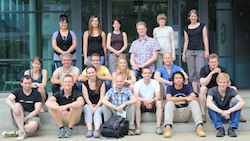
According to Kruse, it was believed that only worms, bacteria and fungi could digest vegetable cellulose and use it as a source of carbon for their growth and survival. In contrast, plants engage in photosynthesis of carbon dioxide, water and light. Yet through a series of experiments, Professor Dr. Olaf Kruse and his team cultivated the microscopically small green alga species in a low carbon dioxide environment and observed that when faced with such a shortage, these single-cell plants drew energy from neighboring vegetable cellulose instead.

So how does this work? Kruse explains that the alga secretes enzymes (so-called cellulose enzymes) that ‘digest’ the cellulose, breaking it down into smaller sugar components. These are then transported into the cells and transformed into a source of energy and abracadabra – the alga can continue to grow.

“This is the first time that such a behaviour has been confirmed in a vegetable organism,” noted Professor Kruse. ‘That algae can digest cellulose contradicts every previous textbook. To a certain extent, what we are seeing is plants eating plants.”

So does this trick happen with also forms of alga? Kruse says preliminary findings indicate this is in fact the case. And based on this hypothesis, this unique property of algae, the presence of celulose enzymes could be of interest for bioenergy production. There would no longer be a need for organic materials to feed the fungi that are currently used to extract the enzymes needed to break down the cellulose.

advanced biofuels, algae, bioenergy, Renewable Energy, Research

Book Review – Winning the Energy Wars

Joanna Schroeder

This week I read “Winning the Energy Wars,” by R. Paul Williamson. I often find myself surprised that after reading and reviewing more than 100 energy and environmental books, that I would find one with a new and unique angle. But I did. The premise is one you often find in an energy book – the United States energy “strategy” is not working. The twist comes into play when Williamson gives us an educational lesson about the different types of energy – he used a favorite business tactic of mine – the SWAT analysis (Strengths, Weaknesses, Opportunities, and Threats).

Strengths – When providing additional information Williamson uses a “product code”. Use your phone to click on the code to get and additional information not contained in the book. After giving a brief history of U.S. energy policy, he lays out a Sustainable Energy Plan (USA-SEP) and outlines and goes into depth about the “six major benefits of for an energy-wise US to adopt and implement the USA-SEP.” I also found that his website supporting the ideas in the book has some good follow-up resources.

Weaknesses – To prove a point about the extravagant and monumental use of energy around the globe, Williamson wrote out all energy equivalents. For example, 98,000,000,000,000 Btu or 28,720,978,623 MWh. This is a bit hard to quantify when your eyes are glazing over the digits because you can’t truly comprehend the number.  The book had some factual errors and a lot of grammatical errors. For me, this diminishes the credibility of the author.

Opportunities – Williamson proposes a new way to evaluate possible energy sources, aka solutions: EF=R/D (energy future equals resources divided by demand). This is a good way to think through some of the “unintended” consequences or benefits of possible energy actions.

Threats – What will happen if the U.S. does not have the fortitude to tackle the problem and the courage to stick with the solution? As Williamson rightly points out, it takes each of us and together, we can make change.

Win a copy of this book. Send me an email with the subject line “Winning the Energy Wars” and include your contact information in the body of the email.

Alternative energy, book reviews, Electricity, Energy, Renewable Energy

Ethanol Groups Not Surprised by Attack on RFS

Cindy Zimmerman

The ethanol industry is categorizing the latest attack on the Renewable Fuel Standard (RFS) by the American Petroleum Institute (API) as more of the same.

In response to API’s call this morning to eliminate the RFS “because it is not working well and because it will force higher concentrations of ethanol in gasoline that could harm vehicles,” Growth Energy CEO Tom Buis said, “This is a classic example of the fox guarding the chicken coop. Really? Special interests will stop at nothing to discredit the success of renewable fuels created right here at home to ensure their lock on the fuels market goes unchecked.”

Bob Dinneen, President and CEO of the Renewable Fuels Association, referred to the API position as the classic “dog bites man” journalism example. “API wants to repeal a highly successful program that has reduced gasoline imports and stimulated investment in renewable energy resources. API doesn’t like the RFS because it has taken ten percent of their barrel and reduced consumer costs. Americans like and support the RFS for exactly those reasons.”

Iowa Renewable Fuels Association Executive Director Monte Shaw was equally blunt. “The reason API is so concerned now is that E15 is poised to become widely available. Without the RFS, Big Oil can continue to hide behind its Century of Subsidies and the federal petroleum mandate to ignore lower cost ethanol blends like E15.”

Brent Erickson, executive vice president of the Biotechnology Industry Organization’s Industrial & Environmental Section, says the oil industry continues its efforts to undermine the success of the RFS. “Since the inception of the RFS, API has used every regulatory and legal ploy available to delay and block implementation of the law. Since these efforts appear to have failed, they are now mounting a public relations effort to convince lawmakers to repeal the RFS. Congress should see right through this effort.”

Ethanol, Ethanol News, Growth Energy, Iowa RFA, Oil, RFA

Solar Training Features PV Inverter Tech

Joanna Schroeder

ImagineSolar is featuring inverter technology for photovoltaic systems developed by Ideal Power Converters (IPC), in their next solar training workshop in Austin, Texas on December 15 and 16, 2012. According to ImagineSolar, IPC’s patented power converter technology improves both energy and cost efficiencies for solar inverters, grid storage, and electric vehicle charging infrastructure.

IPC’s initial product, a 94lb 30kW 480VAC PV inverter, is one of the most efficient PV inverters with 96.5 percent CEC-weighted efficiency according to the company. It can lower inverter shipping and installation costs by 90 percent compared to conventional transformer based inverters.

“We are excited to work with the outstanding team at ImagineSolar,” said Paul Bundschuh, CEO for IPC. “ImagineSolar will conduct a lab using our inverter technology and will provide insight into the advantages of bi-polar system design.”

ImagineSolar is a company that specializes in training people about solar energy. As part of this initiative, the company establishes training partnerships with leading manufacturers, distributors, installation companies, training and accreditation organizations who are developing the latest, advanced, technologies for the solar and smart grid industries.

Michael Kuhn, ImagineSolar founder and CEO, added, “IPC is transforming the PV, grid-storage, and electric vehicle fast charging markets with their game-changing Universal Power Converter Platform(TM). This is a great match with our focus on system solutions for the solar and smart grid industries.”

Alternative energy, Education, Electricity, Energy, Smart Grid, Solar

Southeast Propane Fleets Save $1.62 Per Gallon

Joanna Schroeder

According to Virginia Clean Cities, vehicle fleets across 12 U.S. states participating in the Southeast Propane Autogas Development Program saved an average of $1.62 per gallon last quarter fueling with propane autogas versus gasoline. Total cost savings for the quarter neared $100,000 while to date, the propane fleets have offset more than 1 million gallons of gasoline.

“We’re nearing the end of the third year of the Southeast Propane Autogas Development Program, and we’ve seen tremendous results in terms of reducing harmful pollutants and emissions, as well as helping regional fleets lower their fuel costs by running on propane autogas,” said Alleyn Harned, executive director of Virginia Clean Cities, which administers the Program.” Autogas is a domestically produced, cleaner-burning fuel that’s very cost effective for fleets, so it has a significant role to play in diversifying our nation’s transportation fuel.”

According to a news statement about the propane autogas program, propane is a viable alternative fuel for fleets for several reasons: costs less per gallon than gasoline; affordable to convert vehicle to propane autogas technology; affordable to install fueling stations (Alliance Autogas is providing fuel supply, infrastructure and conversions); propane emits less tailpipe emissions than gas; and propane vehicles require less maintenance.

For example with 24 autogas fleet vehicles, Spotsylvania County in Virginia will save approximately $70,000 in fuel costs each year. Community Counseling Services in Mississippi converted 29 fleet vehicles to autogas and will save an estimated $60,000 in fuel costs annually.

Alternative energy, Propane

Bonanza BioEnergy Embraces Enogen

Joanna Schroeder

Another U.S. ethanol plant has signed on to use the Enogen trait technology developed by Syngenta North America – Bonanza BioEnergy of Garden City, Kansas. According to Syngenta, Enogen allows corn to express a robust form of alpha amylase enzyme, eliminating the need to use liquid alpha amylase enzymes during dry grind ethanol production. The company also says their trait technology can help a plant reduce the slurry viscosity of its corn mash, improving ethanol production while at the same time reducing energy, gas and water usage.

David Witherspoon, head of renewable fuels for Syngenta explained, “Enogen trait technology is available at a critical time for the ethanol industry as margins are tightening. By working across broad ranges of temperature and pH levels, Enogen corn creates flexibility for ethanol plants that helps them capture increased levels of throughput or cost savings based on market conditions.”

In July of this year, Bonanza BioEnergy, a member of Conestoga Energy Partners, completed a three-month trial of Enogen grain. The results convinced the plant to sign a commercial agreement to use the technology in ethanol production in 2013.

“We were very pleased with the enhanced efficiency Enogen grain demonstrated at our Bonanza facility during the trial and we’re confident that we can continue to see added value from the technology in the long run,” said Tom Willis, CEO of Conestoga Energy Partners. “Working with Syngenta as a partner has been a great experience and we look forward to continuing our collaboration with them.”

Bonanza BioEnergy is working to source Enogen grain from local growers in the community. Using specific, yet simple stewardship protocols for the production, harvest and storage of Enogen corn, growers under contract will begin planting Enogen corn seed in the spring and will deliver their Enogen grain to the ethanol plant following harvest next fall.

Alternative energy, biofuels, corn, Ethanol

Register Now: 2013 Iowa Renewable Fuels Summit

Joanna Schroeder

Registration for the 7th Annual Iowa Renewable Fuels Summit and Trade Show is officially open and has one of the best return on investments around – it’s free. Sponsored by the Iowa Renewable Fuels Association (IRFA), renewable industry members, renewable energy enthusiasts and just plain old interested citizens can attend the Summit on January 30, 2013 being held at The Meadows Conference Center in Altoona, Iowa.

Speakers will highlight the future of the Renewable Fuel Standard (in case you missed it, the EPA denied waiver requests to lower the ethanol mandate), initiatives to expand E15 availability to consumers and current opportunities facing the biodiesel industry. Featured speakers will be announced as the event draws closer.

“The Renewable Fuels Summit is Iowa’s premier renewable fuels event bringing together industry leaders, decision makers and the general public to shape Iowa’s energy future,” said IRFA Executive Director Monte Shaw. “This event provides a great opportunity to hear experts address state and national issues facing the future of renewable fuels, as well as network with biofuels professionals and business leaders throughout the Midwest.”

Visit the 2012 Iowa Renewable Fuels Summit website to learn more and to register. As in past years, DomesticFuel will be there bringing our readers live coverage, photos and interviews from the event.

advanced biofuels, Biodiesel, conferences, Energy, Iowa RFA, Renewable Energy

DOE Announces Alt Energy Vehicle Grants

Joanna Schroeder

The U.S. Department of Energy (DOE) has announced 20 new projects to help states and local governments develop infrastructure, training, and regional planning needed to help accelerate the adoption of alternative fuel cars and trucks. These alternative vehicles can run on “fuels” such as natural gas, electricity and propane. In total, the DOE has awarded nearly $11 million.

“Building a clean and secure U.S. transportation system that leverages our domestic energy sources will give American families, businesses, and communities more options and reduce fueling costs,” said U.S. Energy Secretary Steven Chu in a press statement. “At the same time, these projects will help lead the way to further reducing America’s dependence on foreign oil and protecting our nation’s air and water.”

Through the DOE’s Clean Cities initiative, projects will address a range of community infrastructure and training needs, such as providing safety and technical training for fleet operators, mechanics, first responders, and code officials; streamlining permitting and procurement processes; and helping public and private fleets integrate petroleum reduction strategies into their operations.

For example, the American Lung Association in Minnesota, based in St. Paul, Minnesota was awarded $248,788. The funds will be used for The Accelerating Alternatives for Minnesota Drivers project, that will provide safety and technical assistance and training related to Plug-in Vehicle (PEV) and natural gas fueling infrastructure; establish the Minnesota Natural Gas Vehicle Workgroup and create a strategic plan for statewide natural gas vehicle implementation; establish a Minnesota green fleet recognition program; and create the DriveElectricMN.org website as an online resource for electric vehicle (EV) users (and potential EV users) in Minnesota.

Click here for a full list of Clean Cities Coalitions that were awarded funds.

Alternative energy, Electric Vehicles, Natural Gas, Propane, Renewable Energy

GE Purchasing 2,000 C-MAX Energi Plug-In Hybrids

Joanna Schroeder

General Electric (GE) is purchasing 2,000 C-MAX Energi plug-in hybrids as part of its commitment to convert half of its global fleet to alternative fuel vehicles. The purchase ups GE’s alternative vehicle fleet to 5,000 in its goal of 25,000 vehicles. The EPA has rated C-MAX Energi with a 108 miles per gallon city rating and 620 mile single tank range. In addition to the purchase, Ford, who manufactures the electric vehicles (EVs), will promote GE’s WattStation charging station and CNG in a Box, natural gas fueling station with commercial buyers.

“Ford is launching six new electrified vehicles – a big bet that fuel prices will continue rising and lead to more demand for advanced fuel-efficient vehicles,” said Ken Czubay, Ford vice president, U.S. Marketing, Sales and Service. “We are pleased to partner with GE, a company that is charting a similar course, to promote advanced technology and energy savings.”

The two companies will also work with researchers from Georgia Institute of Technology to study GE employee driving and charging habits, with the goal of improving all-electric driving and charging performance. Researchers will use Ford’s MyFord Mobile app – with real-time battery charge status and value charging that automatically recharges at lower-cost, off-peak electricity rates.

Mark Vachon, vice president of ecomagination at GE, said “At GE, we are focused on providing our customers and our fleet with more economically and environmentally efficient vehicles. The Ford C-MAX Energi plug-in hybrid is a great addition to our expanding fleet of alternative fuel vehicles.”

According to Professor Bert Bras of Georgia Tech, understanding driving and charging habits are key to advancing vehicle charging infrastructure. He said the acceleration of research and development of new technologies will help to improve efficiency  driver satisfaction and environmental benefits. The findings of the study will be shared with commercial customers to provide insights and help foster continued adoption of EVs into fleets.

Alternative energy, Compressed Natural Gas (CNG), Electric Vehicles

Human Waste to Biodiesel Project in Ghana A Go

Joanna Schroeder

A pilot facility has gone online in Ghana to convert human waste, or fecal sludge (FS), into biodiesel. The event was celebrated on World Toilet Day where researchers at Columbia University’s Engineering School in conjunction with Ghana with Waste Enterprises, Ltd., the Kwame Nkrumah University of Science and Technology (KNUST), and the Kumasi Metropolitan Assembly, are working together to take research developed in the lab to the community. The goal is to prove out a much needed new sanitation model for people in emerging countries.

“The FS to biodiesel pilot project could potentially address sustainable sanitation and introduce a new dimension into the sanitation value chain not only in Kumasi but globally, thus helping to ‘kill two birds with one stone,” said Anthony Mensah, Waste Management Director for the city of Kumasi. “The Kumasi Metropolitan Assembly is therefore delighted to be part of this novel partnership.”

Entering its second year, the project is led by Kartik Chandran, an associate professor of Earth and Environmental Engineering at Columbia University’s school of engineering and applied science and Ashley Murray, Founder and CEO of Waste Enterprisers Ltd, a Ghanaian company that is working to reinvent the economics of sanitation in the developing world.

As part of this project, Chandran is developing an innovative technology to transform fecal sludge into biodiesel fuel and is working on converting a waste-processing facility into a biorefinery.

“This is a very exciting project for us,” said Chandran. “We are aiming to create a next-generation urban sanitation facility that will set new standards and serve as a model around the world. With the capacity to receive and treat 10,000 liters, or 2,500 gallons—a full sanitation truck carrying concentrated fecal matter from at least 5,000 people—of fecal sludge per day, this facility reaches way beyond the lab scale.”Read More

advanced biofuels, Alternative energy, Biodiesel, International, Renewable Energy, Waste-to-Energy