

The area around Seattle, Washington is known for its beautiful green surroundings, prompted by plentiful rain and moderate temperatures. But while the city itself might covered in lots of gray concrete, it is green when it comes to caring for the environment.
 Part of that commitment is the city’s dedication to biofuels and alternative forms of energy. This post on the Seattle Post-Intelligencer “Strange Bedfellows” blog was prompted by Mayor Greg Nickel’s announcement that he wanted all taxis in the city to get 30 miles per gallon. That prompted the authors to ask if the city is practicing the green ways it preaches, particularly in the use of biofuels:
A city spokeswoman, Katherine Schubert-Knapp, responded, in part:
“In addition to the diesel, (compressed natural gas), electric and hybrid vehicles cited below, we have 2,180 that run on gas. Many are subcompacts and I would expect those have high mileage ratings. Some are trucks and I expect those have low mileage ratings. The point is we buy vehicles that meet our business needs, such as police cars, utility trucks, fire engines, etc. When we can buy green versions of these, we do.”
So far, she said the city has:
– 384 hybrids and 95 cars that run on compressed natural gas.
– 47 electric off-road vehicles (22 scooters, 22 Segways, 2 electric bicycles and 1 neighborhood electric vehicle).
– 699 diesel-powered vehicles and “most run on biodiesel.” (The exceptions are things like fire engines and vehicles at remote locations, such as the Skagit, which cannot obtain the fuel). We use B20 (a fuel blend of 80% diesel and 20% biodiesel). We’re testing a B40 blend.
– 58 vehicles in our general-use motor pool and 45 are hybrid or natural gas vehicles. The Motorpool also features five Segways, three bicycles and two electric bicycles.
“We’re also looking for ways to make our specialty fleet green by replacing those vehicles, e.g., heavy-duty trucks, with more fuel-efficient vehicles. The challenge is the industry hasn’t produced a lot of those yet. We are starting to see some heavy-duty hybrid trucks come on the market and we purchased four last year.
In the long run, Seattle officials want 100 percent of their fleet to be clean and green, defined as using clean fuels and fuel-efficient, low-emission vehicles that still meet the city’s needs.
So, is Seattle truly a green city? Depends on what your standards are, but I would have to say the city is trying… more than many others can say.
 One of today’s presenters at the 25x’25 Renewable Energy Summit was Dr. Steve Chu, Director,
  The 4th Annual
  Two-time Indy 500 winner and “Dancing with the Stars” champion Helio Castroneves was in Iowa Wednesday to promote the
  According to the EIA’s Short-Term Energy Outlook, “The slowing economy combined with high petroleum prices is expected to constrain growth in U.S. consumption of liquid fuels and other petroleum products to just 40,000 barrels per day (bbl/d) in 2008. After accounting for increased ethanol use, U.S. petroleum consumption falls by 90,000 bbl/d.”
 This year has been an exceptionally snowy one for much of the U.S., and some students in Michigan are making use of all the snow… while learning about the benefits of biofuels.
 “As diesel costs continue to skyrocket, this tax break will help ease the pain at the pump for consumers while helping to develop our state’s biodiesel industry,” Rounds said in a news release. “Biodiesel is an ideal alternative to petroleum-based fuel. It will not reduce mileage, and because of its increased lubricity, it is better for the engine.”
 The Missouri State Senate has passed a biodiesel standard that would require all diesel sold in the state to contain at least 5 percent biodiesel.
 The move has gained the praise of the Missouri Soybean Association:
 “A B5 Standard is the next step in advancing Missouri’s growing biofuels industry and we are grateful for the leadership that Senator Stouffer has provided on this important issue,” said Dale R. Ludwig, Missouri Soybean Association (MSA) Executive Director/CEO. “It is refreshing to have people who realize the important role biodiesel can play in reducing our dependency on foreign oil. Missourians can take pride in knowing that homegrown, renewable fuels, such as biodiesel, keep more dollars in the state when we spend less on petroleum-based fuels.”
 “With our support for renewable fuels and the leadership of the Missouri Corn Growers, our state has become a leader in ethanol production,” Blunt said.
 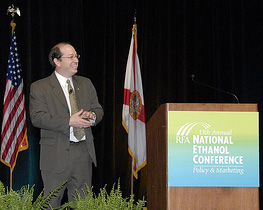 I finally had the chance today to sit down and listen to the entire speech Assistant Energy Secretary Andy Karsner made at the