
 DayStar Technologies has announced the completion of its first acquisition from Avatar Solar of a Hawaiian solar park. DayStar will be acquiring all of Avatar’s operational solar parks throughout the State of Hawaii. DayStar paid cash and common shares issued at $2.00 for the solar park.
- GTM Research and Azure International have released China Wind Market Quarterly: Q4 2012 report. According to the report, China continues to deploy wind capacity at a quick pace with over 14.5 gigawatts installed in 2012 and 18 gigawatts forecast for 2013.
- Quantum Fuel Systems Technologies Worldwide has announced the receipt of an order for its ultra-lightweight Q-Lite compressed natural gas (CNG) fuel storage tanks for natural gas powered pick-up trucks.
- According to the Sustainable Energy in America 2013 Factbook, produced by Bloomberg New Energy Finance on behalf of the Business Council on Sustainable Energy, renewable energy installations hit an all-time record with at least 17 GW of new nameplate capacity added in 2012; in April 2012, electricity generation from natural gas equaled that from coal for the first time in US history; policies and approaches for financing energy efficiency continued to make market headway; energy intensity for US commercial buildings has now dropped by more than 40% since 1980 and investments in smart grid topped $4 billion; and carbon dioxide (CO₂) emissions from the energy sector were on pace to sink to their lowest level since 1994.
- WWF has released a new report, Putting the EU on Track for 100% Renewable Energy, which shows where Europe needs to be by 2030 in order to reach a fully renewable energy system by 2050. According to the report, by 2030, the EU could be reducing its energy use by more than a third and generate almost half of the remainder from renewables. In addition, by 2030 the EU could use at least 38% less energy compared to a business as usual projection; generate more than 40% of its energy from renewable sources, and by doing both, reduce its energy related greenhouse emissions by 50% compared to 1990 levels.
- Primus Green Energy has hired John Doyle as Chief Infrastructure Officer. Doyle was formerly with BP Biofuels.

Europe Imposes Tariff on US Ethanol
According to U.S. ethanol organizations, the European Commission (EC) is officially imposing a $83.03 per metric ton tariff on U.S. ethanol entering the European Union (EU).
The Renewable Fuels Association (RFA) and Growth Energy issued a joint statement on the action.
“This tariff is outrageous and based on absolutely no facts or evidence of harm. An extensive investigation was conducted and there was no proof to substantiate the European Union’s protectionist claims of dumping. Imposing a country wide anti-dumping tariff is unprecedented and unfounded. This is blatant protectionism at its worst. This is absolutely not the final chapter. We will challenge this policy in every manner possible.”
 During the recent National Ethanol Conference, the Secretary General of the European ethanol organization ePure was on a panel with RFA president and CEO Bob Dinneen, as well as representatives from other ethanol producing countries, including Canadian Renewable Fuels Association president Scott Thurlow pictured here between the other two.
On the panel, ePure’s Rob Vierhout was asked why they were pursuing trade actions against U.S. ethanol. “It’s completely legitimate what we are doing,” said Vierhout, who engaged in a back and forth with Dinneen about subsidies and dumping. Dinneen made the point at the time that a country wide anti-dumping tariff is protectionist. “That is a violation of WTO, a violation of every trade concept that has ever been established,” said Dinneen. “If there’s anti-dumping, you’re supposed to impose a fee to penalize the company that’s doing the dumping. You didn’t find any so you’re penalizing everybody.”
Listen to exchange between Vierhout and Dinneen here: ePure's Rob Vierhout and RFA's Dinneen
2013 National Ethanol Conference Photo Album
2013 NEC Golf Tournament Photo Album
Former Congressman at Iowa RFA
 Eight term Iowa congressman Leonard Boswell is continuing to support renewable fuels in his state despite losing his re-election bid in re-districting last year to Tom Latham.
Boswell attended the Iowa Renewable Fuels Summit last month because it is something he says he cares deeply about. “I am so wound up in things like renewable fuels, it’s just one of my passions,” he said during an interview at the summit. “I will participate somehow.”
The former Democratic congressman, who is a farmer, was disappointed that Congress was unable to get a farm bill passed last year. “We need a farm bill, you can’t plan if you don’t know the rules,” said Boswell, who believes the House did have the votes to pass the bill that came out of the agriculture committee but they were never given the chance.
Listen to interview with Boswell here: Former Congressman Leonard Boswell
Ethanol Continues to be Job Creator
 Despite facing major challenges in 2012, the ethanol industry still created more than 380,000 jobs and $43 Billion in Gross Domestic Product, according to the latest analysis conducted by Cardno-ENTRIX and commissioned by the Renewable Fuels Association (RFA).
“The study reaffirms that this is an important industry for the overall economy but more importantly for rural America,” said study author John Urbanchuk at the National Ethanol Conference where the study was released. According to Urbanchuk, the production of the estimated 13.3 billion gallons of ethanol in 2012 directly employed 87,292 Americans. An additional 295,969 Americans found work in positions indirectly affiliated with or induced by ethanol production. “Research and development activities are part of that as well,” he said. “That’s a very vital aspect of this entire industry as we move forward.”
Even with the drought last year, domestic ethanol production of 13.3 billion gallons was the second highest annual production level in history, helping to displace 465 million barrels of imported oil worth $47.2 billion.
Listen to my interview with Urbanchuk here: NEC 13 John Urbanchuk interview
2013 National Ethanol Conference Photo Album
2013 NEC Golf Tournament Photo Album
N.C. Solar Center Receives DOE Grant
The North Carolina Solar Center at North Carolina State University has been awarded a grant from the U.S. Department of Energy (DOE) to expand the use of alternative fuel and advanced vehicle technologies with a $500,000 award for the Alternative Fuel Implementation Team (AFIT) for North Carolina Project. The AFIT project is a two-year collaboration of U.S. DOE designated Clean Cities coalitions in the Triangle, Charlotte and Asheville regions, Clean Cities coalitions in five nearby states, Advanced Energy and  industry leaders such as the Biofuels Center of North Carolina, Duke Energy, Holmes Oil Co, the NC Propane Gas Association, Public Service North Carolina, and Piedmont Natural Gas.
The AFIT project is focused on reducing barriers to more widespread deployment of biofuels such as biodiesel and E85, electric vehicles, natural gas and propane in public and private sector fleets. Fuel specific charettes will result in actions to accelerate the use of alternative transportation technology solutions to enhance North Carolina’s economy and environment. In year two, a Petroleum Displacement Plan (PDP) toolkit will be developed to assist fleet managers and vehicle owners in making decisions on which alternatives will best support their mission and goals. The PDP toolkit will include cost/benefit criteria and best application options and scenarios for specific alternative fuels based on national and North Carolina specific parameters.
As part of the AFIT project, a two-day North Carolina symposium, “Southeast Regional Alternative Fuels Conference,” will be held that includes sharing success stories and recognition awards.
“We are very excited to have the opportunity to bring together all the key parties in the southeast to leverage our unique talents and common interests in providing transportation technology and policy solutions to energy and air quality concerns,” said Anne Tazewell, Transportation Program Manager at the N.C. Solar Center and the AFIT project lead. “We look forward to the results of a cleaner environment and more business opportunities for alternative fuels.”
Worldwide Energy Installs Solar System in KC
It’s not often I write about new solar systems going online in the Midwest. This week, Krtek Real Estate and Worldwide Energy announced the completion of 119 kilowatt solar system consisting of 628 tenKSolar RAIS solar photovoltaic modules on  the roof of the Manor Square parking garage. According to Worldwide Energy, the array utilizes solar reflector technology, which will boost the power production to an equivalent rating of 164 kilowatts, one of the highest production ratings in the state of Missouri. In addition, the solar company says the tenKsolar system is the only solar design without cell-to-cell dependency. The module uses conventional crystalline silicon cells, but is packaged in a module design for superior and optimal production.
“Kansas City has one of the highest solar potentials in the country, and we are excited for Krtek Real Estate to take advantage of that,” said Gaylen Davenport, COO of Worldwide Energy. “Solar is an efficient and smart way to offset the utility usage for the facility, and with the tenKsolar technology, it produces more than the average 119 kW system.”
In its first year, the system will produce more than 205,000 kilowatt-hours and around 5,020,287 kilowatt-hours over 25 years. In the Kansas City area, the average annual sunshine level is nearly five hours a day, above average compared to other parts of the United States.
“Kansas City is in a unique position to utilize solar,” added Davenport. “While our city may not be known for renewable energy, we can certainly lead the way for other businesses in the area.”
Dakota Spirit AgEnergy Receives EPA Certification
Dakota Spirit AgEnergy has received a renewable fuels certification (RFS2) from the U.S. Environmental Protection Agency (EPA) for its proposed 65 million gallon per year biorefinery that will produce ethanol, distillers grains and fuel-grade corn oil at the Spiritwood Energy Park near Jamestown, North Dakota.
 Under the EPA’s revised Renewable Fuel Standard, cornstarch-based ethanol production facilities built after 2007 are required to have lifecycle carbon intensities 20 percent lower than conventional motor fuels. EPA’s RFS2 approval this week affirms that Dakota Spirit AgEnergy meets the 20 percent threshold. The lower intensity is primarily due to the use of steam from Spiritwood Station to power the biorefinery. As a combined heat and power plant, and when fully utilized, Spiritwood Station will be about 66 percent energy efficient. Most conventional coal-based power plants are 30 to 35 percent efficient.
“We are pleased we could bring the EPA regulatory review of our unique RFS2 pathway to a successful and collaborative conclusion,” said Greg Ridderbusch, president of Dakota Spirit AgEnergy, and vice president of business development and strategy, Great River Energy who owns Dakota Spirit AgriEnergy.
To date, Dakota Spirit AgEnergy has completed business planning, engineering and now, RFS2 certification. Ongoing financing work is left to complete before groundbreaking in summer 2013. When operational, the biorefinery will utilize 23 million bushels of corn to produce 65 million gallons of ethanol per year, as well as corn oil and distiller’s grains.
99.9% Electricity from Wind & Solar by 2030
 According to recent research from the University of Delaware, 99.9 percent of electrical needs in a large power grid can be provided by wind, solar and new storage technologies by 2030 at costs comparable to today. Author Dr. Cory Budischak will present the findings in more detail during the general session on Tuesday, March 26, 2013 as part of the 6th Annual Iowa Wind Power Conference.
Other conference speakers include Governor Terry Branstad and Lt. Governor Kim Reynolds. In addition, the Director of Wind and Water from the US Department of Energy has been invited to speak. The conference will focus on four general themes that reflect the national and world leadership position that Iowa has achieved. Those themes include technology development, small & community wind, operation & maintenance and education training & research. In addition, a Research Poster Display featuring dozens of new university research projects will be a key element of the event. Click here for more information about the conference.
Plant Breakthrough May Improve Biofuel Processing
 There may be a connection between two different types of cell wall glycans (sugars) and specific wall protein known as arabinogalactan protein. The initial discovery was made by Li Tan, who then approached researchers at the University of Georgia (UGA to continue the research. According to Tan and Debra Mohnen, who both work at part of the BioEnergy Science Center, this connection is not known to exist and does not conform to the commonly held scientific definitions of plant cell wall structure. Yet what they found could redefine the understanding of basic plant biology, and it may lead to significant improvements in the growth and processing of biofuel crops.
“This is totally new,” said Tan, a research scientist in the Complex Carbohydrate Research Center and lead author of a paper detailing the group’s findings published in the online journal The Plant Cell. “We had never seen linkages between these structures before, and we had to develop a variety of new tests to prove that what we saw was not simply a mistake or a contamination.”
The scientific community generally agrees that complex sugars like pectin and xylan, which allow for cell wall structure, extension and growth, exist in separate networks from cell wall proteins. However, the UGA researchers have identified a direct and indisputable link between these two domains.
“What this means is that plant scientists’ view of the plant cell wall is at least partially wrong,” said Mohnen, professor of biochemistry and molecular biology and also a member of UGA’s Complex Carbohydrate Research Center. “There have been hints over the last 30 or 40 years that this link might exist, but no one has been able to prove it until now.”Read More
Sensenbrenner Introduces Bill to Cap Cellulosic Fuels
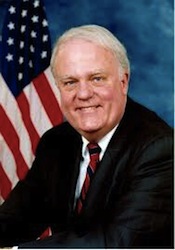 As last week came to a close, U.S. Congressman Jim Sensenbrenner (R-WI) introduced a bill to place what the Renewable Fuels Association (RFA) calls artificial caps on the Environmental Protection Agency’s (EPA) annual cellulosic biofuel projected production numbers. The proposed limits for any given year would be no more than five percent or one million gallons, whichever is greater, of total volume of cellulosic biofuels commercially available for the most recent calendar year.
In response, Bob Dinneen, RFA President and CEO said this is worse than irony. “Now that truly meaningful investment is being made in cellulosic ethanol companies that can be witnessed by the steel in the ground and actual production and introduction of millions of gallons of advanced ethanol into the marketplace, the Congressman wants this nation to turn its back on progress — turn back the clock to days of petroleum domination,” said Dinneen.
“Americans want fuel choice, they want cost savings, and they want American energy independence. America is noted worldwide for its ingenuity and creativity. Ethanol, especially the next generation that is now coming to fruition before our eyes, is the epitome of the American spirit.
Rather than encouraging that uniquely American entrepreneurial spirit, Congressman Sensenbrenner would limit the growth in advanced biofuels to no more than five percent per year. Clearly, far faster growth will occur if the RFS is left to work as designed. But in any case, I wonder if Congressman Sensenbrenner would agree to a five percent cap on the growth of non-conventional petroleum from fracking in the same spirit he is trying to cap advances in biofuels to five percent. Why limit the speed of progress toward energy independence from any domestic resource?” concluded Dinneen.