ACE to Congress: Big Oil Manipulating RIN Market

Joanna Schroeder

ace logoIn response to the release of the fifth white paper on the Renewable Fuel Standard (RFS) from the House Energy and Commerce Committee, the Executive Vice President of the American Coalition for Ethanol (ACE) Brian Jennings submitted comments showing how the RFS is working and Big Oil companies are desperate to repeal it so they can control the fuel market.

Jennings said in the comments:

With respect to a question from the Committee asking who is responsible for the rise in RIN prices: “The question isn’t what is responsible for the rise in RIN prices, rather, the questions are who is responsible for the rise in RIN prices and why. RIN prices have risen this year because oil companies don’t want to comply with the law. While oil companies were reluctantly comfortable with 10 percent ethanol in all gasoline, they prefer to control the remaining 90 percent of the gasoline market by preventing the sale of E15 and other mid-and-high-level blends of ethanol called for under the RFS.”

How the oil industry is manipulating the RIN market: “That oil companies are willing to pay $1 or more for a RIN, just to avoid buying ethanol at 70 cents per gallon less than gasoline and offering consumers safe, tested, and affordable blends such as E15 and E85, should tell Congress everything it needs to know about the RFS: it is needed now, more than ever. The lack of transparency in the RIN trading marketplace leaves open the possibility that unscrupulous traders or even oil companies could create skewed transactions for the purpose of manipulating the RIN market for financial gain or to make a political point. If Congress reduces or repeals the RFS, it rewards oil companies’ bad behavior, ensures they will control 90 percent or more of the gasoline market, and forces consumers to pay more for dirty fuel by restricting their access to more affordable and cleaner blends such as E15 and E85.”

Why the RFS was enacted and how EPA has implemented it: “The RFS wasn’t enacted by Congress to make life comfortable for oil companies or vertically-integrated food conglomerates who managed to operate quite comfortably before the RFS and continue to generate handsome profits today. The RFS was enacted to dramatically improve the way we produce and use transportation fuel, to reduce our dangerous dependence on foreign oil, to create jobs, to reduce gas prices and greenhouse gases, and to spark innovation in new technologies. In its wisdom, Congress provided EPA with appropriate authority and flexibility to implement the RFS, and EPA has judiciously and exercised that authority.”

Click here to read ACE’s full comments.
ACE, biofuels, Ethanol, RFS, RINS

Researchers Look to Remove Algae for Biofuel

John Davis

Blersch-Algae1One of the scourges of lakes during summertime is an algae bloom. While some algae serves as an important part of the food chain, other varieties can become too plentiful and kill off large amounts of wild fish. Researchers from the University of Buffalo are looking at ways to remove that slimy, green mess and turn it into useful materials, such as biofuels.

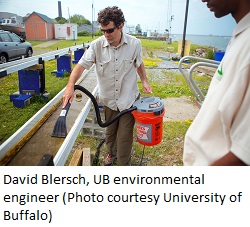
Funded by a $30,000 Rochester Institute of Technology grant, [David] Blersch, an environmental engineer at the University at Buffalo, and his students built a system that pumps water ashore down two, 40-foot-long flumes.

The water is recycled into the lake but it leaves behind microscopic cells that form miniature algae blooms. Blersch vacuums the algae and bottles samples to study. He is creating a database that will help scientists, government, industry and others gauge the algae’s potential uses.

“One element of the project is pollution recovery. By using the algae beds to remove excess nutrients from the lake, we can improve water quality,” says Blersch, PhD, research assistant professor in UB’s School of Engineering and Applied Sciences. “The other aspect is studying its properties; is it viable to turn algae into biofuels, fertilizer or other commercial products?”

The technology is being looked at to help clean up and possibly collect algae to make into biofuels in other important watershed, such as the Chesapeake Bay and the Everglades. In addition, companies, such as Exxon Mobil, which has invested $100 million since 2009 in algae biofuels, are helping move the process along.

algae, biofuels

Pipelines to Iowa Could Shift Fuel Choice At Pump

Joanna Schroeder

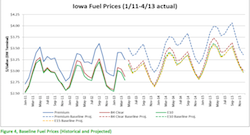
According to a new study commissioned by the Iowa Renewable Fuels Association (IRFA), a pending shift in the fuels carried in pipeline to Iowa will likely increase the cost of non-ethanol blended gasoline forcing retailers to choose between offering a relatively high priced traditional E0 (100 percent gasoline) and a lower-cost E15 (a blend of 15 percent ethanol and 85 percent gasoline). The study finds the net wholesale price difference Iowa Fuel Pricesbetween the two options could range from 34 cents per gallon to 57 cents per gallon. The study was conducted by Decision Innovation Solutions of Urbandale.

“With the price of 87-octane E0 expected to spike, retailers will need to think hard about what fuel will attract more customers,” said IRFA Executive Director Monte Shaw. “Each retailer will need to decide for themselves and the right answer may not be the same for all, but we’re confident that E15 will look very attractive once the marketplace implications of the oil refiners’ pipeline changes are better understood.”

Starting in mid-September, regular 87-octane E0 will no longer be shipped through the pipeline systems that serve Iowa. Oil refiners will replace this product with 84-suboctane gasoline, which cannot legally be sold to the public. Boosting the fuel back to the minimum required 87-octane will necessitate blending with ethanol or with 91-octane premium gasoline. The study found that, “prices for 84 clear and 91 clear will be impacted by the decision to offer a mixed 87 clear product.”

“According to the study, historically at the wholesale level, regular 87-octane E0 has been priced at about 6 cents more than 89-octane E10, a fuel containing 10 percent ethanol,” said  Shaw. “With these pipeline changes, we could see the E10 discount grow to 30 to 52 cents per gallon, while E15 could cost 34 to 57 cents per gallon less than E0.”Read More

biofuels, E15, Ethanol, Iowa RFA

UConn Establishes New Fraunhofer Center

Joanna Schroeder

The University of Connecticut (UConn), has established a new Fraunhofer Center for Energy Innovation (CEI). The role of the center is to develop advanced technologies related to energy storage, fuel cells, in-stream hydro, power management and distribution through contact research.

Dr George Rosenfeld,jpg“The sustainable, efficient and environmentally friendly use of energy is one of the major global challenges of the future,” said Fraunhofer President Professor Reimund Neugebauer during a dedicated ceremony. “Consequently, we combine our advanced energy competencies in the USA with an excellent research partner, the University of Connecticut. The Fraunhofer Center for Energy Innovation expands Fraunhofer USA’s portfolio of energy related technologies and will closely cooperate with the Fraunhofer Center for Sustainable Energy Systems (CSE) in Boston.”

Fraunhofer and UConn will cooperate in several areas. In order to develop highly efficient and cost-effective energy conversion and storage systems, the research will concentrate on modern functional materials, such as metals, ceramics, micro-and nanostructures, as components for fuel cells and electrolyzers. On the UConn campus, components and subsystems will be validated and integrated into flexible microgrid architectures. New methods of membrane and catalyst preparation will be developed, particularly for energy-efficient biofuel production.

“The Fraunhofer Center for Energy Innovation (CEI) combines the expertise of the founding partners for the development and commercialization of new materials and technologies to improve future energy production and storage owing to an efficient use of resources,” added Dr. Prabhakar Singh, the director of the Center. His aim is to accelerate the global supply of affordable and sustainable energy technologies.

Alternative energy, Energy, Energy Storage

ABFA Gives RFS Testimony

Joanna Schroeder

The Advanced Biofuels Association (ABFA) gave testimony last week regarding the Renewable Fuel Standard (RFS). One of the issues ethanol detractors are using in their attempt to modify or even repeal the RFS is the so-called blend wall.

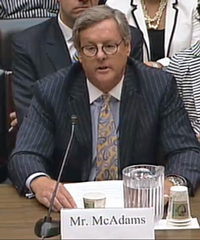
hearing-mcadamsABFA Executive Director, Michael McAdams said in response to this issue, “Calling for the full repeal of the RFS over a short term issue impacting less than 1% of all the fuels we use doesn’t make a lot of sense as a public policy issue.”

One area of concern for the advanced fuels industry, noted McAdams is the uncertainty of the annual obligations, or Renewable Volume Obligations (RVO)s for 2013 and 2014. He echoed the wishes of others to have the numbers released as soon as possible. McAdams also called for the Environmental Protection Agency (EPA) to provide an extra year of clarity with the 2015 RVO. This would help rapidly defuse much of the economic pressure the industry is facing.

Listen to Michael McAdams testimony here: Michael McAdams RFS Testimony

advanced biofuels, Audio, RFS

Offers Made to Buy Biodiesel Maker Syntroleum

John Davis

DynamicSyntroleumSomeone is interested in the biodiesel making efforts of Syntroleum. The Tulsa-based company is in a joint venture with food giant Tyson Foods to make biodiesel from animal fats, and according to the Tulsa World, that has got the attention of some unnamed third parties looking to buy the company, assets or patents:

A news release from Tulsa-based Syntroleum indicated that the unsolicited queries prompted the company earlier this month to announce the hiring of Piper Jaffray & Co. to scout “strategic alternatives.” Syntroleum said the current and long-term prospects of gas-to-liquids production and renewable fuels – both company objectives – were helpful to seeking those alternatives.

“Given the favorable commercial environment, the company believes that now is an appropriate time to broadly review its strategic alternatives with respect to its renewable and GTL intellectual property and its ownership and licensing interest in Dynamic Fuels.”

Syntroleum’s venture with Tyson includes Dynamic Fuels LLC, a refinery in Geismar, La., that began operating several years ago but is now on hold. No re-start for the plant has been given.

Biodiesel

Growth Energy Submits More RFS Comments

Cindy Zimmerman

As the Renewable Fuels Association did, Growth Energy also submitted answers today in response to the request from the House Energy and Commerce Committee for stakeholder input regarding implementation issues and the Renewable Fuel Standard (RFS).

hearing-buisThe answers echoed CEO’s Tom Buis’ testimony on the RFS during the stakeholder hearing this week.“The RFS was enacted nearly six years ago – it is time for the petroleum industry to move to higher biofuel blends and comply with the law,” said Buis. “The easiest way to comply is to simply blend E15 and higher ethanol blends.”

Buis also noted that moving to higher blends of ethanol would address RIN costs as well, stating: “The easiest way to bring down RIN prices and reduce compliance costs is to increase market access for higher blends of biofuels. If the major oil companies stop erecting artificial hurdles to E15 and midlevel ethanol blends, there would be ample RINs available to meet obligations under the RFS.” Tom Buis RFS testimony

Audio, Ethanol, Government, Growth Energy

RFA Says Flexibility is Key to RFS

Cindy Zimmerman

Today, the Renewable Fuels Association (RFA) touted the flexibility of the Renewable Fuel Standard (RFS) while responding to the last in a five part series of whitepaper questions posed by the House of Representatives’ Energy and Commerce Committee. The last whitepaper examines “implementation issues” of the RFS.

Questions answered by RFA in the paper include:
Does EPA’s annual (Renewable Volume Obligation) setting process work well or are there concerns?
Are the cellulosic biofuel provisions in the RFS working well or do they need to be changed?
How can EPA improve its enforcement of the RIN credit trading program?
What is responsible for the rise in ethanol RIN prices in 2013?
Are increases in RIN prices likely to affect the production or marketing of renewable fuels?

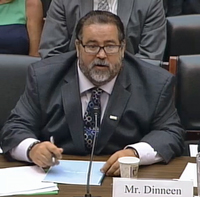
hearing-dinneenRFA president and CEO Bob Dinneen touched on most of these issues during his testimony to the committee this week. “Congress did an excellent job crafting the RFS and building in a great deal of administrative and market flexibility,” he said. “There’s nothing wrong with the RFS that can’t be fixed by what is right with the RFS.”

On the subject of RINS (Renewable Indentification Numbers), Dinneen had this to say. “RINS are free!” he said. “Ethanol producers are required to give RINS to refiners and gasoline marketers when they purchase a gallon of ethanol. Buy a gallon of ethanol, get a RIN for free.”

Listen to Dinneen’s opening remarks here: Bob Dinneen RFS testimony

Audio, Ethanol, Ethanol News, RFA, RFS

Senate Ag Committee Approves USDA Nominees

Cindy Zimmerman

usda-nomineesThe Senate Agriculture, Nutrition and Forestry Committee this week unanimously approved the nominations of Krysta Harden to serve as deputy secretary of agriculture and Robert Bonnie to serve as under secretary for natural resources and the environment.

The Renewable Fuels Association (RFA) congratulated Harden on her confirmation. “Krysta Harden is the right person for the job,” said Bob Dinneen, President and CEO of the RFA. “Her years as Chief of Staff at USDA, her work on Capitol Hill, and her vast understanding of value-added agriculture gleaned from years working for farmers and biofuels have all given her the knowledge and insight needed to fill this very important position as Deputy Secretary at USDA. Just as she has been confirmed in the past, we are eager to see her sweep through the approval process and look forward to her full confirmation by the U.S. Senate.”

Harden has been nominated to succeed Kathleen Merrigan in the second-highest post at USDA Bonnie, while Bonnie, who has been a senior advisor to Agriculture Secretary Tom Vilsack, would succeed Harris Sherman in the post of natural resources under secretary.

biofuels, Ethanol, Ethanol News, RFA, USDA

Refuel Colorado Fleets

Joanna Schroeder

Refuel Colorado Fleets, a pilot project to boost the use of alternative fuel vehicles in public and private sector fleets, has announced a new pilot program for several Colorado communities. The program is funded by a U.S. Department of Energy grant to the Colorado Energy Office. Counties selected for the year-long pilot are Routt, Larimer, Boulder, Jefferson, Adams, Garfield, Mesa, Montezuma and La Plata. A is funding the project.

Energy coaches employed by four community-based nonprofits will help business and government fleet owners work together with auto dealers, fuel providers, business leaders and local governments in the nine counties to pursue or expand use of alternative fuels. The program is aimed at accelerating the deployment of alternative fuels, reducing Refuel Colorado Fleets logopetroleum imports and increasing fuel cost efficiency in public and private sector vehicle fleets. Alternative fuels being considered include compressed natural gas (CNG), liquefied natural gas (LNG), propane, biofuels and plug-in electric vehicles.

“The Refuel Colorado Fleets energy coaches will support the adoption of alternative fuel vehicles,” said Jeff Ackermann, director of the Colorado Energy Office. “Each community will determine what makes sense for them, be that electric, natural gas, propane, or other vehicle types. Each of these provides economic and environmental benefits, making this an exciting project.”

Energy coaching will be done by Northern Colorado Clean Cities, Denver Metro Clean Cities, Garfield Clean Energy and Four Corners Office for Resource Efficiency. The pilot project is being led by CLEER: Clean Energy Economy for the Region, a Carbondale nonprofit with expertise in alternative fuel vehicle technology, energy coaching and community engagement.

“Colorado has built a strong reputation as a leader in renewable energy and other innovative industries,” said U.S. Sen. Michael Bennet, D-Colo. “Refuel Colorado Fleets’ work on these projects in counties across the state only enhances that reputation. “There is great promise in alternative fuel vehicles and these types of programs help proliferate their use and allow communities to see how best to implement proven green technologies.”

In the coming weeks, energy coaches will work with businesses and local governments in the nine counties to analyze their fleets, including miles driven and age, vehicle type and purpose, to determine the optimal alternative fuel to focus on.

Alternative Vehicles, biofuels, Compressed Natural Gas (CNG), Electric Vehicles, Liquefied natural gas (LNG), Propane