NAFTC Launches First Responder Safety Classes

Joanna Schroeder

The National Alternative Fuels Training Consortium (NAFTC) is offering three newly developed Alternative Fuel Vehicle (AFV) First Responder Safety Training classes in partnership with Tulsa Area Clean Cities (TACC). The classes will take place December 8, 2015 at the Tulsa Community College in Tulsa, Oklahoma.

naftctaccFocused on targeted information for firefighters, emergency medical services, and law enforcement, the three courses will feature techniques to safely respond to vehicle collisions, incidents and injuries involving alternative fuel vehicles. Additionally, the courses include information on alternative fuels, their properties and origins, and ways in which alternative fuel vehicles differ from conventionally fueled vehicles.

In addition to the training sessions, activities associated with the training launch include an alternative fuel vehicles display. The vehicles on display will be utilized as part of the training sessions.

“With increased alternative vehicle use, the chance of these new technologies being involved in a collision also increases,” said Bill Davis, NAFTC director. “Firefighters, emergency medical services and law enforcement need to be trained on the proper procedures for safely addressing incidents involving these new technologies so they can work together to secure accident scenes and save lives. We are happy to work with the Tulsa Area Clean Cities in the release of these new courses to make sure first responders have access to the information they need.”

Developed by the NAFTC, these courses were made possible by TACC through funding from the U.S. Department of Energy (DOE) Clean Cities and were constructed from existing NAFTC First Responder Safety Training materials.

Alternative Vehicles, Education, safety

BioEnergy Bytes

Joanna Schroeder

  • BioEnergyBytesDF1The Iowa Renewable Fuels Association (IRFA) has announced National Biodiesel Board (NBB) CEO Joe Jobe will deliver the industry keynote address at the 10th Annual Iowa Renewable Fuels Summit on January 19, 2016 in Altoona, Iowa. The Summit is free to attend and open to the public. The 10th Annual Iowa Renewable Fuels Summit will take place at The Meadows Conference Center at Prairie Meadows in Altoona, Iowa on Tuesday, January 19, 2016. Click here to learn more and to register.
  • Ormat Technologies, Inc. has announced it has signed a binding Memorandum of Understanding (MOU) to acquire, gradually, 85% of Geothermie Bouillante SA (GB) at a total company enterprise value of up to around €52 million (approximately $56 million USD). GB owns and operates a 14.75 MW geothermal power plant and owns two exploration licenses with a total additional potential capacity of up to 30 MW, all located in Guadeloupe Island, a French territory in the Caribbean.
  • Trina Solar Limited has announced that its Chairman and CEO, Mr. Jifan Gao, has been elected a Co-Chairman of the Global Solar Council (GSC). The GSC was officially launched on December 6, 2015 during the 2015 Paris Climate Conference (the “COP21”) and intends to establish its headquarters in China.
  • As countries work toward a new international climate agreement in Paris, a group of six green banks and two leading non-profit groups announced they are establishing a Green Bank Network to help meet the urgent need of increasing and accelerating investment in renewable energy and energy efficiency worldwide. This green bank network potentially could bring billions of dollars in new investment to speed the development of clean energy, creating jobs and helping reduce climate change.
Bioenergy Bytes

POM Wonderful Extends Partnership w/Greenbelt

Joanna Schroeder

POM Wonderful, the largest grower and producer of fresh pomegranates and pomegranate juice in the U.S., has extended its feedstock testing contract with Greenbelt Resources Corporation. Earlier this year, Greenbelt announced its confidential testing program, and the company has now released the news that POM Wonderful was one of its first clients.

© Olhaafanasieva | Dreamstime.com - Ripe Pomegranates On A Rustic Table

© Olhaafanasieva | Dreamstime.com – Ripe Pomegranates On A Rustic Table

Using Greenbelt’s technology, the initial tests have successfully demonstrated the viability of two feedstocks to be converted into fuel, filtered water, and other valuable co-products, according to Greenbelt CEO Darren Eng.  Pomegranate husk waste from POM Wonderful juicing operations is one of these viable feedstocks.

“Based on preliminary testing results, our calculations predict a likely ten-fold to possibly more than twenty-fold increase in per-ton-value of POM’s pomegranate husks through the integration of a Greenbelt system,” said Floyd Butterfield, CTO of Greenbelt Resources. “Our Solution has the potential benefit of being both sustainable and revenue generating.”

POM Wonderful recently commenced the next level of Greenbelt Resources feedstock testing service: Commercial-Scale Feedstock Testing (CSFT). CSFT entails running several truckload-sized batches to test multiple variables and their myriad impacts on process efficiency. The purpose of CSFT, says Butterfield, is to obtain data necessary for designing a specific system for a specific scenario in a specific location. The goal is to generate data from which an efficient system can be designed and its cost estimated.

Eng added, “POM Wonderful is a world class operation and a market leader with an ideal waste stream for use as a feedstock. Their commitment to the testing process and basing decisions on sound science, allows us to explore system tweaks designed to maximize value.”

advanced biofuels, bioenergy, Ethanol, Waste-to-Energy, water

Hybrid Yeast to Give Rise to Better Biofuel Production

John Davis

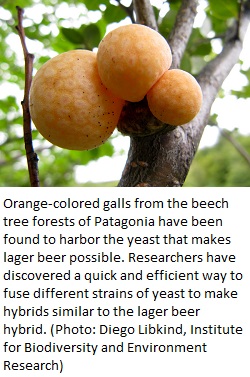
galls_beech_tree10_4536Researchers in Wisconsin, a state already known for its good use of yeast for the brewing of beer, are developing yeast hybrids that would also help in biofuels production. This article from the University of Wisconsin says the scientists at the school continue to find more strains suited for the green fuel making.

“We can achieve hybrids at rates of one in a thousand cells,” notes William Alexander, a University of Wisconsin-Madison postdoctoral research associate and the lead author of a paper describing the new method in a special synthetic biology issue of the journal Fungal Genetics and Biology. “It is much more efficient than nature.”

There are hundreds of known species of yeasts and they occupy almost every ecological niche imaginable worldwide. They are essential to the process of fermentation, where the microbes convert sugars to alcohol and carbon dioxide. Yeasts are used widely to not only make beer, wine and bread, but also cider, whiskey, cheese, yogurt, soy sauce and an array of other fermented foods and beverages. In industry, yeasts are used to produce biofuels and to make enzymes, flavors and pigments and even drugs such as human insulin.

An ability to quickly and efficiently churn out new yeast interspecies hybrids means industries that depend on yeasts will have many more organisms to experiment with to make new flavors, enhance production and produce entirely new products, explains Chris Todd Hittinger, a UW-Madison professor of genetics and the senior author of the new study…

The new yeast hybridization method uses plasmids, circles of DNA that can be built into an organism to confer a genetic quality. In the lab, plasmids are routinely used to manipulate genes in cells. Genes in the plasmids facilitate yeast hybridization by expressing a naturally occurring yeast protein that allows two distinct species of yeasts to mate.

“The advantages of the technique are speed, efficiency, and precision,” says Hittinger, a world authority on yeast genetics and a co-discoverer of the wild Patagonian yeast that formed the lager beer hybrid. “Within a week, you can generate a large number of hybrids of whatever two species you want, creating forms never seen before.”

Funding for the research comes from grants from the National Science Foundation and the Department of Energy through the Great Lakes Bioenergy Research Center.

biofuels, Ethanol, Ethanol News

China Top Customer for US Ethanol Exports

John Davis

growth-exportsChina is America’s best customer when it comes to buying ethanol exports. Government numbers show October ethanol exports totaled 70.1 million gallons (mg), up 16 percent from September levels, making China for the first time ever the biggest importer of U.S. ethanol. This analysis from the Renewable Fuels Association’s Ann Lewis says Canada was the second-leading destination in October, but shipments were about one-third lower than September at 20.1 mg (29 percent of total exports).

The Philippines brought in 9.8 mg of U.S. product, while other key importers included South Korea (4.1 mg), Jamaica (1.5 mg) and Singapore (1.1 mg). Once again, Brazil completely disappeared from the U.S. export market. Total year-to-date ethanol exports for the United States are 695.0 mg—4% more than this time last year. Year-to-date shipments indicate an annualized rate of exports of 834 mg.

October exports of undenatured fuel ethanol tallied 19.5 mg, down 42% from September. The Philippines (9.8 mg) pulled in half of the product, with South Korea (4.0 mg), China (2.6 mg) and four others picking up the rest. Meanwhile, October exports of denatured fuel ethanol doubled to 47.0 mg, primarily split between China (29.9 mg) and Canada (17.1 mg). It was the largest monthly total of the year for denatured fuel ethanol exports.The United States exported 3.6 mg of undenatured and denatured ethanol for non-fuel, non-beverage use, up 17% from September. Most product crossed our borders to Canada (3.0 mg, or 92%) and Mexico (250,036 gallons, or 7%).

U.S. ethanol imports dropped to 5.5 mg in October, down from the September volume of 24.9 mg. Year-to-date U.S. imports of ethanol hit 63.2 mg—lagging behind last year’s cumulative volume at this point. The U.S. has now realized its 26th month as a net exporter.

Meanwhile, exports of the animal feed ethanol by-product, distillers dried grains with solubles (DDGS), were down for the third straight month after hitting record highs in July, falling 7 percent to 1.03 million metric tons (mt), still considered a substantial number. While there was a 24 percent drop in exports of DDGS to China, Mexico (164,314 mt, or 16 percent), Viet Nam (88,305 mt, or 9 percent), Canada (52,623 mt), Turkey (52,498 mt) and South Korea (46,159 mt) all saw increases.

Ethanol, Ethanol News, Government, RFA

New Biodiesel Board Chair Elected

John Davis

The National Biodiesel Board recently elected new officers for 2016.

* Chairman – Ron Marr, Minnesota Soybean Processors
* Vice-Chair – Jennifer Case, New Leaf Biofuel
* Treasurer – Greg Anderson, Nebraska Soybean Board
* Secretary – Kent Engelbrecht, ADM

Marr said the officers’ job now is to make sure the green fuel has all the necessary tools to remain competitive.

nbb-marr“America’s advanced biofuel continues to make a significant impact to reduce carbon and support local jobs from Coast to Coast,” said NBB’s newly elected chair Ron Marr. “Right now our focus is on securing a long term producers incentive to support much needed competition in the distillate fuel market. Advocating for a strong and growing biodiesel market remains the National Biodiesel Board’s top priority, and I look forward to working with our board and members to expand biodiesel’s energy, environment and economic benefits even further.”

Biodiesel, NBB

UN Climate Deal May Spur European Wind Growth

Joanna Schroeder

EWEA_vertical_01Ambitious climate plans are being unveiled in Paris during COP21 and some of these could spark an export boom for European wind industry according to European Wind Energy Association (EWEA). China, India, Morocco, Brazil and Turkey are just a few of the countries that have made post-2020 national pledges on the deployment of wind energy in the coming years. In all 70 countries have identified wind as a key climate mitigation technology.

Giles Dickson, CEO of EWEA, said, “The pledges from emerging markets in Asia, Africa and Latin America should read like an investment brochure for the wind industry in Europe. The EU’s export potential for wind and renewable technologies is vast. There could be a real opportunity here for Europe to cement its place as the number one manufacturer and supplier of wind power technology globally.”

Europe is home to three of the world’s five largest wind turbine makers with installed wind capacity able to meet over 10 percent of electricity consumption across the continent. More broadly, says EWEA, renewable energy contributes EUR130 billion each year to the European economy with EUR35 billion coming from export revenues to countries outside the EU.

Dickson says, however, that despite the clear economic benefits, the lack of ambition from EU countries on renewables post-2020 puts a big question mark over whether Europe will realize its huge export opportunities.

“The hard truth is that we go to Paris with long-term renewable energy pledges from India, China and Turkey, who have come forward with ambitious targets, while the UK, Poland, Spain and others have yet to outline their own plans beyond the next five years,” said Dickson. “Europe should be a torchbearer on climate and renewable energy ambition. The EU’s leadership in renewables must not be sacrificed due to a lack of ambitious policies from Member States. The wind industry alone supports 262,000 jobs across Europe. Political impetus could see those numbers grow over the next 15 years but a new renewables law is needed to underpin a vibrant home market.”

Clean Energy, Climate Change, Electricity, Wind

African Renewable Electricity Program Debuts @COP21

Joanna Schroeder

Africa launched an ambitious Africa Renewable Energy Initiative (AREI) during the Conference of Parties (COP21) taking place in Paris, France. The program’s goal is to produce 300 gigawatts (GW) of electricity for the continent by 2030 as a demonstration of Africa’s leadership in the UN climate negotiations. AREI is an outcome of African leadership in Workstream II of the Durban Platform including their May 2014 proposal for a global renewable energy support programme.

Screen Shot 2015-12-04 at 9.35.04 AMThe project aims to help African countries leapfrog towards renewable energy systems that support their low-carbon development strategies while enhancing economic and energy security. The initiative is expected to deliver 10 GW of new and additional electrical installed capacity by 2020 and 300 GW by 2030.

Speaking during the launch of the project at the Africa Pavillion in Paris, Akinwumi Adesina, the President of the African Development Bank (AfDB), one of the major sponsors of the initiative, said the institution has tripled its financing to climate change initiatives.

“We are aware that Africa needs massive financing for climate change mitigation and adaptation efforts. That is why we are dedicating 40 per cent of our resources to such efforts,” Adesina said. He regretted that Africa is often referred to as a dark continent because majority of the residents have no access to electricity.

“Africa has 640 million of its people who don’t have access to electricity. A total of 7 million Africans have no access to clean energy and majority use charcoal and kerosene. This always leads to deaths. We must stop this,” Adesina continued. “The initiative is a game-changer as Africa loses 4 per cent of its GDP due to lack of clean energy. Let us use our abundant sunshine to light our homes and our water to generate clean energy. This investment must bring electricity to our people. ”

The AfDB also launched $300 million which will be given as loans for women to engage in smart environmental businesses as a way of empowering them.

Clean Energy, Climate Change, Electricity, Renewable Energy

BioEnergy Bytes

Joanna Schroeder

  • BioEnergyBytesDF1Fengate Capital Management has finalized the purchase of two solar parks for C$110 million, its first investment in the United Kingdom. The two solar parks were co-developed by Kinetica Solar and WElink Energy and are the 39 MW Raventhorpe site in North Lincolnshire, England and the 7 MW Roanhead site in Cumbria, England. Raventhorpe is the UK’s sixth largest solar park and the largest solar park in the Fengate portfolio.
  • Not all air pollution is the same when it comes to human mortality risk – some sources produce far more toxic particles than others, according to a study led by researchers from NYU Langone Medical Center and published online today in the journal Environmental Health Perspectives. Sources of fossil fuel emissions, including coal-fired power plants and diesel vehicles, were found to generate the most toxic particles of the sources examined in the first nationwide study of its kind, which included nearly 450,000 participants in 100 U.S. cities.
  • On the heels of news announced in Paris that a record number of institutions have made divestment commitments—a new investment vehicle launched stateside is the first publicly-traded index fund that invests in S&P 500 companies that do not own reserves of coal, gas or oil. State Street Global Advisors investment firm created the SPDR S&P 500 Fossil Fuel Free Exchange Traded Fund (SPYX) with the support of NRDC. It is designed to meet the needs of climate conscious investors seeking to eliminate fossil fuel reserves from their portfolio while maintaining exposure to the core of the S&P 500 Index.
  • NuPower Renewables, one of India’s leading IPPs (Independent Power Producer) in the renewable energy sector, has commissioned another 30 MW wind power project in Vaspeth village of Sangli district in Maharashtra. This wind power project is built from end to end on a self-development basis with 2.05 MW wind turbines manufactured by NuPower with advanced German technology from Wind-to-Energy (W2E), GmbH.
Bioenergy Bytes

Call for Renewable Fuel Marketing Award Nominations

Joanna Schroeder

It’s time to nominate an Iowa fuel retailer for their support of renewable fuels. Iowa Ag Secretary Bill Northey is encouraging Iowa fuel retailers and gas stations to submit nominations for the Secretary’s Renewable Fuels Marketing Awards. These recognize fuel retailers that have gone above and beyond in their efforts to sell renewable fuels such as ethanol and biodiesel with awards presented for both.

Renewable Fuel pump featuring biodiesel and ethanol. Photo Credit: Joanna Schroeder

Renewable Fuel pump featuring biodiesel and ethanol. Photo Credit: Joanna Schroeder

“Fuel retailers continue to take steps to make ethanol and biodiesel more available to Iowa customers and this award is an opportunity to recognize those who have shown leadership in promoting these renewable fuels and making them more available to customers,” Northey said.

Qualifying entities will be those that market the renewable fuels they have available through creative means including, but not limited to: hosting special events highlighting their renewable fuels, development of creative signage, initiation of new advertisements or marketing efforts, and efforts that dramatically increase renewable fuel availability.

Nominations forms can be found on the Iowa Department of Agriculture and Land Stewardship’s website at www.IowaAgriculture.gov. Completed nominations can be submitted via email at Dustin.VandeHoef@iowaagriculture.gov or mail at Henry A. Wallace Building, Attn: Dustin Vande Hoef, 502 East 9th Street, Des Moines IA 50319. Nominations must be submitted by Dec. 31, 2015.

Also this week, Iowa Ag Secretary Bill Northey announced funds available for retailers to install blender pumps.

Biodiesel, biofuels, Ethanol