

A prolific fungus found in eastern Russia and termites from Costa Rica are just two of the avenues being explored to get ethanol on the cellulosic superhighway.
A Business Week online article reports on some of the bio-breakthroughs that are promising more efficient ways to make ethanol.
Scientists are scouring China for strains of tall grasses and tinkering with plants’ genes to make better energy crops. They are collecting termites in Costa Rica, hoping to harness the bugs’ ability to digest cellulose. Several groups have studied a fungus discovered during World War II that ate up the Army’s cotton tents. Richard Hamilton, CEO of Thousand Oaks (Calif.)-based Ceres Inc., compares the progress to TV makers’ struggle to perfect flat-panel displays. The first few factories “will be godawful expensive, but we’re early on the learning curve. We’ve only scratched the surface of what a lot of us think is possible,” he says.
Read the whole article.
 Average corn prices are now expected to range between $2.90 to $3.30 a bushel, up ten cents from last month’s forecast. USDA Chief Economist Keith Collins said, “We think about 50 percent of the corn crop has been marketed so far this year at an average price of about $2.70 a bushel. As we look for the other 50% to be marketed, we think that could probably average about $3.50 a bushel.”


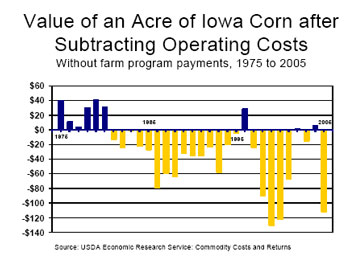
 Iowa corn growers say they can meet the demand for both food and fuel.
 Scientists with the
  Senator Byron Dorgan (D-ND) told a recent ethanol summit in his state that with new ethanol plants coming on line at a rapid pace, the use of ethanol needs to grow or we could soon end up producing a surplus of ethanol.