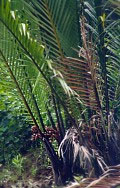
 A Malaysian company is building what it says is the world’s first plant to commercially produce ethanol from nipah palm trees.
The Associated Press reports that Pioneer Bio Industries Corp. Sdn. Bhd. is building the plant in northern Perak state to extract ethanol from the sap of the nipah tree, scientifically known as Nypa fruiticans and found in abundance in Malaysia’s coastal areas.
Company chairman Badrul Shah Mohamad Noor said the company plans to build more than a dozen additional plants over the next five years. He said the technology was developed by 16 Malaysian scientists over the last five years.
Ethanol is produced as a bio-fuel in Brazil and Europe but is sourced from other raw products such as sugar cane, cassava, corn and sugar beet.
The first plant, costing 1.4 billion ringgit ($398 million), will have a capacity to process 140 million gallons of ethanol per year. It is expected to be operational at end-2008, Badrul Shah told reporters.
Read more from the Associated Press and from Bloomberg.
 The new chairman of the House Agriculture Committee made his first official appearance outside Washington at the South Dakota Corn Growers Association annual meeting Saturday, telling farmers that ethanol produced from corn and from new feedstocks such as switchgrass will be one of the forces driving a new farm bill in Congress.
 Also addressing the corn growers was South Dakota Republican Senator John Thune who told the group that developing new feedstocks for ethanol should help the industry grow in other areas. “Corn ethanol is fine,” he said. The challenge for Congress: “Don’t screw it up.”
 The demand for corn to make ethanol is expected to keep growing, which is creating challenges for livestock producers.
 Georgia’s first ethanol plant broke ground this week in Mitchell County.
 Chickens could provide a cheaper feedstock for biodiesel than soybeans.
 First day of the new Congress and already biofuels legislation has been introduced.
 On the House side,
  Clif Bar – a California-based environmental advocacy company that makes energy bars – is paying cash to employees who buy cars that run on biodiesel.
  Biotech firms working on more efficient ways to produce biofuels also saw a big boost in 2006. For example, the