

 The former naval shipyard at Seneca, Illinois near Chicago will soon be the home to a 60-million-gallon-a-year biodiesel plant.
This story on the Chief Engineer.org web site says Nova Biosource Fuels is building the plant:
One of the premier components of the project is the pre-fabricated pipe that transports the biodiesel fuel within the plant. Nova Biosource chose Edwards Engineering, Inc. of Elk Grove Village, IL, to take on this task because of their cutting edge technology and industrial experience. The project was so large that Edwards opened a separate facility specifically for this project, which is added good news for the Illinois economy. Edwards employs approximately 75 workers in their 50,000 square foot pre-fabrication facility in Minooka, IL, and as part of an installation team on-site at the Seneca plant.
Nova Biosource has more than 230 million gallons of biodiesel capacity under construction or in operation throughout the country.
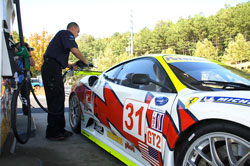 It’s not quite official, but the Vice President of Media Communications for the American Le Mans Series says the ALMS will be making an announcement within a week about it’s future with ethanol. Bob Dickinson says ALMS will move to an E85 blend of ethanol fuel for the series’ 2008 season. He says the series’ switch to an E10 blend was a positive move and the ALMS wants to continue to stay on the cutting edge of fuel technology.
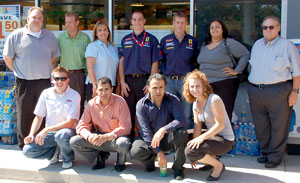 Sam’s Mart on 5640 New Northside Drive, NW in Atlanta, GA is among the network of Shell stations within the metropolitan area that uses an E10 blend of fuel in all of it’s fuel grades offered at the pump. Bob Walden is the Manager of Special Projects for Sam’s Mart. He says Shell is a leading player the ethanol industry when it comes offering the fuel to consumers at the pump. For Bob, pump promotions like the one the
 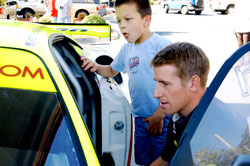 I’m not the only one who thought
  It’s not very often that you get a foreign take on one of America’s emerging alternative fuels, so I was particularly interested in speaking with
  Ethanol is simply “a great fuel” for
 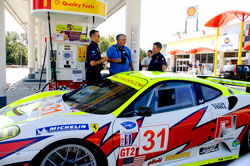 Consumers enjoyed discounted fuel and free fountain drinks and coffee at the Sam’s Mart in Atlanta, GA this afternoon. The
  In a near unanimous decision, ethanol has been chosen as the 2007 AgriMarketing Product of the Year by
  The Iowa Farmers Union has joined with Green World Biofuels to offer a workshop to help people brew their own biodiesel to use in their homes or farm equipment. Covering the entire process from start to finish, it will be at the Green World Biofuels facility near Tiffin, just northwest of Iowa City on Friday, November 16th.
 ‘Our workshops are designed to educate people who are seriously interested in biodiesel production,” says [Green World Biofuels owner Steve] Fugate. “You will leave very knowledgeable and excited about making and using your own biodiesel.”