 The deadline has now passed for fuel station owners in the state of Oklahoma to have signage regarding ethanol at their faclities. They must now label their pumps indicating ethanol additives. This law will be in accordance with what was passed this last legislative sesssion.
The Oklahoma Corporation Commission will be inspecting pumps to be sure that the dispensers are labeled. Violators will face a $500 fine and will be shut down.
“They need to fix it immediately,” Commission spokesman Matt Skinner said, before adding, “We’re in a transition phase. We’re giving a little leeway.” The leeway indicates a short-term tolerance involving stations that right now “may” meet the spirit of the law if not the letter. And may is the operative word.
A fueling station’s sticker, for instance, could say the “fuel contains up to 10 percent ethanol.” Outside another station, however, the wording may say the gasoline “may” contain up to 10 percent ethanol.” Skinner noted that some businesses were having sticker issues and would eventually need to get more precise wording about their gasoline content.
It’s been reported that part of the incentive to sell ethanol blended fuel at a 10 percent blend is that it is significantly cheaper than regular gasoline. Ethanol costs less than $3 per gallon wholesale, while regular gasoline is selling at about $4 per gallon nationally.
Commission inspectors performed more than 18,000 tests at pumps last year and they indicated any stations violating the law now will be shut down.
 The heads of Canada, France, Germany, Italy, Japan, Russia, the U.K., and the U.S. said they will work to develop science-based benchmarks and indicators for biofuel production and use. The leaders also said they are committed to “continuing research and development of second generation biofuels made from non-food plant materials and inedible biomass.”
 Rick Boydston and his team with USDA’s Agriculture Research Service recently completed a study on the use of dried distillers grains, or DDGS, as a weed deterrent in container-grown ornamentals. The study was published in the
 Billionaire oilman T. Boone Pickens is choosing a decidely non-petroleum source as the solution for America’s energy woes: wind power.
 “The U.S. Secretaries of Agriculture and Energy say that biofuels-related feedstock demand plays only a small role in global food supply and pricing. Worldwide, the estimated increase in the price of soybeans and soybean oil would increase the global food commodity price index by 1-2 percent. In the U.S., according to the Department of Energy and USDA, food prices have increased by about 4.8 percent. Of that increase, ethanol and biodiesel consumption accounted for only 4 or 5 percent while other factors accounted for 95-96 percent of the increase.
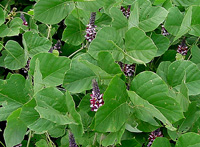 Making ethanol from a nuisance weed could be an idea whose time has come.
  Doug Mizell is a co-founder of Agro*Gas Industries, LLC, which he promotes on
  Minnesota Corn Growers treasurer Chad Willis says corn growers will be out at the events, talking to the fans and promoting ethanol. “For the past few years we’ve done an ethanol trivia contest with the t-shirts as a prize,” said Willis, who is a farmer from Willmar and one of the volunteer coordinators for the event. “It’s a great way to get our message across because it has the crowd listening carefully so they know the answer if they get called up. The best way to learn something is to learn it and repeat it.”