 Following the route of the famous Cannonball Run of the 1970s (made even more famous by the movie in 1981), a pair of advertising copywriters will attempt to go from the East Coast to the West Coast… entirely non-stop and entirely on biodiesel.
This press release from the Willie Run ’08 web site has more information:
Scheduled for departure from Midtown Manhattan on September 22, Nik Bristow and Brian Pierce from Atlanta’s Fitzgerald+CO will embark on “Willie Run ‘08”, the first-ever non-stop, cross-country trek powered entirely by Willie Nelson’s own BioWillie® biodiesel. The two-man team will follow the route of the infamous Cannonball Run and arrive less than 40 hours later in Los Angeles on September 24. They won’t stop for fuel. They won’t stop to go to the bathroom. In fact, excluding driver changes, they won’t stop for anything for almost 3000 miles.
Their vehicle of choice? The “Willie One,” a diesel Volkswagen Jetta with an additional 60 gallons of fuel capacity that, along with the diesel car’s superior fuel economy of approximately 45-50 mpg, will allow it to travel coast-to-coast without a single fuel stop.
Bristow and Pierce have been biodiesel supporters for years and are ardent fans of Willie Nelson. After discovering the BioWillie® brand and linking those two passions, they began developing a relationship with BioWillie® and creating print ads and other marketing concepts on a pro bono basis.
“We’d been working on the BioWillie brand for a while and we were doing some pretty cool stuff. But it occurred to us that we were working with Willie Nelson, the original outlaw of the music industry, so we needed to be doing something outlaw. So we came up with Willie Run ’08,” said Pierce.
There are plenty of questions that come to mind, especially “what about going to the bathroom?” Well, you can find out the answer to that and more in some pretty hilarious videos the guys have posted on their web site: willierun.com.


 Saab plans to display a new E85 concept vehicle at the Paris autoshow in October. The futuristic Saab 9-X Air BioHybrid concept is a four-seat convertible that features wrap-around glass. It is designed to include a 1.4-liter Saab BioPower engine with turbocharging.
 The first two summits were held in Washington DC, but organizers say “the transitional stasis of a federal election year and the accelerated ambition of the states to pursue their own alternative fuel programs, prompted a venue change to Florida which is rapidly proving to be a pioneer in the quest for renewable energy.”
 The ABE facility is designed to produce 65 million gallons per year of ethanol using regionally grown barley as the primary feedstock. According to the company, barley can be grown in double-crop systems with established food crops such as soybeans in the Mid-Atlantic region.
  The
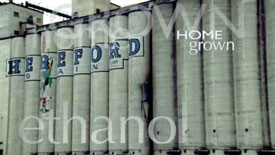
The 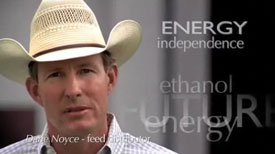 In “Faces,” local Hereford residents explain why ethanol is critical to America’s energy future. In “Places,” the geographic diversity of America’s ethanol industry is on display as the self-proclaimed “Beef Capital of the World” is also home to two ethanol biorefineries.
 In a
In a  The forum will feature both agricultural and food business leaders, including representatives from the National Corn Growers Association, Missouri Farm Bureau, the American Bakers Association, and the Food and Agricultural Organization.
 Five Midwestern states have joined together to develop an electric transmission system that should help promote wind energy in the region.
 Officials in Parkersburg, Iowa recently received a check for $10,520 to help them rebuild their town destroyed by an F5 tornado back on May 25, 2008.
 The money will go toward buying biodiesel that runs the equipment that continues to cleanup and rebuild the town. If you remember the photo on the left from right after the storm happened at the end of May, the town doesn’t look like that anymore. But there’s still plenty of work to do. It’s nice to know that biodiesel will be part of that effort.