

According to a press release from the Missouri Corn Growers Association, Missouri will soon be offering additional blends of ethanol at fueling pumps. A pilot program was announced allowing the sale of 10 – 85 percent ethanol fuel.
 “This is an important step towards providing Missouri consumers with new energy options that can offer both economic savings and improved fuel mileage,” said Gary Clark, Missouri Corn Growers Association (MCGA) senior director of marketing. “Our goal is to work with MDA and fuel retailers across the state to make sure proper and workable measurement standards are established while helping install locations where consumers can benefit from these mid-range ethanol blends.”
A partnership between MCGA, Missouri Renewable Partners, Ethanol Promotion and Information Council (EPIC) and the Missouri Department of Agriculture Weights and Measures Division are working together to implement this new program. LifeLine Foods-Ethanol Division in St. Joseph, Mo., has served as a representative from Missouri’s farmer-owned ethanol industry in this pilot. The program has been awarded a one-year permit and will then be reviewed by MDA for statewide implementation. All pilot locations must be approved through the MDA Weights and Measures Division and MCGA.
Currently, ethanol blends higher than 10 percent are only approved by the U.S. Environmental Protection Agency for FFVs.
 “The start-up of our Stockton plant marks the achievement of our goal of 220 million gallons of annual production capacity and dramatically increases the availability of renewable fuels produced in the state of California. As the largest fuel market in the United States, California will benefit from locally produced ethanol and its feed co-products,” said Neil Koehler, Pacific Ethanol’s President and CEO.
 Rains and flooding kept farmers in the Midwest corn and soybean belts out of their fields for a long time this spring. But according to a new report from the USDA, the actual stockpiles of the main feedstocks for ethanol and biodiesel are higher than expected.

 According to
  According to
  The forum will provide an opportunity for Nebraska policymakers and consumers to better understand how ethanol policy plays a role in economic development, energy security, agriculture and the environment.
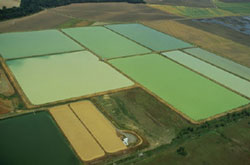 Algae has traditionally been a nuisance to catfish farmers, but it could end up being a new source of income for them and a new source of energy for the southeast.
 Ron Putt, an associate research professor at Auburn University, has been studying the feasibility of using algae from catfish farms for biodiesel production. “Currently I have a small project that is going to demonstrate the ability to harvest algae from the catfish ponds in the western part of Alabama,” Putt says. “I see them as the core of the algae farming industry throughout the southeast. My goal is to turn the southeast conference into the new OPEC.”
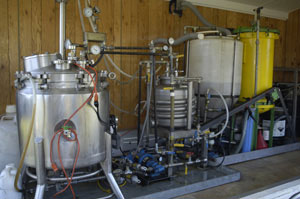 Farmers on the panhandle of Florida can now make their own biodiesel on the farm with the help of the
  “We relied on the knowledge of one of our county commissioners who is an expert in biodiesel processes. We work with our farmers and show them how to get into biodiesel production for themselves,” Harper said. The washing machine-sized processor can produce 100 gallons of biodiesel in ten hours and can easily transported to a farm.